Deal flow in private equity: how it works and definition
Published on
30
Amended on
20
Deal flow is the starting point for any private equity strategy. It refers to all the investment opportunities that a fund identifies, analyzes, and filters over time.
The mechanics of private equity
Deal flow is a pillar of private equity, but it is part of a broader set of mechanisms that must be mastered. The J-curve and co-investments, in particular, help to understand the timing of value creation and the terms of capital allocation, which are essential for effectively integrating this asset class into a long-term approach.
This article has been automatically translated. Please excuse any inaccuracies or translation errors.
Dieser Artikel wurde automatisch übersetzt. Bitte entschuldigen Sie etwaige Ungenauigkeiten oder Übersetzungsfehler.
This article has been automatically translated. We apologize per inaccuracies or translation errors.
What is deal flow in private equity?
Operationally, deal flow is a continuous process. It encompasses opportunities that are quickly dismissed as well as those that are analyzed in depth, right up to the transactions that are actually completed.
The majority of cases included in the deal flow do not result in an investment.
This gradual attrition is structural. It constitutes a mechanism for protecting the fund's capital and internal resources.
The relevance of the deal flow depends on how well it aligns with the fund’s strategy. This alignment pertains in particular to investment size, target sectors, geographic focus, and risk profile.
Why is deal flow so important in private equity?
Deal flow occurs well before any potential value is created. A significant portion of the risks associated with an investment are already present at the time of the equity investment.
A structured deal flow makes it possible, first and foremost, to compare opportunities with one another, rather than analyzing each case in isolation.
It also promotes discipline in the face of market cycles by limiting decisions driven by scarcity or competitive pressure.
Finally, it contributes to a more efficient allocation of time and internal resources, which are, by their very nature, limited.
The effects of deal flow are indirect. They improve the decision-making environment without eliminating operational or macroeconomic uncertainties.
Where does deal flow in private equity come from?
The origin of the deal flow is a major determinant of its quality. In private equity, access to information is rarely uniform.Opportunities circulate within structured relational ecosystems, in which the reputation and credibility of teams play a central role.
Professional networks and team credibility
Networks are a key source of qualified deal flow. They are built on long-standing relationships with executives, shareholders, boards, and specialized intermediaries.
A Fund manager credibility Fund manager less on its size than on its proven ability to support companies, manage complex situations, and maintain a balanced relationship with stakeholders. This reputation influences the nature of the proposals received and the quality of discussions leading up to transactions.
Intermediated processes and organized competition
A significant portion of deal flow goes through specialized intermediaries. These transactions are generally structured, documented, and put out to competitive bidding.
They provide more standardized information, but impose tight deadlines and increased pressure on entry criteria. In this context, the ability to analyze quickly, identify key risks, and remain disciplined regarding investment criteria becomes critical.
Direct sourcing and long-term approach
Some teams develop a strategy of directly sourcing executives. This approach is based on in-depth industry knowledge and long-term follow-up, sometimes outside of any formal divestiture process.
It does not guarantee exclusivity, but it often provides a more nuanced understanding of the company’s operational and strategic challenges. It requires a significant investment of time and expertise.
How does a fund handle its deal flow?
The deal flow process aims to transform a diverse stream of opportunities into structured investment decisions. This process is designed to protect both the fund’s invested capital and its internal resources.
Initial strategic filtering
The first step is to check that the application is in line with the fund's strategy. This analysis is deliberately quick and selective. It focuses on simple criteria, such as the size of the company, its sector, its location, and the nature of the proposed transaction.
Most opportunities are eliminated at this stage. This early screening is essential to prevent the analytical resources from being spread too thin .
In-depth analysis and hypothesis building
The selected applications are then subjected tomore detailed analysis. The teams evaluate the strength of the business model, market dynamics, the quality of management, and the key risks identified.
This phase aims to develop realistic working hypotheses. It does not prejudge the final decision and allows areas of uncertainty requiring further analysis to be identified.
Due diligence and internal arbitration
When interest is confirmed, in-depth audits are conducted. These cover financial, legal, tax, operational, and non-financial aspects.
This work helps reduce information asymmetry, without ever eliminating it entirely. At each stage, internal trade-offs are made, and a significant number of opportunities are abandoned before any investment decision is made.
Deal flow and types of private equity strategies
The structure of deal flow in private equity varies significantly depending on the investment strategy pursued, both in terms of the volume of opportunities analyzed and the depth of analysis and level of uncertainty.
Deal flow is characterized by a very high volume of opportunities in an environment where visibility on growth trajectories remains limited. The process aims above all to identify potential value creation options within innovative and highly uncertain universes, where the selectivity rate is particularly high.
Deal flow is generally more targeted and consistent. It is based on companies that are already structured and have proven business models. The analysis focuses primarily on growth dynamics, the quality of operational execution, and the ability to accelerate development that is already underway.
The number of opportunities analyzed is more limited, but each case is subject toin-depth, multidimensional analysis, taking into account the amounts invested, governance issues, and the expected operational transformation. Deal flow is a key lever for investment discipline and strategic consistency over time.
The deal flow process of a fund of funds
Whether it's the deal flow of a fund or a fund of funds, the selection process is based on a common requirement: identifying players with proven expertise, a solid track record, structured teams, and disciplined processes.
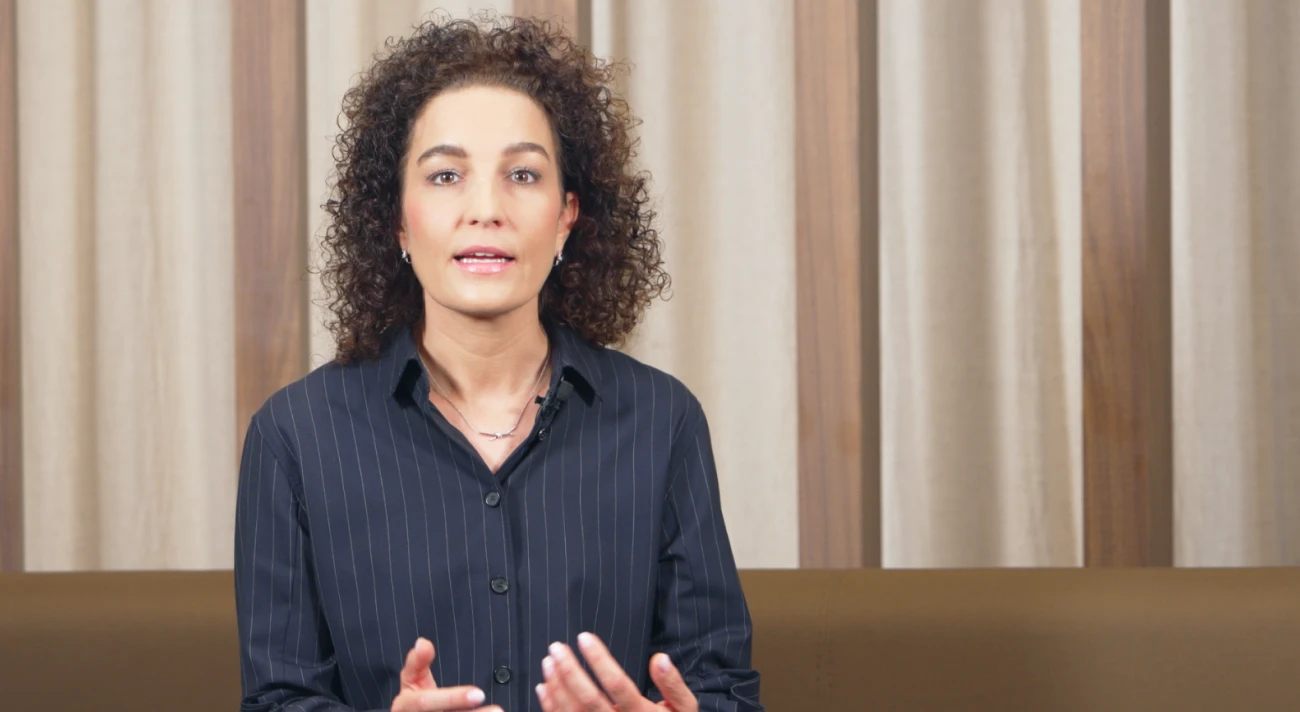
DiscoverAltaroc deal flow processAltaroc Louis Flamand, Chief Investment Officer. This content is provided for informational purposes only. It does not constitute personalized recommendations, investment advice, or solicitation.
Volume and quality of deal flow: a non-linear relationship
Deal flow volume is often perceived as an indicator of dynamism. In practice, the relationship between volume and quality is complex.
Too small a volume can limit the ability to make comparisons and increase the risk of opportunistic decisions. Conversely, an excessive volume can dilute the teams’ focus, lengthen analysis times, and reduce the depth of their work.
The quality of deal flow depends on the relevance of opportunities, their strategic consistency, and the fund's ability to analyze them under favorable conditions. Actual selectivity, as measured by the conversion rate, is often more revealing than the raw number of cases.
Deal flow in the face of market cycles
The nature of deal flow changes with economic and financial cycles.
During an expansion phase, competition intensifies and valuations rise. During a slowdown, the volume of opportunities may increase, but with different risk profiles.
A disciplined fund adjusts its investment pace without compromising its criteria. Deal flow then becomes a management tool, enabling the fund to maintain strategic consistency in changing environments.
Structural limits of deal flow
Even when structured, deal flow does not eliminate the uncertainties inherent in unlisted markets. Information remains incomplete, certain risks only become apparent after the investment is made, and market conditions can change rapidly.
Competition among funds, time pressure, and economic cycles influence decisions, sometimes regardless of the intrinsic quality of the cases being analyzed.
Reminder about the risks of private equity
Private equity is an illiquid asset class characterized by a long investment horizon and a lack of intermediate liquidity. Capital is committed for several years, with no possibility of early exit.
The risk of capital loss is real and may be total. Performance varies significantly depending on managers, strategies, sectors, and vintages. The quality of the deal flow and the selection process helps to manage risk, but never eliminate it.
Any investment in private equity must be part of a comprehensive strategy that takes into account the investor’s circumstances, investment horizon, and ability to tolerate illiquidity.
This content is provided for informational purposes only and does not constitute investment advice.
FAQ
What is deal flow in private equity?
In private equity, deal flow refers to all investment opportunities analyzed by a private equity fund over a given period, whether they are rejected or result in a transaction.
Does deal flow guarantee better performance?
No, deal flow does not guarantee better performance. Structured deal flow improves selection discipline, but does not eliminate the risks inherent in unlisted investments.
Is the deal flow the same for all strategies?
No, deal flow is not the same across all strategies. The volume, depth of analysis, and conversion rate vary greatly between venture capital, growth capital, and buyouts.
Can the quality of a deal flow be measured objectively?
There is no single indicator for measuring the quality of a deal flow. Strategic consistency, selectivity, and investment discipline are often more relevant than the volume analyzed.
The mechanics of private equity
Deal flow is a pillar of private equity, but it is part of a broader set of mechanisms that must be mastered. The J-curve and co-investments, in particular, help to understand the timing of value creation and the terms of capital allocation, which are essential for effectively integrating this asset class into a long-term approach.
Salma Moumen is Chief Project Officer at Altaroc. A graduate of TBS Education with a specialization in Banking & Corporate Finance, she began her career by assisting fintech companies with their fundraising efforts before focusing on the digital transformation of financial sector players, at the intersection of business and technology challenges. Through her articles, she offers an informative, well-researched, and objective analysis of private markets, their mechanisms, and the risks associated with them.
In accordance with applicable regulations, we ask that you complete your profile. This step is required to access the content and services offered on our websites.
Please fill out your profile to access the site
country of tax residence
Select
choosenCountry
Preferred language
Select
choosenLang
YOUR INVESTOR PROFILE
Financial intermediary or professional investor
Financial advisors, wealth managers, private bankers, or any other investment service providers.
Qualified Investor or Altaroc Investor
Experienced investor or Altaroc investor
Private investors who have already invested with Altaroc or who have a minimum investment capacity of €100,000.
Private investors who have previously invested in Altaroc who have a minimum investment capacity of 200,000 euros.
Non-professional (retail) investor
Individual investors with an investment capacity below €100,000.
Retail investors with an investment capacity of less than 200,000 euros.
Institutional investor
Pension funds, retirement schemes, asset management companies, and single-family offices.
Important information
choosenTerms
choosenTermsValue
Select your language and investor profile to continue
Select your investor profile to continue
Scroll down to accept General Terms and Conditions













_5_11zon.webp)

_1_11zon.webp)