Home
Resources
Mastering the challenges of private equity
...

School Dropout Rates: How Private Equity Can Fund Education

Published on
19/10/2026
Amended on
19/10/2026
0
minute(s)
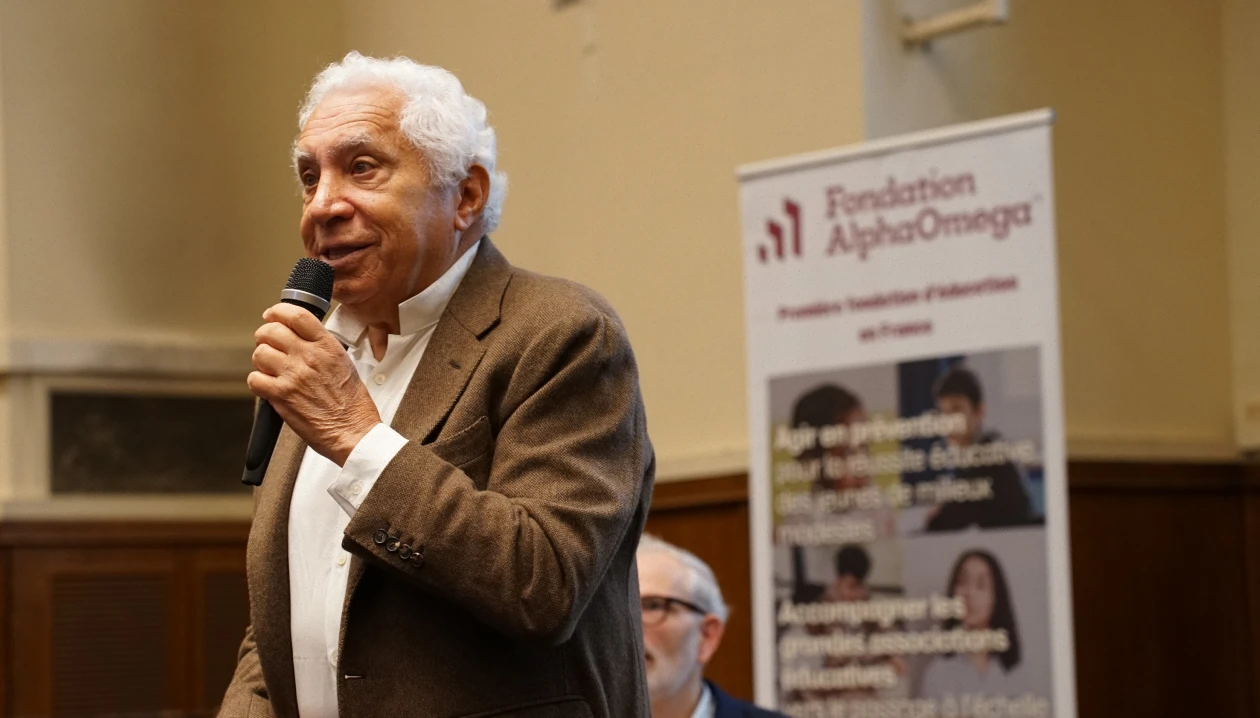
How can we provide sustainable funding for organizations working to combat school dropout rates? This question was at the heart of the first edition of the Grand Forum de l’Éducation, organized on Thursday, October 15, at the Conservatoire national des arts et métiers in Paris by the AlphaOmega Foundation. While the funding needs of nonprofit organizations remain considerable, Maurice Tchenio, CEO ofAltaroc and president of the AlphaOmega Foundation, alongside Patrick Sapy, CEO of FAIR Finansol, advocated for an approach that has yet to be fully explored in France: leveraging private equity to bolster foundations’ resources and enable them to support nonprofit organizations over the long term.
By
Damien Hélène
Damien Hélène
School Dropout Rates: How Private Equity Can Fund Education
This article has been automatically translated. Please excuse any inaccuracies or translation errors.
Dieser Artikel wurde automatisch übersetzt. Bitte entschuldigen Sie etwaige Ungenauigkeiten oder Übersetzungsfehler.
This article has been automatically translated. We apologize per inaccuracies or translation errors.

"Public funding is becoming increasingly scarce."

French nonprofit organizations are facing an increasingly difficult challenge: supporting a growing number of beneficiaries while improving the quality of their work. This goal requires financial resources, even as “public funding is becoming increasingly scarce,” as Maurice Tchenio pointed out. According to a survey by the Federation of Solidarity Organizations published on October 8, 2026, 77% of the solidarity organizations surveyed reported a decline in public funding in 2025 or an announced reduction for 2026.

Doing More with Limited Resources

To continue their growth, nonprofit organizations have several tools at their disposal. The first is to increase productivity, particularly through the digitization of certain functions and the use of artificial intelligence, which can help them perform certain tasks at a lower cost. They can also rely on pro bono services, volunteer work, or support from major consulting firms, some of which offer their services for free or at discounted rates.

That leaves the question of funding. Faced with declining public resources, nonprofit organizations are turning to private funders. But competition to attract this capital is intensifying. To win support, they must now present well-structured projects with clear objectives and measurable results.

Maurice Tchenio cites the example of Entreprendre pour Apprendre, an organization supported by the AlphaOmega Foundation. Its “Mini-Entreprise” program, typically aimed at middle and high school students, was piloted with young people served by the Paris Local Mission. This pilot program improved their access to employment, which serves as a concrete argument to convince companies facing recruitment challenges to fund the initiative. “The more you’re able to develop programs that appeal to funders, the better your chances of success, ” emphasized the founder and president of the AlphaOmega Foundation.

How Foundations Can Grow Their Capital More Effectively

France has a considerable asset: its households’ savings, whose financial assets exceed 6,500 billion euros. But how can part of this wealth be channeled to support nonprofit organizations? According to Maurice Tchenio, three avenues are worth exploring.

The first concerns endowment foundations recognized as public-benefit organizations, particularly umbrella foundations. These organizations may have capital whose income enables them to fund their missions and the associations they support. However, their needs are growing, while their resources remain limited.

The problem stems in particular from the way their capital is invested. In France, foundations have traditionally favored liquid investments, primarily bonds and stocks. In the United States, large university endowments have long incorporated unlisted assets into their investment strategies. In 2025, they allocated, on a weighted average basis, nearly 30% of their assets to private equity and venture capital, according to NACUBO-Commonfund. In France, private equity still has a limited presence in the portfolios of many foundations.

To illustrate the performance potential of private equity, Maurice Tchenio cites a long-term annualized net return of around 13 percent, compared with about 6 percent for bonds, stocks, or real estate. Over a ten-year period, a 25 percent allocation to private equity could thus generate higher returns than the remaining 75 percent.

Another challenge is preserving capital value in the face of inflation. For foundations with an endowment that cannot be spent, the investment horizon is particularly long. Maurice Tchenio therefore encourages them to consider allocating 20 to 30 percent to private equity, depending on their liquidity needs. The goal is to increase the resources available to fund their missions over a ten-year horizon.

French Savings: A Source of Funding for Nonprofits

The second funding avenue is aimed directly at nonprofit organizations. Many of them currently operate on the donations they collect and spend each year. This reliance on annual fundraising makes it difficult to ensure long-term financial stability.

Maurice Tchenio therefore proposes developing endowment funds, financed by capital donations. Rather than reaching out to the same donors every year, an organization could ask them to make a one-time contribution toward building a long-term investment portfolio. The income from this capital would then supplement the organization’s annual resources and support its initiatives over the long term.

The third approach is based on shared-profit funds. This time, rather than asking investors to donate a portion of their assets, the idea is to offer them the opportunity to invest while allocating a portion of their earnings to a philanthropic cause.

Altaroc has already established three shared-profit funds. Some are aimed at investors who can commit at least one million euros and who agree to donate a portion of their capital gains. More recently, created a “Venture Philanthropy” fund, certified by Finansol, which allocates 25% of its capital gains to funding .

This approach thus makes it possible to achieve two objectives: seeking long-term financial performance and helping to fund organizations dedicated to education. These mechanisms open up an additional avenue for mobilizing private savings in the public interest.

Two Struggles for the Same Goal

Maurice Tchenio concluded his remarks by highlighting the two causes that drive his commitment: combating school dropout rates through the AlphaOmega Foundation and helping French people grow their savings more effectively with Altaroc. These two goals, in his view, go hand in hand: “The other simplest way to increase donations is to help French people become wealthier.”

‍

This content is for informational purposes only and does not constitute personalized advice, legal or tax advice, or an investment strategy. The information presented is based on current conditions and is subject to change. We encourage you to consult with your advisor to ensure that the products discussed are appropriate for your financial profile. Investing in private equity involves risks of capital loss and illiquidity. Past performance is not indicative of future results. 

Other content in this topic

Explore our content collections, which bring together different formats around a single subject/issue/theme.
Mastering the challenges of private equity
2027 Budget Bill - An Analysis of the Wealth-Related Measures
The 2027 Finance Bill was introduced in the National Assembly on October 1, 2026; it is expected to be adopted before December 31, following review by the National Assembly and then by the Senate. The measures outlined below, relating to estate planning issues in Articles 2, 3, 4, 5, 6, 7, and 10, are those contained in the Government’s initial draft and are subject to change—or even removal—during parliamentary debates.
Article
|
07
2026-10-07
Strategic focus: software sector
Mastering the challenges of private equity
The software sector: a key asset class for private equity
Discover the new Strategic Viewpoint by Louis Flamand, CIO ofAltaroc. Once a quarter, our Chief Investment Officer deciphers the major trends that are transforming private equity over the long term.
Article
|
15
2025-10-15
Portrait Merrick McKay
Mastering the challenges of private equity
Merrick McKay (Abrdn): the advantages of investing in specialized Private Equity funds
For Private Equity specialists Merrick McKay and Louis Flamand, investment in specialized funds is crucial to company growth. McKay stresses the difficulty for generalist funds to compete with this expertise. Flamand also discusses the European market's move towards sector specialization. They discuss the complexity of investing with over-demanded managers.
Article
|
04
2024-03-04
Portrait of Merrick McKay
Mastering the challenges of private equity
Merrick McKay (Abrdn): It's always a good time to invest in private equity
Abrdn's Merrick McKay maintains that it's still a good time to invest in Private Equity, despite the global economic climate. He stresses the importance of choosing the best funds for optimal returns, with a median performance in Europe of 15-16% over the past 20 years.
Article
|
23
2024-02-23
Building a long-term private equity allocation
Mastering the challenges of private equity
Building a long-term private equity allocation
Watch the full recording of the webinar “ Altaroc ” and learn how to build a sustainable private equity portfolio, inspired by the practices of institutional investors.
Video
|
22
2026-09-22
Best Of: Building a Long-Term Private Equity Portfolio
Mastering the challenges of private equity
Best Of: Building a Long-Term Private Equity Portfolio
Check out the highlights from the “ Altaroc ” webinar, which focuses on how institutional investors build a sustainable private equity portfolio and support your clients’ wealth management strategies.
Video
|
25
2026-09-25
Interview with Charly Zwemstra—Founder, CEO, and CIO— Main Capital Partners
Mastering the challenges of private equity
Interview with Charly Zwemstra—Founder, CEO, and CIO— Main Capital Partners
Charly Zwemstra unveils Main Capital Partners' strategy for transforming B2B software companies into global leaders.
Video
|
22
2026-09-22
Interview with Antoine Levy, Economist - Berkeley
Mastering the challenges of private equity
Interview with Antoine Levy, Economist - Berkeley
From Berkeley, economist Antoine Levy explains why the pay-as-you-go pension system can no longer withstand the demographic shock.
Video
|
24
2026-08-24
Interview - Sven van Berge & Bram Kaashoek - Main capital
Mastering the challenges of private equity
Interview - Sven van Berge & Bram Kaashoek - Main capital
Sven van Berge & Bram Kaashoek explain how artificial intelligence is redefining value creation and business models for B2B software publishers
Video
|
11
2026-06-11
Strategic Consideration—Waiting for Dividends: The Hidden Cost
Mastering the challenges of private equity
Strategic Consideration—Waiting for Dividends: The Hidden Cost
Find out why waiting for a fund’s distributions before reinvesting can reduce the performance and diversification of a private equity portfolio.
File
|
25
2026-09-25
Strategic Point - Evergreen
Mastering the challenges of private equity
Strategic Point - Evergreen
Check out our analysis in the latest Strategic Briefing
File
|
21
2026-04-21
Flash Market - AI & B2B software
Mastering the challenges of private equity
Flash Market - AI & B2B software
A dynamic of reinforcement, not replacement
File
|
15
2026-02-15
Special Report - New Mountain Capital
Mastering the challenges of private equity
Special Report - New Mountain Capital
New Mountain Capital adopts a Defensive Growth investment strategy, focusing on high-growth, non-cyclical sectors. Each year, the team identifies resilient sub-sectors, which it explores in depth through an in-house "Deep Dive Process". The firm is particularly well known in the healthcare sector, including life sciences and healthcare IT, as well as in segments at the crossroads of technology and infrastructure services.
File
|
10
2025-04-10
Special report - Thoma Bravo
Mastering the challenges of private equity
Special report - Thoma Bravo
Featured in the Vintage Altaroc Odyssey , Thoma Bravo is a U.S.-based private equity firm specializing in the software sector. Founded by Carl Thoma and Orlando Bravo, it takes an approach focused on margin optimization and external growth. With more than 220 employees, including about 100 investment professionals, it has offices in San Francisco, Miami, Chicago, London, New York, and Dubai. Thoma Bravo manages more than $166 billion in assets across its various fund portfolios.
File
|
13
2025-03-13
No articles in this category yet.
Welcome to Altaroc
In accordance with applicable regulations, we ask that you complete your profile. This step is required to access the content and services offered on our websites.
Please fill out your profile to access the site
country of tax residence
Select
choosenCountry
Preferred language
Select
choosenLang
YOUR INVESTOR PROFILE
Financial intermediary or professional investor
Financial advisors, wealth managers, private bankers, or any other investment service providers.
Qualified Investor or Altaroc Investor
Experienced investor or Altaroc investor
Private investors who have already invested with Altaroc or who have a minimum investment capacity of €100,000.
Private investors who have previously invested in Altaroc who have a minimum investment capacity of 200,000 euros.
Non-professional (retail) investor
Individual investors with an investment capacity below €100,000.
Retail investors with an investment capacity of less than 200,000 euros.
Institutional investor
Pension funds, retirement schemes, asset management companies, and single-family offices.
Select your language and investor profile to continue
Select your investor profile to continue
Scroll down to accept General Terms and Conditions
The webpage you are trying to access is not available in your country.