Home
Resources
Understanding Private Equity Trends
...

Artificial Intelligence and SaaS Software: Who Will Be the Winners and Losers?

Published on
11/6/2026
Amended on
1/11/2026
0
minute(s)
Architectural detail of a modern corporate building facade for analysis of the SaaS and AI sectors
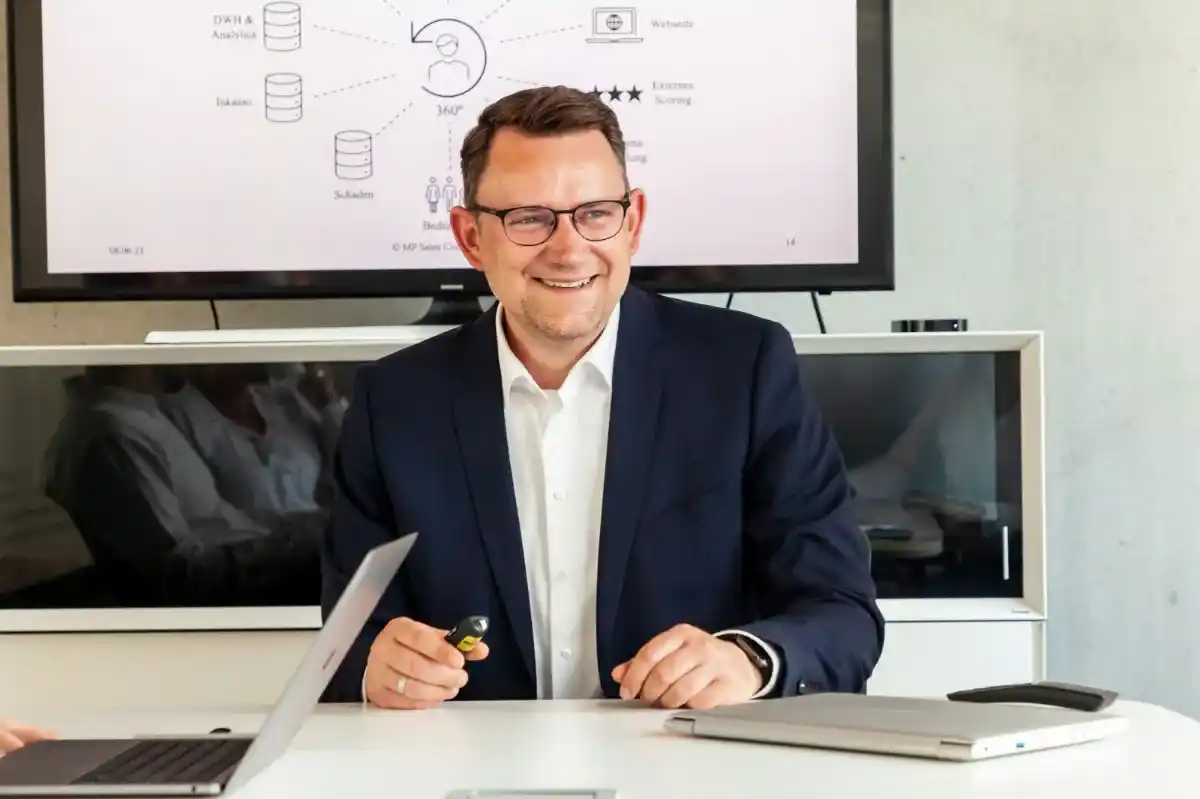
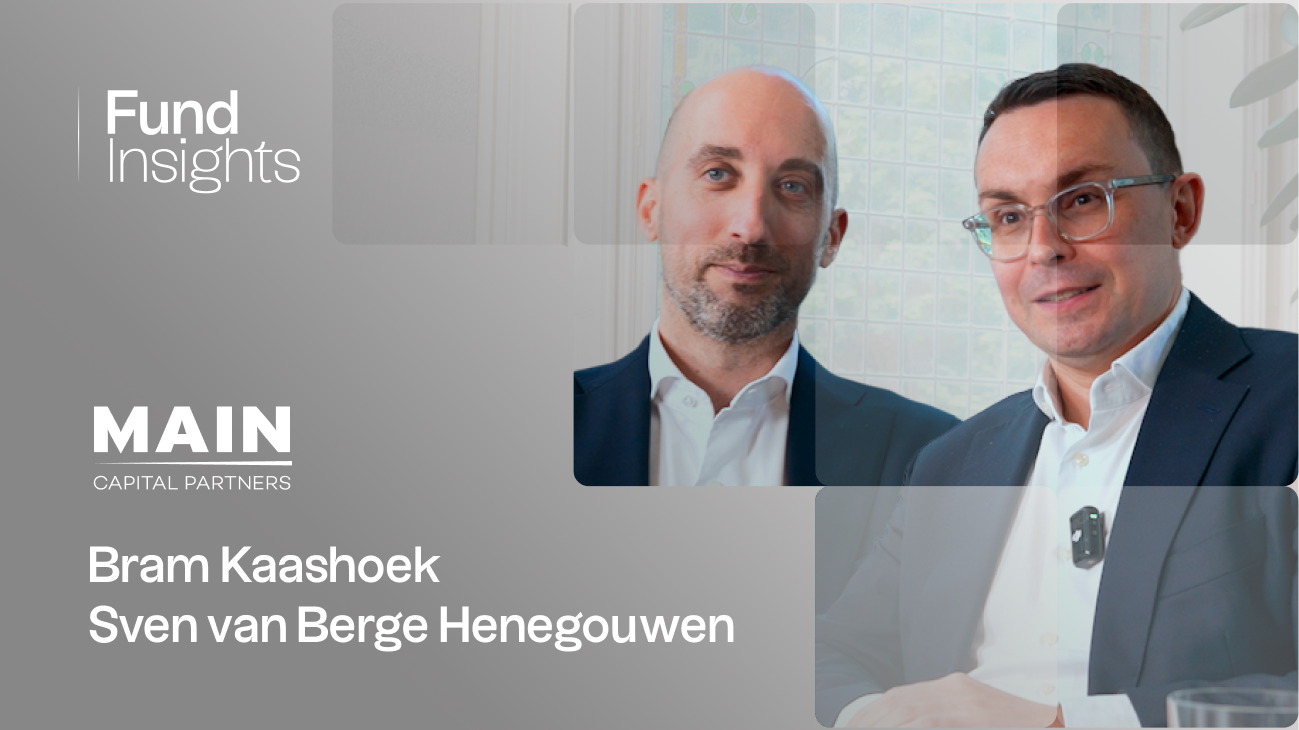
Altaroc Sven van Berge (Managing Partner) and Bram Kaashoek (COO) of Main Capital at their offices in The Hague. Main Capital one of Europe’s most specialized investors in B2B software, with 57 companies in its portfolio. This discussion allowed us to refine our understanding of a sector undergoing significant transformation.
By
Damien Hélène
Damien Hélène
Artificial Intelligence and SaaS Software: Who Will Be the Winners and Losers?
This article has been automatically translated. Please excuse any inaccuracies or translation errors.
Dieser Artikel wurde automatisch übersetzt. Bitte entschuldigen Sie etwaige Ungenauigkeiten oder Übersetzungsfehler.
This article has been automatically translated. We apologize per inaccuracies or translation errors.

Artificial intelligence is profoundly transforming the software industry. But contrary to what is sometimes suggested by public markets—where pressure on SaaS valuations is running alongside record levels for AI pure players—this transformation does not call the entire sector into question. Rather, it is widening the gap between players.

This is the core belief of Main Capital , and it aligns with our own at Altaroc the real question for an investor is not whether AI will transform software. It is identifying which companies have the strategic assets to turn this disruption into a sustainable competitive advantage.

The Most Vulnerable Software: When AI Lowers the Barriers to Entry

Not all software vendors face the same level of risk. For Main Capital, the most vulnerable ones are clearly identified: “point solutions”—software that addresses a limited use case, is poorly integrated into their customers’ processes, and is relatively easy to replace.

AI automatically lowers the barriers to entry in these markets. New players can now develop and launch comparable solutions much more quickly and at a lower cost. Differentiation is eroding, and price pressure is intensifying.

This is, in fact, one of the reasons why Main Capital historically Main Capital little exposure to this type of asset. Their investment screening process weeds out under-substantial opportunities very early on, even before due diligence begins.

Why mission-critical software offers a strategic advantage

Conversely, so-called “mission-critical” software appears to be structurally well-positioned—and may even see its competitive edge strengthened in the age of AI.

Main Capital ’s definition Main Capital clear: software is considered critical when the organization using it simply cannot function without it. A one-day or one-week outage is out of the question; any downtime immediately paralyzes operations. These solutions are also very often the single source of truth for data.

Yet this is precisely what AI needs to create value. To automate processes and produce relevant results, AI models must rely on layers of reliable data. Publishers who control this strategic data are therefore not threatened by AI: they become its natural partners.

Some concrete examples from Main Capital portfolio Main Capital SDB Groep, a provider of critical healthcare software for Dutch healthcare facilities, and Mach, whose accounting systems are integrated into the German government’s processes.

An important point that is often misunderstood: the relevant distinction is not between vertical and horizontal software. Horizontal software also includes critical recording systems and proprietary data. And in vertical software, certain point solutions can be easily replaced. The determining factors are the depth of integration, the actual criticality of the solution, and the quality of the data it holds.

Monetizing AI: Faster Than We Think

One of the most practical lessons we learned from our discussion with Main Capital monetization and how quickly it can be achieved.

Simply adding AI capabilities isn’t enough. The most successful companies are simultaneously rethinking their product offerings, sales strategies, and business models. It’s a major undertaking, but when done right, the results are quickly apparent.

Within Main Capital’s portfolio, a direct impact on ARR can be seen within three to four months of launching well-designed AI features. Some portfolio companies have reported developer productivity gains ranging from 20% to 60%. WoodWing, a provider of solutions for media companies and publishers, generated nearly €3 million in contract value in just a few months thanks to an AI tool designed for editorial teams.

When it comes to pricing models, the trend is clear: the market is gradually shifting toward hybrid models that combine a license or platform fee with components tied to usage or the results generated by AI. Pure per-user pricing, which is dominant today, will gradually be supplemented—without disappearing overnight—particularly in enterprise markets where cost volatility is poorly received.

AI is expanding the addressable market for software

One key trend deserves special attention: the growing convergence between software and services.

Historically, software was primarily a tool. It improved team productivity, but it was always a person—or a team of contractors—who actually did the work. With generative AI and autonomous agents, software is beginning to perform certain tasks directly.

The result is structural: software vendors can now compete in business models that have historically been dominated by service companies. Their products no longer capture only IT budgets; they can also capture a share of operational budgets, and even payroll expenses. This represents a significant expansion of the addressable market.

What this means for private equity investors

For Main Capital, AI makes specialization even more important and harder to replicate. Accurately assessing a software vendor’s market position in the age of AI requires a nuanced understanding of whether its data is truly critical, whether it actually owns it, and whether its integration into customer processes is sufficiently deep.

A non-specialist investor will have a hard time making this distinction. Many companies claim to be “systems of record.” due diligence verify whether this is actually the case.

Post-investment support is the other key challenge. Main Capital on its 57 portfolio companies to identify AI use cases that work and roll them out across the entire portfolio. The Performance Excellence team—which consisted of just one person six years ago—now includes nearly twenty specialists (product, AI, go-to-market, finance). This type of shared resource is difficult to build for a generalist fund that holds only one or two software companies across many different sectors.

At Altaroc, it is precisely this kind of sector-specific conviction and operational support capability that we look for in our portfolio managers. AI does not transform private equity in the software sector in a uniform way; rather, it rewards specialization and depth of expertise. This is the central criterion of our selection process.

‍

Watch our full interview with Sven van Berge and Bram Kaashoek in this video.
Other content in this topic

Explore our content collections, which bring together different formats around a single subject/issue/theme.
A retired couple on the beach
Understanding Private Equity Trends
Pensions: Private Equity Has Led U.S. Pension Fund Performance for the Past 14 Years
With a median annualized return of 13.2% over ten years, private equity has reaffirmed its top ranking in terms of performance among asset classes for U.S. public pension funds. A new study by the American Investment Council highlights the role of private markets in funding pensions and building long-term portfolios.
Article
|
26
2026-10-26
Illustration from the Banking Series No. 04 on the Silent Disintermediation of Private Banks by Private Equity
Understanding Private Equity Trends
Private Equity: The Silent Disintermediation of Private Banks
Private banks continue to believe they have private equity under control. In reality, they are gradually losing control of it. This is not a sudden break or a visible shock, but a slow, almost imperceptible shift (and yet one that is already well underway). This trend is all the more striking because it is driven, in large part, by their own clients
Article
|
23
2026-06-23
Panoramic view of New York's skyscrapers and the Empire State Building for Insight Partners
Understanding Private Equity Trends
Insight Partners 30 Years of Commitment to Software, with a Focus on AI
Deven Parekh wanted to be a doctor. He eventually chose finance, then private equity, then software—not by chance, but out of conviction. “If you’re going to invest, you might as well do it in the fastest-growing sectors.”
Article
|
21
2026-05-21
A rocky, snow-capped mountain peak illustrating the value creation and economic impact of private equity
Understanding Private Equity Trends
The Economic Impact of Private Equity: Value Creation and Transformation
Private equity has emerged as a key player in financing the real economy. Beyond its financial role, it plays a central role in the transformation of businesses, particularly small and medium-sized enterprises (SMEs).
Article
|
12
2026-05-12
Club Patrimoine Video Interview Roundtable on Kickbacks and Market Practices
Understanding Private Equity Trends
Club Patrimoine - Retrocessions: A Turning Point for Market Practices?
To analyze the implications of this decision, assess its impact on the profession, and present Altaroc proposals, Club Patrimoine brought together Frédéric Stolar, CEO and co-founderAltaroc; David Charlet, President of ANACOFI; and Guillaume Goffin, Partner at Gide Loyrette Nouel.
Article
|
16
2026-04-16
Private Equity: Cycles, AI, and Vintage
Understanding Private Equity Trends
Private Equity: Cycles, AI, and Vintage
Louis Flamand, Chief Investment OfficerAltaroc, explains how a private equity fund operates, discusses market cycles, and outlinesAltaroc positioningAltaroc the enterprise software sector in light of artificial intelligence.
Video
|
27
2026-07-27
Private Equity Outlook for 2026
Understanding Private Equity Trends
Private Equity Outlook for 2026
Private equity is set to enter a recovery phase after 2023. The software sector stands out for its resilience and its potential in the field of AI.
Video
|
05
2026-05-05
Private Equity Outlook 2026
Understanding Private Equity Trends
Private Equity Outlook 2026
In 2026, the private equity sector will enter a recovery phase, offering attractive investment conditions following the low point of 2023. Software, particularly systems of record, stands out for its resilience and potential to create value.
Video
|
04
2026-05-04
Inside Private Equity - Broadcast on December 17, 2025
Understanding Private Equity Trends
Inside Private Equity - Broadcast on December 17, 2025
Inside Private Equity with François Georges, Dominica Adam, and Maurice Tchenio, among others
Video
|
17
2025-12-17
Inside Private Equity - November 26, 2025 issue
Understanding Private Equity Trends
Inside Private Equity - November 26, 2025 issue
Inside Private Equity with Olivier Farouz, Briac Houtteville, and Frédéric Stolar, among others
Video
|
29
2025-10-29
Banking Series - Private Equity: Toward a New Wealth Management Framework
Understanding Private Equity Trends
Banking Series - Private Equity: Toward a New Wealth Management Framework
Private equity is playing an increasingly important role in the wealth management strategies of entrepreneurs and high-net-worth individuals. Pierre Ferron analyzes its role in asset allocation, wealth transfer, and long-term management.
File
|
13
2026-10-13
Market Review - PE Environment, Q2 2026
Understanding Private Equity Trends
Market Review - PE Environment, Q2 2026
The private equity sector is experiencing neither a broad-based recovery nor an overall decline. It is undergoing a restructuring. In the first half of 2026, the slowdown was concentrated in the United States, in the software sector, and in large-cap transactions.
File
|
11
2026-09-11
Special Feature - Summer 2026
Understanding Private Equity Trends
Special Feature - Summer 2026
Beyond the hype, discover how artificial intelligence is truly transforming software, the strategies of major private equity firms, and the drivers of value creation for the future.
File
|
21
2026-07-21
Market Review - PE Sector Q1 2026
Understanding Private Equity Trends
Market Review - PE Sector Q1 2026
This quarter has been marked by a resurgence of volatility in the public markets, against a backdrop of geopolitical tensions, pressure on technology stocks, and persistently high interest rates.
File
|
02
2026-06-02
Market Review - PE Environment Q2 2025
Understanding Private Equity Trends
Market Review - PE Environment Q2 2025
Our CIO, Louis Flamand, shares his analysis of the private equity landscape for the second quarter of 2025.
File
|
03
2025-09-03
Asset Management Holding Company: Definition, How It Works, and Benefits
Understanding Private Equity Trends
Asset Management Holding Company: Definition, How It Works, and Benefits
An asset management holding company allows you to structure and manage your assets, consolidate equity interests, reinvest capital, and prepare for the transfer of those assets.
Article
|
27
2026-10-27
Planning for Retirement: 5 Mistakes That Can Jeopardize Your Wealth
Understanding Private Equity Trends
Planning for Retirement: 5 Mistakes That Can Jeopardize Your Wealth
Preparing for retirement isn't just about accumulating capital. It's about developing a wealth management strategy that can generate income over several decades, while preserving purchasing power in the face of inflation and economic changes.
Article
|
08
2026-09-08
How Should a Business Executive Plan for Retirement?
Understanding Private Equity Trends
How Should a Business Executive Plan for Retirement?
According to the Pensions Advisory Council (COR), the standard of living of retirees depends more and more on the assets accumulated during their working life, in addition to mandatory pensions.
Article
|
30
2026-07-30
How do you set your investment goals?
Understanding Private Equity Trends
How do you set your investment goals?
Setting investment goals involves establishing a clear framework for your wealth management strategy: determining the amount of capital to invest, the investment horizon, return objectives, the acceptable level of risk, and your ability to tie up your savings for the long term.
Article
|
09
2026-07-09
Welcome to Altaroc
In accordance with applicable regulations, we ask that you complete your profile. This step is required to access the content and services offered on our websites.
Please fill out your profile to access the site
country of tax residence
Select
choosenCountry
Preferred language
Select
choosenLang
YOUR INVESTOR PROFILE
Financial intermediary or professional investor
Financial advisors, wealth managers, private bankers, or any other investment service providers.
Qualified Investor or Altaroc Investor
Experienced investor or Altaroc investor
Private investors who have already invested with Altaroc or who have a minimum investment capacity of €100,000.
Private investors who have previously invested in Altaroc who have a minimum investment capacity of 200,000 euros.
Non-professional (retail) investor
Individual investors with an investment capacity below €100,000.
Retail investors with an investment capacity of less than 200,000 euros.
Institutional investor
Pension funds, retirement schemes, asset management companies, and single-family offices.
Select your language and investor profile to continue
Select your investor profile to continue
Scroll down to accept General Terms and Conditions
The webpage you are trying to access is not available in your country.