Home
Resources
Understanding Private Equity Trends
...

Insight Partners 30 Years of Commitment to Software, with a Focus on AI

Published on
21/5/2026
Amended on
1/11/2026
0
minute(s)
Odyssey 2021
Panoramic view of New York's skyscrapers and the Empire State Building for Insight Partners
Deven Parekh wanted to be a doctor. He eventually chose finance, then private equity, then software—not by chance, but out of conviction. “If you’re going to invest, you might as well do it in the fastest-growing sectors.”
By
Damien Hélène
Damien Hélène
Insight Partners 30 Years of Commitment to Software, with a Focus on AI
This article has been automatically translated. Please excuse any inaccuracies or translation errors.
Dieser Artikel wurde automatisch übersetzt. Bitte entschuldigen Sie etwaige Ungenauigkeiten oder Übersetzungsfehler.
This article has been automatically translated. We apologize per inaccuracies or translation errors.

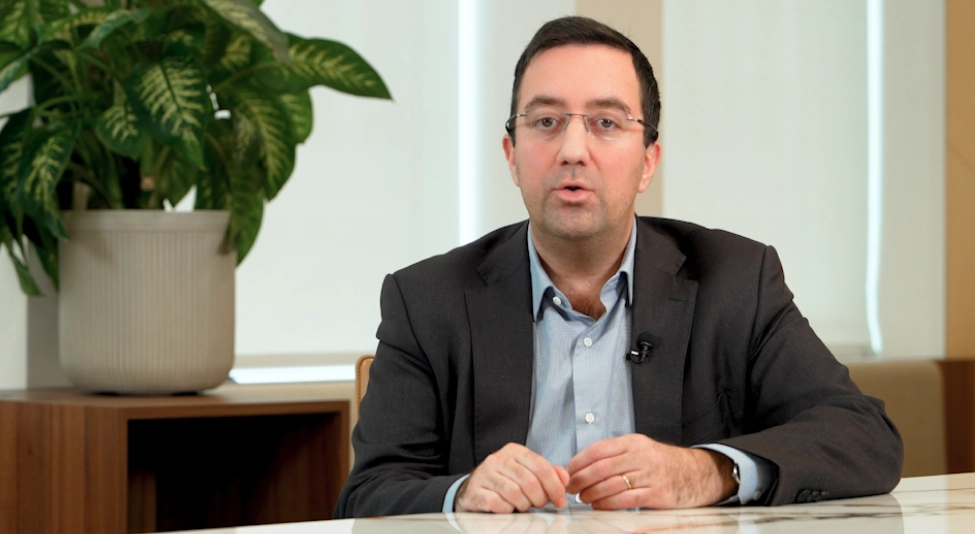
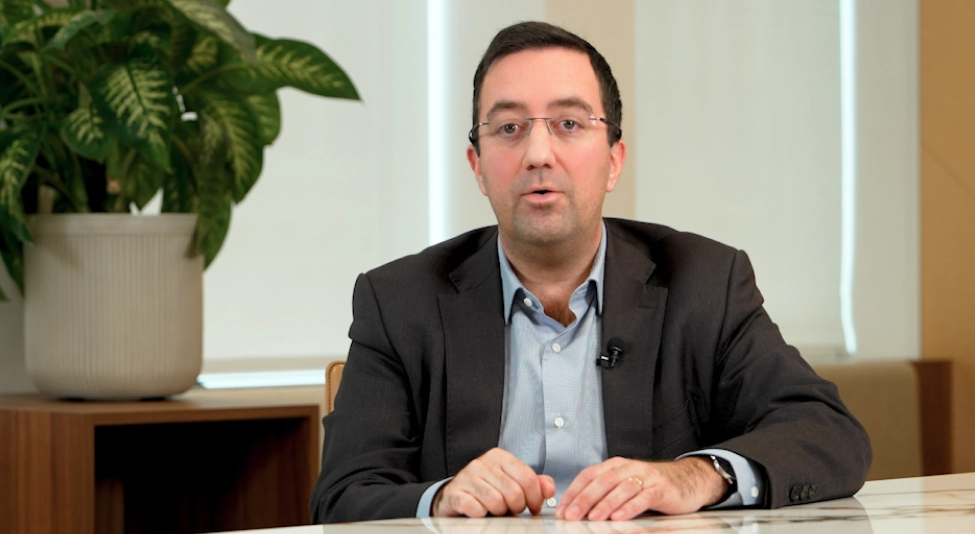
An exclusive interview conducted by Altaroc Deven Parekh, Managing DirectorInsight Partners, at the firm’s New York offices in October 2025.

Deven Parekh wanted to be a doctor. He ultimately chose finance, then private equity, then software—not by chance, but out of conviction. “If you choose to invest, you might as well do so in the fastest-growing sectors.” It was with this simple logic that he joined Insight Partners more than two decades Insight Partners , just before the firm raised its first institutional fund. Since then, he has seen Insight become one of the global leaders in software private equity over the past 30 years.
‍

A company built on a simple idea and sustained over three decades

Founded in 1995 by Jeff Horing and Jerry Murdock, Insight Partners from the outset by a clear investment thesis: to invest in software companies in the growth phase—those that have demonstrated product-market fit and need capital to accelerate. Thirty years and tens of billions of dollars in assets under management later, that thesis hasn’t fundamentally changed—and that’s what makes it remarkable.

What has evolved, however, is the breadth of the spectrum it covers. Insight now invests across the entire spectrum, from initial significant funding rounds to buyout , including growth equity. Deven Parekh cites this vertical continuity as a genuine competitive advantage: “Each strategy informs the other. When you’re evaluating a mature company for a buyout, knowing which startups could disrupt it in five years is critical information. And conversely, understanding the long-term growth trajectories of the market’s top players changes how you view an early-stage company.”
‍

A machine for sourcing, not for waiting

One of Insight’s defining strengths is its approach to sourcing. The firm employs 80 people whose sole role is to identify new investment opportunities—even before founders have begun to consider raising capital. “We don’t wait for companies to come to us. We go out and find them.”
‍

This proactivity is supported by an in-house tool, Insight Onsite: a sort of internal consulting firm, entirely dedicated to portfolio companies. For each key function—sales, marketing, product—a team of specialists works to identify best practices observed across the entire portfolio and disseminate them. The idea is not to run the companies, but to share with them what the firm has learned from hundreds of similar cases. A pooling of operational intelligence rarely seen on this scale.
‍

AI: A Calculated Threat, a Huge Opportunity

When it comes to artificial intelligence, Deven Parekh refuses to play the role of a prophet—in either direction. His perspective is pragmatic and rests on a fundamental distinction.
Horizontal software—that is, software not tied to specific business workflows and not reliant on proprietary data—is clearly vulnerable to disruption. “It’s becoming much easier to build these tools with AI, in a customized way, without much resistance to change. ”
‍‍

Conversely, vertical applications—those deeply embedded in the processes of a specific sector, whether it’s managing autism clinics or oil operations—enjoy natural protection. Proprietary data, the complexity of workflows, and migration costs: these are all barriers that AI won’t easily overcome.
But beware: being immune to disruption does not mean you can ignore AI. “These companies must invest in integrating artificial intelligence into their products, because the next generation of users—our children—is coming up with ChatGPT as their benchmark for user experience. That’s the standard they expect.” ”
‍

Insight’s AI investment strategy reflects this conviction: the firm focuses primarily on vertical players, where the addressable market size is often much larger than it appears. “In these markets, you’re not just replacing existing software. You’re also capturing a portion of the payroll and service costs that AI helps streamline. The total market is structurally larger.”

For large foundation models—such as OpenAI, Anthropic, and others—Insight maintains exposure, but through dedicated late-stage co-investment vehicles, separate from its main funds. This distinction reflects a deliberate caution: “We don’t yet know what their long-term business models will be.”
‍

AI is also part of Insight's processes

The firm doesn't just invest in AI—it applies it to its own organization. About a dozen engineers work full-time on internal AI tools designed to improve every stage of the investment process.
For sourcing, new analysts receive a list of companies recommended by an algorithm on their very first day—whereas their predecessors spent months building this type of pipeline. For due diligence, AI enables them to prepare for a meeting or analyze a 100-page board deck—including appendices—in record time, by comparing data with previous periods.

For decision-making, the idea of a “non-voting member of the investment committee” fed by Insight’s thousands of historical memos is being seriously explored, even though Deven Parekh remains realistic: “AI cannot meet with a management team or evaluate it.” We’re not there yet. But it can tell you that, based on your history, all companies in this sector with a retention rate below 91% have underperformed. And that’s valuable.”
‍

Two iconic offerings, two distinct investment philosophies

To illustrate the diversity of its approach, Deven Parekh cites two recent exits by Insight.
‍
Central Reach: Acquired nearly ten years ago with approximately $10 million in revenue, this company developed management software (a sector-specific ERP, so to speak) for clinics specializing in autism. Insight acquired 100% of the equity, completely rebuilt the management team, and supported organic growth driven by the rise in autism diagnoses in the United States. Eighteen months before the exit, an AI product was launched, opening up a new and visible growth trajectory for strategic acquirers. The result: a sale for nearly $2 billion—a venture-style return within a buyout structure.
‍
Wiz: a different story, one that’s even more meteoric. Insight co-led this cybersecurity company’s Series A round with an investment of approximately $5 million. Eighteen months later, Wiz reached $100 million in annual recurring revenue—the fastest growth trajectory ever seen in the software industry. In 2024, Google announced its acquisition of the company for $33 billion, subject to regulatory approval.
‍
These two examples illustrate what Insight stands for: strategies that are very different in nature, but both capable of generating very significant capital gains.
‍

A demanding market, a balanced approach

Deven Parekh has no illusions about the market environment. The coming decade will be challenging: intense competition, uncertain exit multiples— “likely lower than we thought three years ago” —and unresolved questions about the value of slow-growth assets in a post-zero-interest-rate world.
But in this context, Insight maintains a deliberately balanced approach in its funds: Venture buyouts for stability and cash flow, AI exposure for upside potential, and growth equity for diversification. “If part of the market undergoes a correction, the rest of the portfolio acts as a buffer. And if the AI boom continues for another three or four years, we have positions that can generate very significant gains.”
‍

Read the full interview

Other content in this topic

Explore our content collections, which bring together different formats around a single subject/issue/theme.
A retired couple on the beach
Understanding Private Equity Trends
Pensions: Private Equity Has Led U.S. Pension Fund Performance for the Past 14 Years
With a median annualized return of 13.2% over ten years, private equity has reaffirmed its top ranking in terms of performance among asset classes for U.S. public pension funds. A new study by the American Investment Council highlights the role of private markets in funding pensions and building long-term portfolios.
Article
|
26
2026-10-26
Illustration from the Banking Series No. 04 on the Silent Disintermediation of Private Banks by Private Equity
Understanding Private Equity Trends
Private Equity: The Silent Disintermediation of Private Banks
Private banks continue to believe they have private equity under control. In reality, they are gradually losing control of it. This is not a sudden break or a visible shock, but a slow, almost imperceptible shift (and yet one that is already well underway). This trend is all the more striking because it is driven, in large part, by their own clients
Article
|
23
2026-06-23
Architectural detail of a modern corporate building facade for analysis of the SaaS and AI sectors
Understanding Private Equity Trends
Artificial Intelligence and SaaS Software: Who Will Be the Winners and Losers?
Altaroc Sven van Berge (Managing Partner) and Bram Kaashoek (COO) of Main Capital at their offices in The Hague. Main Capital one of Europe’s most specialized investors in B2B software, with 57 companies in its portfolio. This discussion allowed us to refine our understanding of a sector undergoing significant transformation.
Article
|
11
2026-06-11
A rocky, snow-capped mountain peak illustrating the value creation and economic impact of private equity
Understanding Private Equity Trends
The Economic Impact of Private Equity: Value Creation and Transformation
Private equity has emerged as a key player in financing the real economy. Beyond its financial role, it plays a central role in the transformation of businesses, particularly small and medium-sized enterprises (SMEs).
Article
|
12
2026-05-12
Club Patrimoine Video Interview Roundtable on Kickbacks and Market Practices
Understanding Private Equity Trends
Club Patrimoine - Retrocessions: A Turning Point for Market Practices?
To analyze the implications of this decision, assess its impact on the profession, and present Altaroc proposals, Club Patrimoine brought together Frédéric Stolar, CEO and co-founderAltaroc; David Charlet, President of ANACOFI; and Guillaume Goffin, Partner at Gide Loyrette Nouel.
Article
|
16
2026-04-16
Private Equity: Cycles, AI, and Vintage
Understanding Private Equity Trends
Private Equity: Cycles, AI, and Vintage
Louis Flamand, Chief Investment OfficerAltaroc, explains how a private equity fund operates, discusses market cycles, and outlinesAltaroc positioningAltaroc the enterprise software sector in light of artificial intelligence.
Video
|
27
2026-07-27
Private Equity Outlook for 2026
Understanding Private Equity Trends
Private Equity Outlook for 2026
Private equity is set to enter a recovery phase after 2023. The software sector stands out for its resilience and its potential in the field of AI.
Video
|
05
2026-05-05
Private Equity Outlook 2026
Understanding Private Equity Trends
Private Equity Outlook 2026
In 2026, the private equity sector will enter a recovery phase, offering attractive investment conditions following the low point of 2023. Software, particularly systems of record, stands out for its resilience and potential to create value.
Video
|
04
2026-05-04
Inside Private Equity - Broadcast on December 17, 2025
Understanding Private Equity Trends
Inside Private Equity - Broadcast on December 17, 2025
Inside Private Equity with François Georges, Dominica Adam, and Maurice Tchenio, among others
Video
|
17
2025-12-17
Inside Private Equity - November 26, 2025 issue
Understanding Private Equity Trends
Inside Private Equity - November 26, 2025 issue
Inside Private Equity with Olivier Farouz, Briac Houtteville, and Frédéric Stolar, among others
Video
|
29
2025-10-29
Banking Series - Private Equity: Toward a New Wealth Management Framework
Understanding Private Equity Trends
Banking Series - Private Equity: Toward a New Wealth Management Framework
Private equity is playing an increasingly important role in the wealth management strategies of entrepreneurs and high-net-worth individuals. Pierre Ferron analyzes its role in asset allocation, wealth transfer, and long-term management.
File
|
13
2026-10-13
Market Review - PE Environment, Q2 2026
Understanding Private Equity Trends
Market Review - PE Environment, Q2 2026
The private equity sector is experiencing neither a broad-based recovery nor an overall decline. It is undergoing a restructuring. In the first half of 2026, the slowdown was concentrated in the United States, in the software sector, and in large-cap transactions.
File
|
11
2026-09-11
Special Feature - Summer 2026
Understanding Private Equity Trends
Special Feature - Summer 2026
Beyond the hype, discover how artificial intelligence is truly transforming software, the strategies of major private equity firms, and the drivers of value creation for the future.
File
|
21
2026-07-21
Market Review - PE Sector Q1 2026
Understanding Private Equity Trends
Market Review - PE Sector Q1 2026
This quarter has been marked by a resurgence of volatility in the public markets, against a backdrop of geopolitical tensions, pressure on technology stocks, and persistently high interest rates.
File
|
02
2026-06-02
Market Review - PE Environment Q2 2025
Understanding Private Equity Trends
Market Review - PE Environment Q2 2025
Our CIO, Louis Flamand, shares his analysis of the private equity landscape for the second quarter of 2025.
File
|
03
2025-09-03
Asset Management Holding Company: Definition, How It Works, and Benefits
Understanding Private Equity Trends
Asset Management Holding Company: Definition, How It Works, and Benefits
An asset management holding company allows you to structure and manage your assets, consolidate equity interests, reinvest capital, and prepare for the transfer of those assets.
Article
|
27
2026-10-27
Planning for Retirement: 5 Mistakes That Can Jeopardize Your Wealth
Understanding Private Equity Trends
Planning for Retirement: 5 Mistakes That Can Jeopardize Your Wealth
Preparing for retirement isn't just about accumulating capital. It's about developing a wealth management strategy that can generate income over several decades, while preserving purchasing power in the face of inflation and economic changes.
Article
|
08
2026-09-08
How Should a Business Executive Plan for Retirement?
Understanding Private Equity Trends
How Should a Business Executive Plan for Retirement?
According to the Pensions Advisory Council (COR), the standard of living of retirees depends more and more on the assets accumulated during their working life, in addition to mandatory pensions.
Article
|
30
2026-07-30
How do you set your investment goals?
Understanding Private Equity Trends
How do you set your investment goals?
Setting investment goals involves establishing a clear framework for your wealth management strategy: determining the amount of capital to invest, the investment horizon, return objectives, the acceptable level of risk, and your ability to tie up your savings for the long term.
Article
|
09
2026-07-09
Welcome to Altaroc
In accordance with applicable regulations, we ask that you complete your profile. This step is required to access the content and services offered on our websites.
Please fill out your profile to access the site
country of tax residence
Select
choosenCountry
Preferred language
Select
choosenLang
YOUR INVESTOR PROFILE
Financial intermediary or professional investor
Financial advisors, wealth managers, private bankers, or any other investment service providers.
Qualified Investor or Altaroc Investor
Experienced investor or Altaroc investor
Private investors who have already invested with Altaroc or who have a minimum investment capacity of €100,000.
Private investors who have previously invested in Altaroc who have a minimum investment capacity of 200,000 euros.
Non-professional (retail) investor
Individual investors with an investment capacity below €100,000.
Retail investors with an investment capacity of less than 200,000 euros.
Institutional investor
Pension funds, retirement schemes, asset management companies, and single-family offices.
Select your language and investor profile to continue
Select your investor profile to continue
Scroll down to accept General Terms and Conditions
The webpage you are trying to access is not available in your country.