Home
Resources
Understanding Private Equity Trends
...
Special Report
Special report - Pension financing in the United States
May 2025

Private equity: a new horizon for French pensions?

Published on
19/5/2025
Amended on
4/11/2026
0
minute(s)
Special feature: Pension funding USA
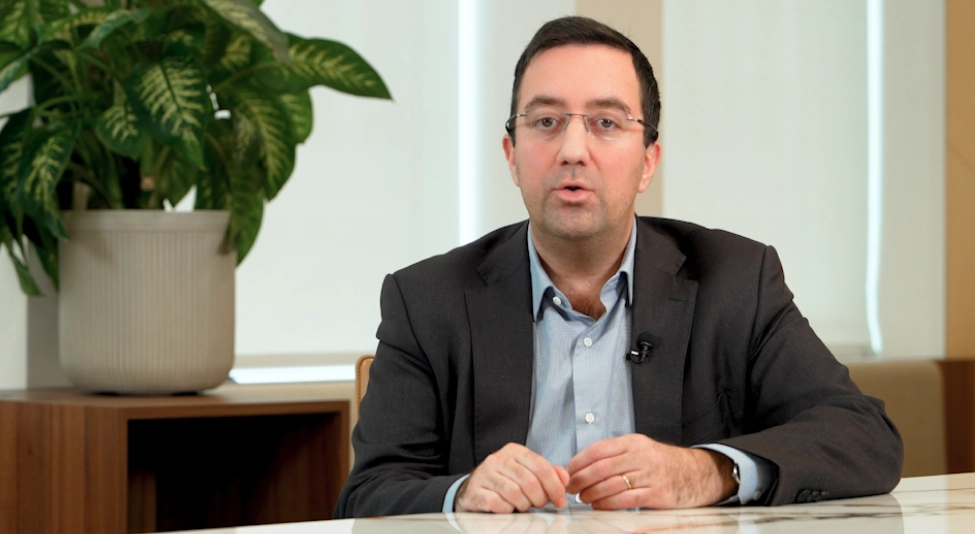
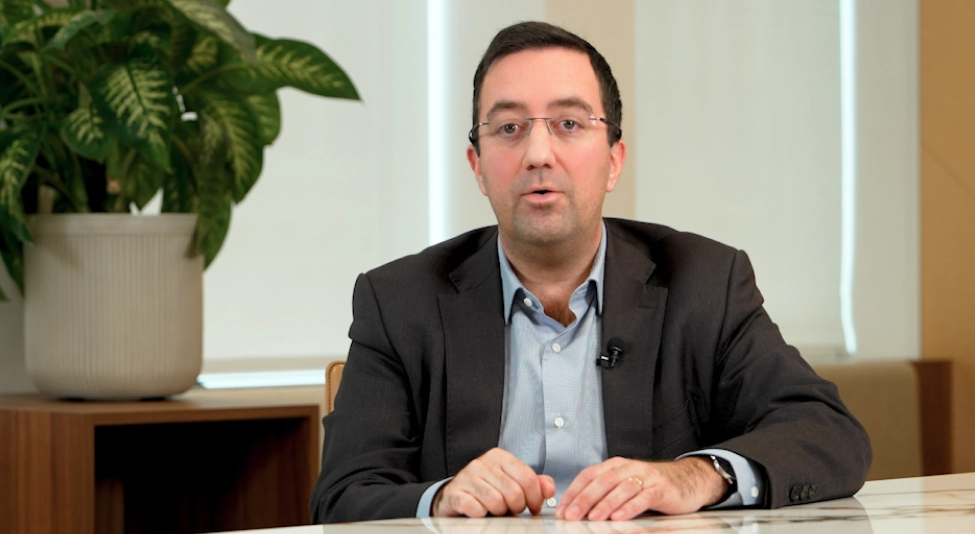
With the French pension system running out of steam, should we draw inspiration from the American model and bet on private equity? French economist Antoine Levy shares his vision in an exclusive interview with Altaroc.
By
Damien Hélène
Damien Hélène
Private equity: a new horizon for French pensions?
This article has been automatically translated. Please excuse any inaccuracies or translation errors.
Dieser Artikel wurde automatisch übersetzt. Bitte entschuldigen Sie etwaige Ungenauigkeiten oder Übersetzungsfehler.
This article has been automatically translated. We apologize per inaccuracies or translation errors.

The French pension system is based on intergenerational solidarity. This redistributive model boasts an average replacement rate of 75% for civil servants and 50% for private-sector employees41. In other words, French retirees receive between half and three-quarters of their working income. This partial coverage is prompting more and more people to turn to complementary savings solutions. This calls into question the future of the French model, and invites us to take a closer look at American practices.

Following the example of the United States, should we open the door more widely to capitalization, in particular via private equity? For Antoine Levy, a French economist and assistant professor at UC Berkeley, the answer is yes: "The American system is half Social Security and half funded. The balance is better because it responds to two risks: returns on capital and growth in labor income".

Rely on a hybrid model

It's hardly surprising that the American approach, marked by the growing integration of private equity into pension fund portfolios, is attracting interest in Europe. However, while some see this model as a potential lever for boosting pension returns, others have reservations about transposing it to France. Savers' cultural caution, regulatory complexity and the very structure of the French system are holding back its adoption.

Yet this versatility between pay-as-you-go and capitalization reduces dependence on political decisions that no one can predict. " Capitalization allows better geographic and sectoral diversification, and an improvement in the financial culture of participants, while reducing dependence on political hazards and the capture of the system by a particular generation," stresses the economist.

The decisive role of public authorities

To implement such a strategy, however, a review of decision-making processes and a more flexible regulatory framework are required. If the American model is to be adapted to France, French legislators must introduce more sophisticated risk management mechanisms, while preserving the interests of retirees.42

"Public policy must play a more general role in encouraging long-term investment (equities, private equity, etc.), particularly for young working people who, far from retirement age, can afford greater exposure to risk," says Antoine Levy.

Recent developments, such as the extension of the European Long-Term Investment Funds (ELTIF) framework, reflect a desire to make access to alternative investments more flexible, without sacrificing investor security. Certain restrictions have been relaxed to encourage the adoption of private equity, while maintaining a protective framework.

"Public policy must play a role in regulating the players involved, to ensure transparency of fees and returns and avoid fiascos such as investments in FIP-FCPI 43, which are overly motivated by an obsession with tax exemption.  

Inspiration without copying

Although the American model has proven its effectiveness, it cannot be transposed as is. The fundamental differences between the American and French systems, marked by regulatory and cultural constraints, complicate the exportability of this system. The American model should therefore be taken as a source of inspiration for rethinking pension financing in France.

Provided it is properly regulated and adapted to the specific characteristics of the French market, private equity could offer a viable solution to the challenges of retirement. This is all the more true in a context where returns on traditional assets are increasingly low. With the right legislative and regulatory framework, private equity could play a growing role in France's pension funding strategies. Market players, whether asset managers, economists or regulators, will need to continue exploring these avenues with caution and pragmatism.

More information

Private Equity in Europe: behind the gap, an opportunity

Less developed than on the other side of the Atlantic, the European private equity market offers real potential for individual investors. For Antoine Levy, this asset class "is a tool that, over the long term, has its place in an individual investment portfolio, particularly in countries where listed equity markets represent a smaller share of the entrepreneurial and corporate universe".

While private equity investments are more developed in the USA, accounting for 24.5% of funds raised compared with an average of 7.9% in Europe 44, competition between firms is fiercer. Darren Foreman, former Director of Private Equity for PSERS, sees this as an opportunity for European fund managers. "We have more private equity funds in the US than you have in Europe, so the groups you can invest with have a lot of opportunities."

Nevertheless, Antoine Levy points out that the scale of investments in the United States offers funds greater room for manoeuvre. "Private equity and venture capital funds in the US have the means to assemble larger equity portfolios and interfere in their management in a more structured way."

‍

41 https://manouvellevie.groupama.fr/s-informer-retraite/essentiel-montant-pension-retraite/taux-remplacement-retraite

42 https://www.amf-france.org/sites/institutionnel/files/private/2023-09/230911-private-equity-etat-des-lieux-et-vulnerabilites-l.-grillet-aubert-fr_0.pdf

43 Fonds d'Investissement de Proximité (FIP) and Fonds Communs de Placement dans l'Innovation (FCPI) are French collective investment vehicles created to encourage the financing of unlisted SMEs.

44 https://www.amf-france.org/sites/institutionnel/files/private/2023-09/230911-private-equity-etat-des-lieux-et-vulnerabilites-l.-grillet-aubert-fr_0.pdf

Other content in this topic

Explore our content collections, which bring together different formats around a single subject/issue/theme.
A retired couple on the beach
Understanding Private Equity Trends
Pensions: Private Equity Has Led U.S. Pension Fund Performance for the Past 14 Years
With a median annualized return of 13.2% over ten years, private equity has reaffirmed its top ranking in terms of performance among asset classes for U.S. public pension funds. A new study by the American Investment Council highlights the role of private markets in funding pensions and building long-term portfolios.
Article
|
26
2026-10-26
Illustration from the Banking Series No. 04 on the Silent Disintermediation of Private Banks by Private Equity
Understanding Private Equity Trends
Private Equity: The Silent Disintermediation of Private Banks
Private banks continue to believe they have private equity under control. In reality, they are gradually losing control of it. This is not a sudden break or a visible shock, but a slow, almost imperceptible shift (and yet one that is already well underway). This trend is all the more striking because it is driven, in large part, by their own clients
Article
|
23
2026-06-23
Architectural detail of a modern corporate building facade for analysis of the SaaS and AI sectors
Understanding Private Equity Trends
Artificial Intelligence and SaaS Software: Who Will Be the Winners and Losers?
Altaroc Sven van Berge (Managing Partner) and Bram Kaashoek (COO) of Main Capital at their offices in The Hague. Main Capital one of Europe’s most specialized investors in B2B software, with 57 companies in its portfolio. This discussion allowed us to refine our understanding of a sector undergoing significant transformation.
Article
|
11
2026-06-11
Panoramic view of New York's skyscrapers and the Empire State Building for Insight Partners
Understanding Private Equity Trends
Insight Partners 30 Years of Commitment to Software, with a Focus on AI
Deven Parekh wanted to be a doctor. He eventually chose finance, then private equity, then software—not by chance, but out of conviction. “If you’re going to invest, you might as well do it in the fastest-growing sectors.”
Article
|
21
2026-05-21
A rocky, snow-capped mountain peak illustrating the value creation and economic impact of private equity
Understanding Private Equity Trends
The Economic Impact of Private Equity: Value Creation and Transformation
Private equity has emerged as a key player in financing the real economy. Beyond its financial role, it plays a central role in the transformation of businesses, particularly small and medium-sized enterprises (SMEs).
Article
|
12
2026-05-12
Private Equity: Cycles, AI, and Vintage
Understanding Private Equity Trends
Private Equity: Cycles, AI, and Vintage
Louis Flamand, Chief Investment OfficerAltaroc, explains how a private equity fund operates, discusses market cycles, and outlinesAltaroc positioningAltaroc the enterprise software sector in light of artificial intelligence.
Video
|
27
2026-07-27
Private Equity Outlook for 2026
Understanding Private Equity Trends
Private Equity Outlook for 2026
Private equity is set to enter a recovery phase after 2023. The software sector stands out for its resilience and its potential in the field of AI.
Video
|
05
2026-05-05
Private Equity Outlook 2026
Understanding Private Equity Trends
Private Equity Outlook 2026
In 2026, the private equity sector will enter a recovery phase, offering attractive investment conditions following the low point of 2023. Software, particularly systems of record, stands out for its resilience and potential to create value.
Video
|
04
2026-05-04
Inside Private Equity - Broadcast on December 17, 2025
Understanding Private Equity Trends
Inside Private Equity - Broadcast on December 17, 2025
Inside Private Equity with François Georges, Dominica Adam, and Maurice Tchenio, among others
Video
|
17
2025-12-17
Inside Private Equity - November 26, 2025 issue
Understanding Private Equity Trends
Inside Private Equity - November 26, 2025 issue
Inside Private Equity with Olivier Farouz, Briac Houtteville, and Frédéric Stolar, among others
Video
|
29
2025-10-29
Banking Series - Private Equity: Toward a New Wealth Management Framework
Understanding Private Equity Trends
Banking Series - Private Equity: Toward a New Wealth Management Framework
Private equity is playing an increasingly important role in the wealth management strategies of entrepreneurs and high-net-worth individuals. Pierre Ferron analyzes its role in asset allocation, wealth transfer, and long-term management.
File
|
13
2026-10-13
Market Review - PE Environment, Q2 2026
Understanding Private Equity Trends
Market Review - PE Environment, Q2 2026
The private equity sector is experiencing neither a broad-based recovery nor an overall decline. It is undergoing a restructuring. In the first half of 2026, the slowdown was concentrated in the United States, in the software sector, and in large-cap transactions.
File
|
11
2026-09-11
Special Feature - Summer 2026
Understanding Private Equity Trends
Special Feature - Summer 2026
Beyond the hype, discover how artificial intelligence is truly transforming software, the strategies of major private equity firms, and the drivers of value creation for the future.
File
|
21
2026-07-21
Market Review - PE Sector Q1 2026
Understanding Private Equity Trends
Market Review - PE Sector Q1 2026
This quarter has been marked by a resurgence of volatility in the public markets, against a backdrop of geopolitical tensions, pressure on technology stocks, and persistently high interest rates.
File
|
02
2026-06-02
Market Review - PE Environment Q2 2025
Understanding Private Equity Trends
Market Review - PE Environment Q2 2025
Our CIO, Louis Flamand, shares his analysis of the private equity landscape for the second quarter of 2025.
File
|
03
2025-09-03
Asset Management Holding Company: Definition, How It Works, and Benefits
Understanding Private Equity Trends
Asset Management Holding Company: Definition, How It Works, and Benefits
An asset management holding company allows you to structure and manage your assets, consolidate equity interests, reinvest capital, and prepare for the transfer of those assets.
Article
|
27
2026-10-27
Planning for Retirement: 5 Mistakes That Can Jeopardize Your Wealth
Understanding Private Equity Trends
Planning for Retirement: 5 Mistakes That Can Jeopardize Your Wealth
Preparing for retirement isn't just about accumulating capital. It's about developing a wealth management strategy that can generate income over several decades, while preserving purchasing power in the face of inflation and economic changes.
Article
|
08
2026-09-08
How Should a Business Executive Plan for Retirement?
Understanding Private Equity Trends
How Should a Business Executive Plan for Retirement?
According to the Pensions Advisory Council (COR), the standard of living of retirees depends more and more on the assets accumulated during their working life, in addition to mandatory pensions.
Article
|
30
2026-07-30
How do you set your investment goals?
Understanding Private Equity Trends
How do you set your investment goals?
Setting investment goals involves establishing a clear framework for your wealth management strategy: determining the amount of capital to invest, the investment horizon, return objectives, the acceptable level of risk, and your ability to tie up your savings for the long term.
Article
|
09
2026-07-09
Welcome to Altaroc
In accordance with applicable regulations, we ask that you complete your profile. This step is required to access the content and services offered on our websites.
Please fill out your profile to access the site
country of tax residence
Select
choosenCountry
Preferred language
Select
choosenLang
YOUR INVESTOR PROFILE
Financial intermediary or professional investor
Financial advisors, wealth managers, private bankers, or any other investment service providers.
Qualified Investor or Altaroc Investor
Experienced investor or Altaroc investor
Private investors who have already invested with Altaroc or who have a minimum investment capacity of €100,000.
Private investors who have previously invested in Altaroc who have a minimum investment capacity of 200,000 euros.
Non-professional (retail) investor
Individual investors with an investment capacity below €100,000.
Retail investors with an investment capacity of less than 200,000 euros.
Institutional investor
Pension funds, retirement schemes, asset management companies, and single-family offices.
Select your language and investor profile to continue
Select your investor profile to continue
Scroll down to accept General Terms and Conditions
The webpage you are trying to access is not available in your country.