Home
Resources
Understanding Private Equity Trends
...
Special Report
Special report - Pension financing in the United States
May 2025

Private equity is reshaping pensions in the United States

Published on
15/5/2025
Amended on
4/11/2026
0
minute(s)
Special feature on US pensions
In order to secure the pensions of retirees, American pension funds have to juggle returns and risk. Private equity offers a solution to this delicate balance.
By
Damien Hélène
Damien Hélène
Private equity is reshaping pensions in the United States
This article has been automatically translated. Please excuse any inaccuracies or translation errors.
Dieser Artikel wurde automatisch übersetzt. Bitte entschuldigen Sie etwaige Ungenauigkeiten oder Übersetzungsfehler.
This article has been automatically translated. We apologize per inaccuracies or translation errors.

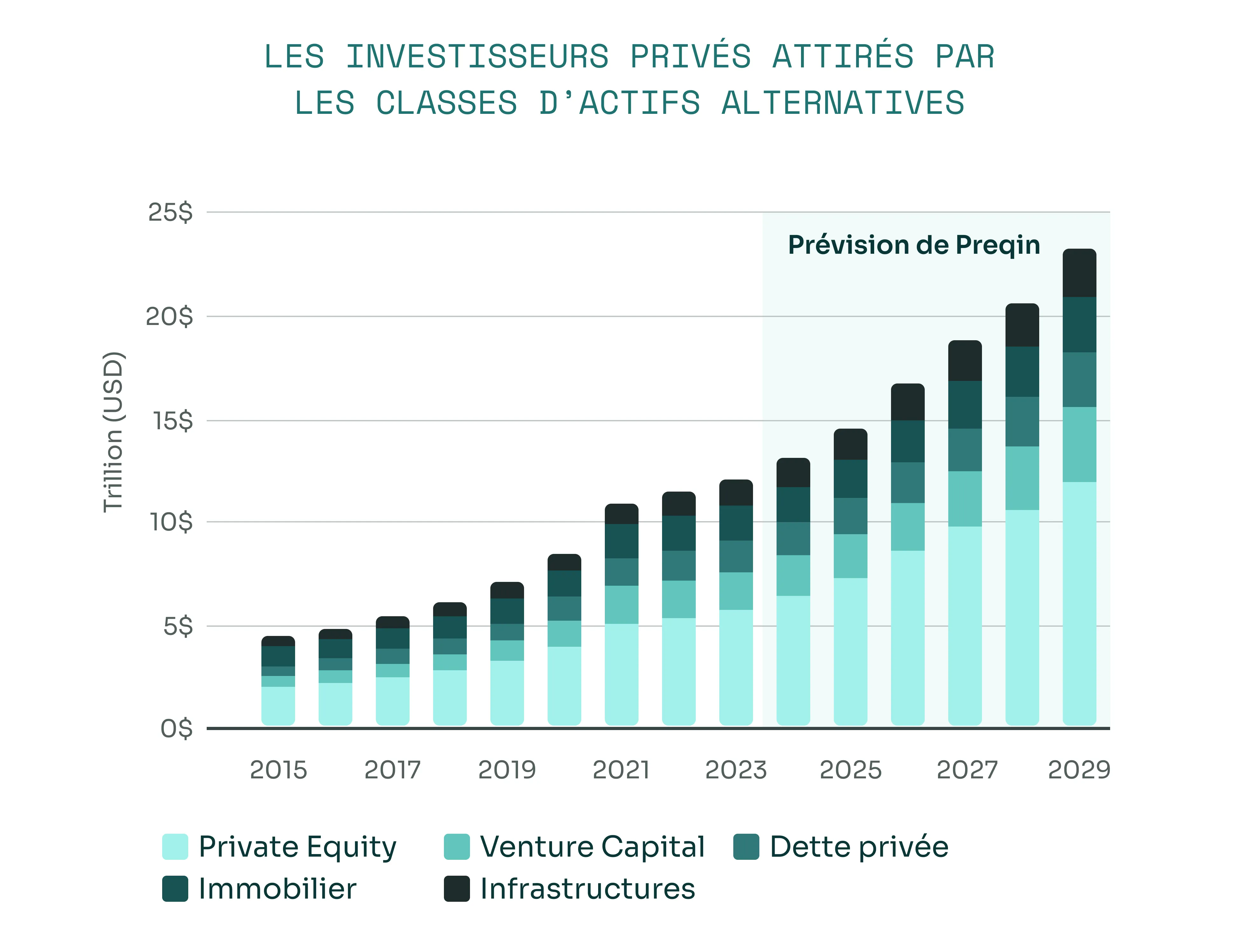
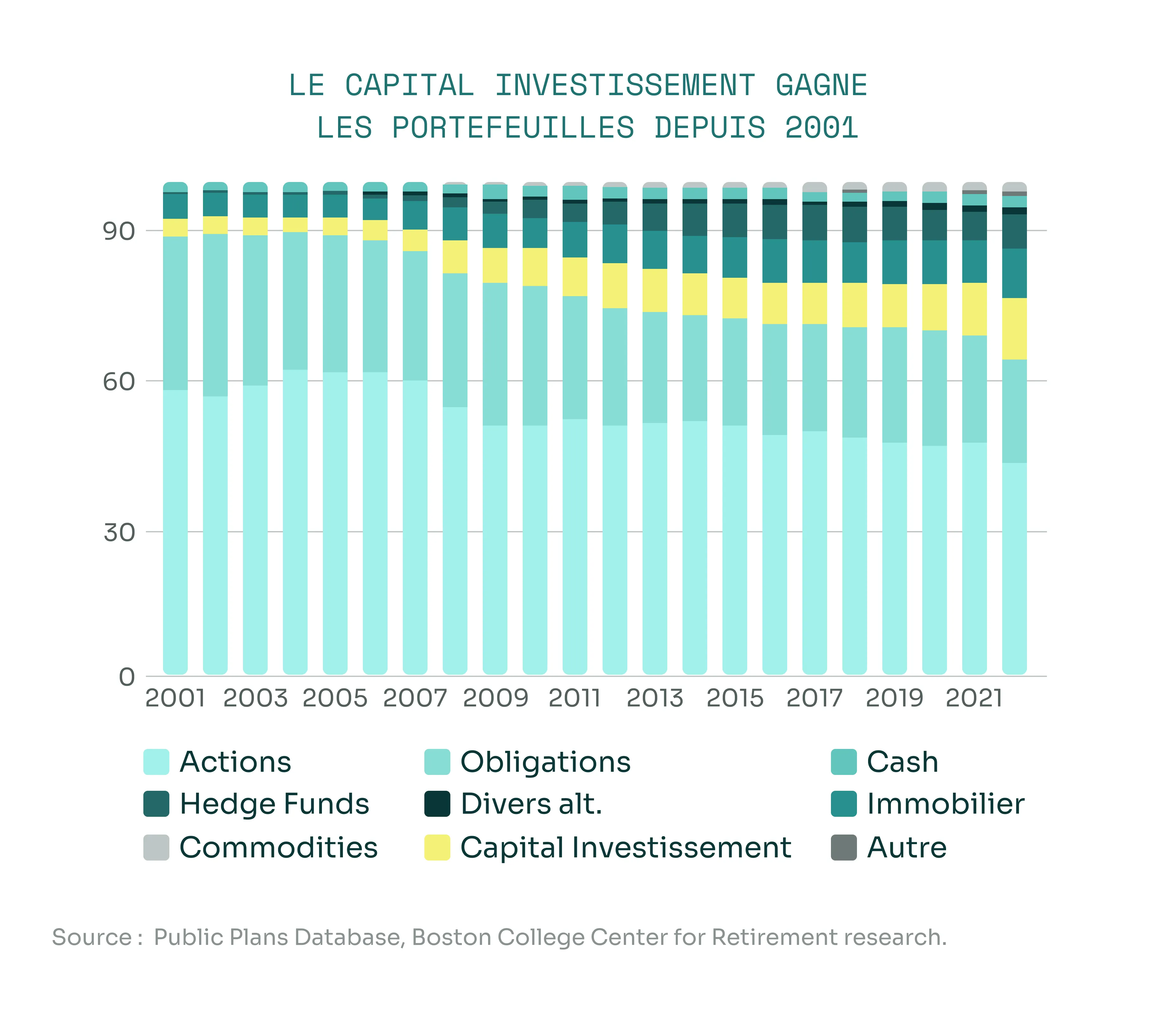
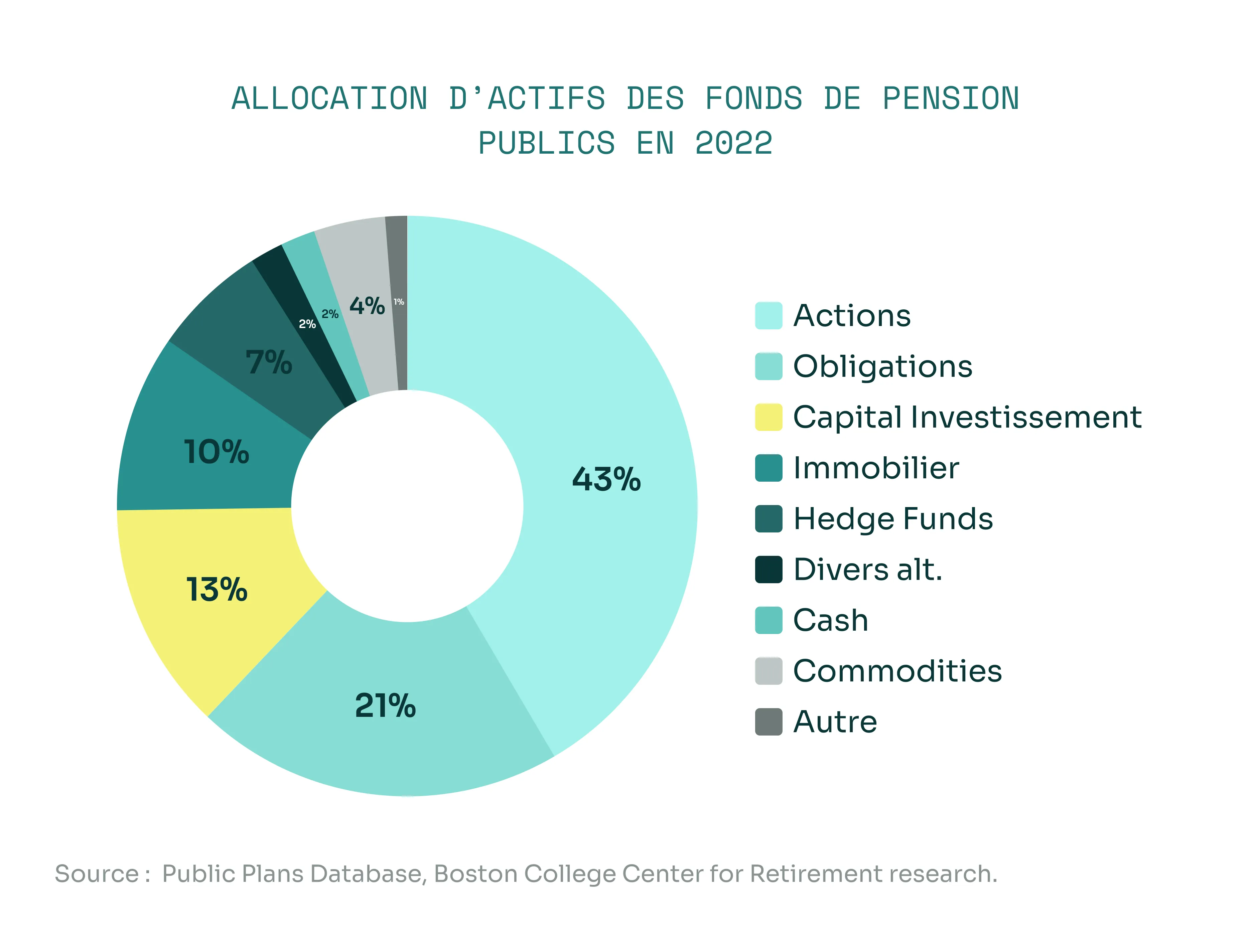
The equation between managing active workers' contributions to fund retirees' pensions is proving increasingly difficult to resolve. On the one hand, historically low interest rates over the past decade have reduced returns on bonds, which traditionally make up a large proportion of portfolios. On the other, stock market volatility is increasing the risks on listed assets.

Against this backdrop of growing tensions between returns and stability, private equity, which targets unlisted companies, presents itself as a solution. For pension funds, private equity represents a response to the structural challenges they face, while at the same time enabling portfolio diversification. This strategy is based on a strong conviction: the long-term performance of these investments more than compensates for their challenges, notably their low liquidity.
5
‍

6

Long-term vision makes private equity attractive

Private equity stands out from other asset classes for its ability to generate annualized returns often in excess of 10% net, well above those of traditional assets. These attractive returns are mainly due to three factors: direct value creation, decorrelation from listed markets and a long-term vision.

In addition to investing in companies, private equity managers are directly involved in their strategies, and sometimes even in their day-to-day management. They restructure them to improve management and stimulate growth in order to create value. This involves optimizing costs and developing new markets7.

This direct value creation, uncorrelated with listed markets, limits exposure to the day-to-day fluctuations of the stock markets and thus ensures a degree of stability. In this way, private equity offers a long-term vision, established over several years, in contrast to the way public markets operate.

Private equity, a growth driver for US funds

Last year, CalPERS, one of America's leading public pension funds, announced a 4% increase in its private equity investments. The firm, which began investing in private equity in the 1990s, was devoting 16.1%8 of its portfolio to it by the end of 2024, with the aim of eventually reaching 17%9.

David Miller, member of the Board of Directors and Director of the CalPERS Investment Committee, explains 10: "Market conditions are changing. The investment team needs the flexibility to invest capital intelligently to keep the fund on track for sustainable returns. Sustained growth in private equity returns is behind this measured and appropriate increase".

This strategy is based on a simple observation: private equity's historical returns outperform those of other asset classes. Between 2012 and 2022, CalPERS' private equity portfolio generated an average net return of 13.9% 11.

TIAA launches its own private equity fund

TIAA, which manages the pensions of over three million teachers and researchers, is also focusing on private equity. Last June, it launched TIAA Ventures, an investment program dedicated to Private Equity 12.

"TIAA Ventures enables us to invest in innovative concepts and products that can ultimately create safer and more secure prospects for all retirees, whether they are close to retirement or have already retired," says Wayne Baker, Investment Director of TIAA Ventures.

TIAA sets itself apart with an approach that focuses solely on strategic sectors, such as information technology and healthcare. These targeted yet diversified investments enable us to support companies with solid growth potential, thereby minimizing risk.

A notable example is TIAA's investment in Blackstone Energy Partners, a private equity fund that finances companies developing clean technologies and energy infrastructure. An investment that not only generates competitive returns, but also contributes to broader societal goals.

The challenges of Private Equity...

The integration of private equity into pension fund portfolios is not without debate. The capital invested is generally locked in for a period of 7 to 10 years, which can pose a problem in the event of an urgent need for liquidity.

There is also an operational risk, in the case of a turnaround strategy. This is due to the success of investments, which depends on the fund's ability to select the most promising companies and execute effective transformation strategies.

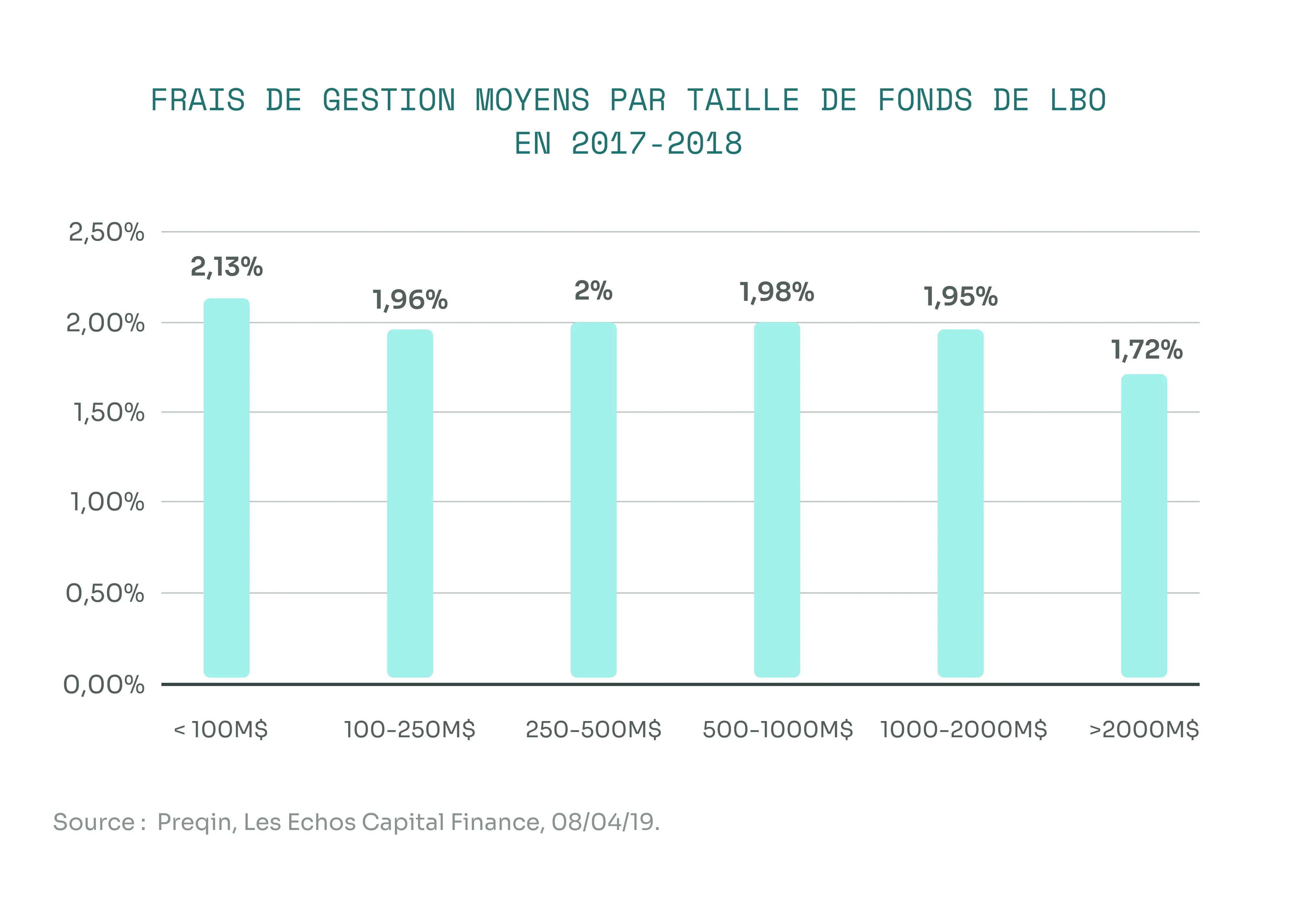
The management costs associated with private equity funds are also often cited as being higher than those of traditional assets. This is because, by going beyond the simple acquisition and disposal of assets, private equity requires more management.
13

In 2020, CalPERS came under fire for underestimating its private equity management fees, which can be as high as 2% of assets under management and 20% of earnings14. In response, the fund has adopted a more selective approach, investing directly in companies rather than through third-party managers. This disintermediation strategy reduces costs and therefore increases net returns.

...do not hinder its expansion

Despite these challenges, large pension funds continue to increase their private equity allocations. According to an Amundi report published in December 2024, 86% 15 of them expect to be invested in private equity over the next 3 years, and 55% 16 of them plan to increase their exposure to this asset class.

The growing role of private equity reflects growing confidence in its ability to meet the financial and demographic challenges of the US pension system. Funds are looking to private equity to balance and diversify their portfolios, while maximizing returns and meeting their obligations to retirees. Private equity is gradually positioning itself as a strategic partner for pension funds.

Business ID card

CalPERS: "the largest public pension fund [in the United States]".

Founded in 1932, the California Public Employees' Retirement System (CalPERS) describes itself on its website as "the nation's largest public pension fund". This U.S. agency, part of California's public administration, manages over $502 billion in assets 17 and looks after the retirement funds of more than 2 million Californians 18. CalPERS has been investing in private equity since the 1990s, and today devotes around 17% of its total portfolio to the sector.

Business ID card

TIAA: 96th in the Fortune 500

Founded in 1918, the Teachers Insurance and Annuity Association (TIAA) is an American insurance and investment company. It insures over 5 million active and retired employees and 15,000 institutions 19, mainly educational and medical 20. Its funds manage over $1,400 billion in assets 21 and invest in more than fifty countries. In 2024, it ranked 96th on the Fortune 500.

‍

5. https://www.revue-banque.fr/metiers/gestion-d-actifs/les-fonds-de-pension-americains-geants-aux-pieds-d-argile-PA15266238

6. https://www.blackrock.com/corporate/literature/whitepaper/bii-global-outlook-2025.pdf

7. See article "Making pensions sustainable by transforming high-potential companies

8. https://www.privateequityinternational.com/recapturing-the-lost-decade/?utm

9. https://www.calpers.ca.gov/newsroom/calpers-news/2024/calpers-will-increase-private-markets-investments

10. https://www.calpers.ca.gov/page/newsroom/calpers-news/2024/calpers-will-increase-private-markets-investments

11. https://www.calpers.ca.gov/sites/default/files/spf/docs/board-agendas/202202/invest/item07a-01_a.pdf

12. https://www.tiaa.org/public/about-tiaa/news-press/news/2024/06-01

13. https://www.amf-france.org/sites/institutionnel/files/private/2023-09/230911-private-equity-etat-des-lieux-et-vulnerabilites-l.-grillet-aubert-fr_0.pdf

14. https://www.calpers.ca.gov/documents/201508-invest-item09a-01/download (page 5)

15. https://fr.media.amundi.com/actualites/les-fonds-de-pension-prets-a-augmenter-leur-allocation-en-faveur-des-actifs-prives-et-des-marches-emergents-asiatiques-81d6a-22f29.html

16. https://alternativecreditinvestor.com/2024/12/19/pension-funds-to-increase-private-market-allocations/

17. https://www.calpers.ca.gov/newsroom/calpers-news/2024/calpers-preliminary-investment-return-fiscal-year-2023-24

18. https://www.calpers.ca.gov/members

19. https://www.tiaa.org/public/pdf/lifetime_income_brochure.pdf

20. https://en.wikipedia.org/wiki/TIAA

21. https://www.tiaa.org/public/about-tiaa/news-press/press-releases/2024/12-11

22. https://fortune.com/ranking/fortune500/?Name=TIAA

Other content in this topic

Explore our content collections, which bring together different formats around a single subject/issue/theme.
A retired couple on the beach
Understanding Private Equity Trends
Pensions: Private Equity Has Led U.S. Pension Fund Performance for the Past 14 Years
With a median annualized return of 13.2% over ten years, private equity has reaffirmed its top ranking in terms of performance among asset classes for U.S. public pension funds. A new study by the American Investment Council highlights the role of private markets in funding pensions and building long-term portfolios.
Article
|
26
2026-10-26
Illustration from the Banking Series No. 04 on the Silent Disintermediation of Private Banks by Private Equity
Understanding Private Equity Trends
Private Equity: The Silent Disintermediation of Private Banks
Private banks continue to believe they have private equity under control. In reality, they are gradually losing control of it. This is not a sudden break or a visible shock, but a slow, almost imperceptible shift (and yet one that is already well underway). This trend is all the more striking because it is driven, in large part, by their own clients
Article
|
23
2026-06-23
Architectural detail of a modern corporate building facade for analysis of the SaaS and AI sectors
Understanding Private Equity Trends
Artificial Intelligence and SaaS Software: Who Will Be the Winners and Losers?
Altaroc Sven van Berge (Managing Partner) and Bram Kaashoek (COO) of Main Capital at their offices in The Hague. Main Capital one of Europe’s most specialized investors in B2B software, with 57 companies in its portfolio. This discussion allowed us to refine our understanding of a sector undergoing significant transformation.
Article
|
11
2026-06-11
Panoramic view of New York's skyscrapers and the Empire State Building for Insight Partners
Understanding Private Equity Trends
Insight Partners 30 Years of Commitment to Software, with a Focus on AI
Deven Parekh wanted to be a doctor. He eventually chose finance, then private equity, then software—not by chance, but out of conviction. “If you’re going to invest, you might as well do it in the fastest-growing sectors.”
Article
|
21
2026-05-21
A rocky, snow-capped mountain peak illustrating the value creation and economic impact of private equity
Understanding Private Equity Trends
The Economic Impact of Private Equity: Value Creation and Transformation
Private equity has emerged as a key player in financing the real economy. Beyond its financial role, it plays a central role in the transformation of businesses, particularly small and medium-sized enterprises (SMEs).
Article
|
12
2026-05-12
Private Equity: Cycles, AI, and Vintage
Understanding Private Equity Trends
Private Equity: Cycles, AI, and Vintage
Louis Flamand, Chief Investment OfficerAltaroc, explains how a private equity fund operates, discusses market cycles, and outlinesAltaroc positioningAltaroc the enterprise software sector in light of artificial intelligence.
Video
|
27
2026-07-27
Private Equity Outlook for 2026
Understanding Private Equity Trends
Private Equity Outlook for 2026
Private equity is set to enter a recovery phase after 2023. The software sector stands out for its resilience and its potential in the field of AI.
Video
|
05
2026-05-05
Private Equity Outlook 2026
Understanding Private Equity Trends
Private Equity Outlook 2026
In 2026, the private equity sector will enter a recovery phase, offering attractive investment conditions following the low point of 2023. Software, particularly systems of record, stands out for its resilience and potential to create value.
Video
|
04
2026-05-04
Inside Private Equity - Broadcast on December 17, 2025
Understanding Private Equity Trends
Inside Private Equity - Broadcast on December 17, 2025
Inside Private Equity with François Georges, Dominica Adam, and Maurice Tchenio, among others
Video
|
17
2025-12-17
Inside Private Equity - November 26, 2025 issue
Understanding Private Equity Trends
Inside Private Equity - November 26, 2025 issue
Inside Private Equity with Olivier Farouz, Briac Houtteville, and Frédéric Stolar, among others
Video
|
29
2025-10-29
Banking Series - Private Equity: Toward a New Wealth Management Framework
Understanding Private Equity Trends
Banking Series - Private Equity: Toward a New Wealth Management Framework
Private equity is playing an increasingly important role in the wealth management strategies of entrepreneurs and high-net-worth individuals. Pierre Ferron analyzes its role in asset allocation, wealth transfer, and long-term management.
File
|
13
2026-10-13
Market Review - PE Environment, Q2 2026
Understanding Private Equity Trends
Market Review - PE Environment, Q2 2026
The private equity sector is experiencing neither a broad-based recovery nor an overall decline. It is undergoing a restructuring. In the first half of 2026, the slowdown was concentrated in the United States, in the software sector, and in large-cap transactions.
File
|
11
2026-09-11
Special Feature - Summer 2026
Understanding Private Equity Trends
Special Feature - Summer 2026
Beyond the hype, discover how artificial intelligence is truly transforming software, the strategies of major private equity firms, and the drivers of value creation for the future.
File
|
21
2026-07-21
Market Review - PE Sector Q1 2026
Understanding Private Equity Trends
Market Review - PE Sector Q1 2026
This quarter has been marked by a resurgence of volatility in the public markets, against a backdrop of geopolitical tensions, pressure on technology stocks, and persistently high interest rates.
File
|
02
2026-06-02
Market Review - PE Environment Q2 2025
Understanding Private Equity Trends
Market Review - PE Environment Q2 2025
Our CIO, Louis Flamand, shares his analysis of the private equity landscape for the second quarter of 2025.
File
|
03
2025-09-03
Asset Management Holding Company: Definition, How It Works, and Benefits
Understanding Private Equity Trends
Asset Management Holding Company: Definition, How It Works, and Benefits
An asset management holding company allows you to structure and manage your assets, consolidate equity interests, reinvest capital, and prepare for the transfer of those assets.
Article
|
27
2026-10-27
Planning for Retirement: 5 Mistakes That Can Jeopardize Your Wealth
Understanding Private Equity Trends
Planning for Retirement: 5 Mistakes That Can Jeopardize Your Wealth
Preparing for retirement isn't just about accumulating capital. It's about developing a wealth management strategy that can generate income over several decades, while preserving purchasing power in the face of inflation and economic changes.
Article
|
08
2026-09-08
How Should a Business Executive Plan for Retirement?
Understanding Private Equity Trends
How Should a Business Executive Plan for Retirement?
According to the Pensions Advisory Council (COR), the standard of living of retirees depends more and more on the assets accumulated during their working life, in addition to mandatory pensions.
Article
|
30
2026-07-30
How do you set your investment goals?
Understanding Private Equity Trends
How do you set your investment goals?
Setting investment goals involves establishing a clear framework for your wealth management strategy: determining the amount of capital to invest, the investment horizon, return objectives, the acceptable level of risk, and your ability to tie up your savings for the long term.
Article
|
09
2026-07-09
Welcome to Altaroc
In accordance with applicable regulations, we ask that you complete your profile. This step is required to access the content and services offered on our websites.
Please fill out your profile to access the site
country of tax residence
Select
choosenCountry
Preferred language
Select
choosenLang
YOUR INVESTOR PROFILE
Financial intermediary or professional investor
Financial advisors, wealth managers, private bankers, or any other investment service providers.
Qualified Investor or Altaroc Investor
Experienced investor or Altaroc investor
Private investors who have already invested with Altaroc or who have a minimum investment capacity of €100,000.
Private investors who have previously invested in Altaroc who have a minimum investment capacity of 200,000 euros.
Non-professional (retail) investor
Individual investors with an investment capacity below €100,000.
Retail investors with an investment capacity of less than 200,000 euros.
Institutional investor
Pension funds, retirement schemes, asset management companies, and single-family offices.
Select your language and investor profile to continue
Select your investor profile to continue
Scroll down to accept General Terms and Conditions
The webpage you are trying to access is not available in your country.