
MedTech: ScreenPoint's AI Boosts Breast Cancer Detection by 29% in a Major Clinical Trial
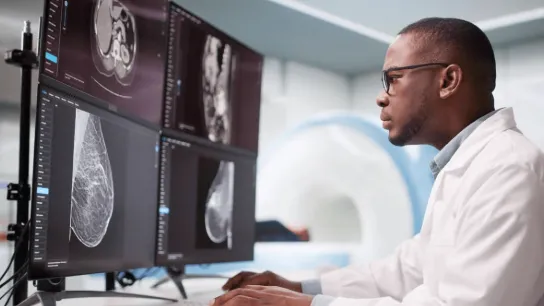
A large-scale clinical study conducted in Sweden as part of the national breast cancer screening program has yielded new and particularly encouraging results for the connected health sector. Known as MASAI (Mammography Screening With Artificial Intelligence), this large-scale trial followed more than 105,000 women to assess the practical benefits of artificial intelligence in traditional radiology.
To measure the system’s effectiveness, the study group was divided into two: some of the mammograms were analyzed using the Transpara Breast software developed by ScreenPoint, while others followed standard manual reading protocols. The study, led by Dr. Kristina Lång of Lund University—a researcher recognized by the prestigious European Society of Breast Imaging —demonstrates that AI significantly improves the detection rate while reducing the incidence of aggressive tumors between routine screenings.
Greater clinical accuracy without false alarms
The quantitative findings of the MASAI trial mark a turning point in digital oncology. Thanks to the combination of the computational power of artificial intelligence and the specialized expertise of radiologists, the breast cancer detection rate has jumped by 29%.
Most importantly, the study highlights a significant decrease in “interval cancers” (tumors that develop rapidly between two mandatory screening campaigns and are often the most difficult to treat). In the group of patients monitored via AI, the results show:
- A 12% decrease in overall interval cancers.
- A 16% lower rate of invasive cancers .
- A 21% reduction in the number of large tumors at the time of diagnosis.
- A dramatic 27% reduction in the most aggressive forms of cancer.
This significant improvement in therapeutic accuracy was achieved without compromising the reliability of the test, as the false-alarm rate (false-positive results that cause significant anxiety in patients) remained exactly the same as that of the conventional model.
“The MASAI trial shows that artificial intelligence applied to breast cancer detection has reached a decisive milestone: it helps healthcare professionals work more efficiently, and above all, it has a tangible impact on women around the world. “Now that this level of evidence exists, the question is no longer whether AI should be used, but how to ensure that all women can benefit from it,” says Pieter Kroese, CEO of ScreenPoint.
Prospects for Deployment in France and Europe
Europe is facing a major demographic challenge: a growing shortage of radiologists specializing in breast imaging, even as the average age of the population rises. Given this strain on medical resources, the findings of the Swedish study pave the way for a reevaluation of public health policies.
In France, the organized breast cancer screening program (for women aged 50 to 74) is based on a strict double-reading protocol: each mammogram is examined by a first radiologist, then re-evaluated by a second radiologist if the initial reading is negative. The integration of clinically validated solutions such as Transpara could make it possible to replace the second human review with algorithmic validation for cases that are unambiguous. This would free up valuable medical time, allowing practitioners to focus on complex cases and biopsies.
However, large-scale deployment across Europe remains contingent on approval by national regulatory agencies, such as the Haute Autorité de Santé (HAS) in France, which requires rigorous levels of clinical evidence before authorizing reimbursement for these technological procedures by Social Security.
Economic Implications and Opportunities for HealthTech Investors
For public health system managers as well as private investors in innovation capital (venture capital and growth equity), the clinical validation of medical AI is fundamentally changing the sector’s financial equation:
- Reducing the costs of long-term treatment: Detecting a tumor at a very early stage makes it possible to opt for treatments that are less intensive, less invasive, and significantly less costly for the public (targeted surgery rather than lengthy courses of chemotherapy or immunotherapy for metastatic cancers).
- Valuation of Trusted Software Developers: The market for AI applied to medical imaging is moving beyond its exploratory phase. Investors are turning away from gimmicky applications to pour capital into “pure players” with robust clinical studies published in leading scientific journals.
An ecosystem in the midst of intense competition
ScreenPoint is not the only player seeking to standardize the use of AI in hospitals. The medical and oncology imaging sector is structured around several high-performing growth companies:
- Lunit (South Korea): A publicly traded global company whose software suite for thoracic and breast imaging is used by thousands of radiology centers worldwide.
- Kheiron Medical (United Kingdom): Developer of the Mia solution, an AI assistant that is also widely used in screening studies within the British National Health Service (NHS).
- Gleamer and Therapanacea (France): Two rising stars of the French Tech scene, specializing, respectively, in the automation of standard bone radiography and the optimization of radiation therapy treatment plans using deep learning.
This healthy sector-wide competition supports a strong investment thesis: software-based MedTech combines solid recurring revenue (SaaS subscription models with clinics) with a direct societal impact, making connected health one of the most resilient segments of the private market.


.webp)