
MedTech: Cleerly Is Revolutionizing Preventive Cardiology with AI to Eliminate Heart Attacks
Every year in the United States, nearly 900,000 people die from cardiovascular disease. In light of this alarming statistic, Cleerly—a company founded in 2017 in Denver, Colorado—has developed a groundbreaking artificial intelligence technology capable of radically transforming the management of coronary artery disease.
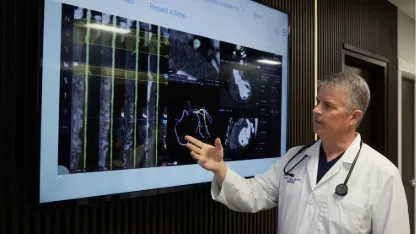
By analyzing cardiac CT scans in less than a minute, Cleerly’s AI identifies and quantifies fatty deposits in the arteries, well before the first symptoms appear. This noninvasive test provides comprehensive results within a few hours, giving doctors a powerful public health tool to identify patients who are truly at risk and intervene (with treatments, personalized follow-up, and lifestyle adjustments) before a major cardiovascular event occurs.
The Human Cost of "Weak Signals": The Story of Brian Pitts
Cleerly’s preventive approach is crucial, as the vast majority of heart attacks occur without any typical warning signs. The Pitts family’s story tragically illustrates this lack of accuracy in traditional diagnoses. In February 2023, the lives of Megan Ivey Pitts and her three children were turned upside down when her husband, Brian—a 49-year-old man in excellent physical condition—suddenly fell ill.
“He started feeling unwell around midnight and was sick all night. He thought it might be a stomach bug, perhaps from undercooked pheasant. He was also suffering from heartburn. Suddenly losing your partner and your rock is a nightmare. It’s become my mission: to help people understand that it doesn’t always manifest as arm pain or sudden shortness of breath. Sometimes the signs are harmless, like simple heartburn.” — Megan Ivey Pitts
Now the sole head of the family business, Megan devotes her energy to raising awareness alongside leading experts so that these preventable tragedies can truly be prevented.
Clinical Performance: Cleerly vs. Traditional Methods
The main drawback of conventional cardiology lies in its inability to detect the disease at an early stage. The figures highlight a major technological breakthrough:
- The Limitations of Traditional Tests: Nearly 70% of conventional blood tests and stress tests fail to identify patients at risk. These tests only detect the disease once the artery is already severely blocked.
- Surgical-grade precision with AI: Cleerly has a sensitivity of over 95% for measuring the exact volume of atherosclerotic plaque.
- Reducing Serious Events: Clinical studies show that the use of this early mapping, combined with targeted medical treatment, can reduce the risk of heart attack by up to 40% in asymptomatic patients.
Plaque Biology vs. Flow Mechanics: A Comparative Analysis
In the rapidly expanding market for AI-powered medical imaging, Cleerly stands out with a philosophy that is radically different from that of its competitors:
- HeartFlow and FFR-CT (The Mechanical Approach): These leading platforms focus primarily on measuring blood flow and the degree of stenosis (the physical narrowing of the artery). Their primary goal is to help the surgeon determine whether or not a stent should be implanted or a bypass procedure performed.
- Cleerly and Elucid (The Biological Approach): Cleerly does not simply determine whether the artery is narrowed, but analyzes the deep composition of the plaque itself. It identifies “soft plaque” (non-calcified), an unstable and highly dangerous substance that can rupture at any moment and cause a sudden heart attack, even in an artery that is only slightly blocked.
This analysis, which focuses on the biology of the disease rather than solely on its mechanical consequences, provides a much earlier and more comprehensive risk assessment than conventional imaging tools.
Gaining Expert Buy-In: Making Prevention the Standard of Care
This quest to raise awareness led Megan Pitts to collaborate with Dr. Kevin Young, a renowned cardiologist based in Nashville. With more than 20 years of experience, dual board certification in cardiology and internal medicine, and training at the prestigious UCLA, Dr. Young founded the Young Heart Group to place AI at the center of preventive medicine.
“The adoption of solutions like Cleerly marks a historic turning point in our practice. For decades, cardiology has been a reactive field: we waited for a crisis to occur before intervening. Today, AI gives us sight where we were once blind. It allows us to detect weak signals invisible to traditional tools and treat arterial disease before it becomes life-threatening. This is a complete paradigm shift for healthcare systems and an invaluable opportunity for patients.” — Dr. Kevin Young, founder of the Young Heart Group.




.webp)