Home
Resources
Understanding Private Equity
...
Special Report
Special report - Focus on the United States: 10 hypergrowth companies
February 2024

Private Equity, an industry born in the United States 60 years ago

Published on
6/2/2024
Amended on
6/11/2026
0
minute(s)
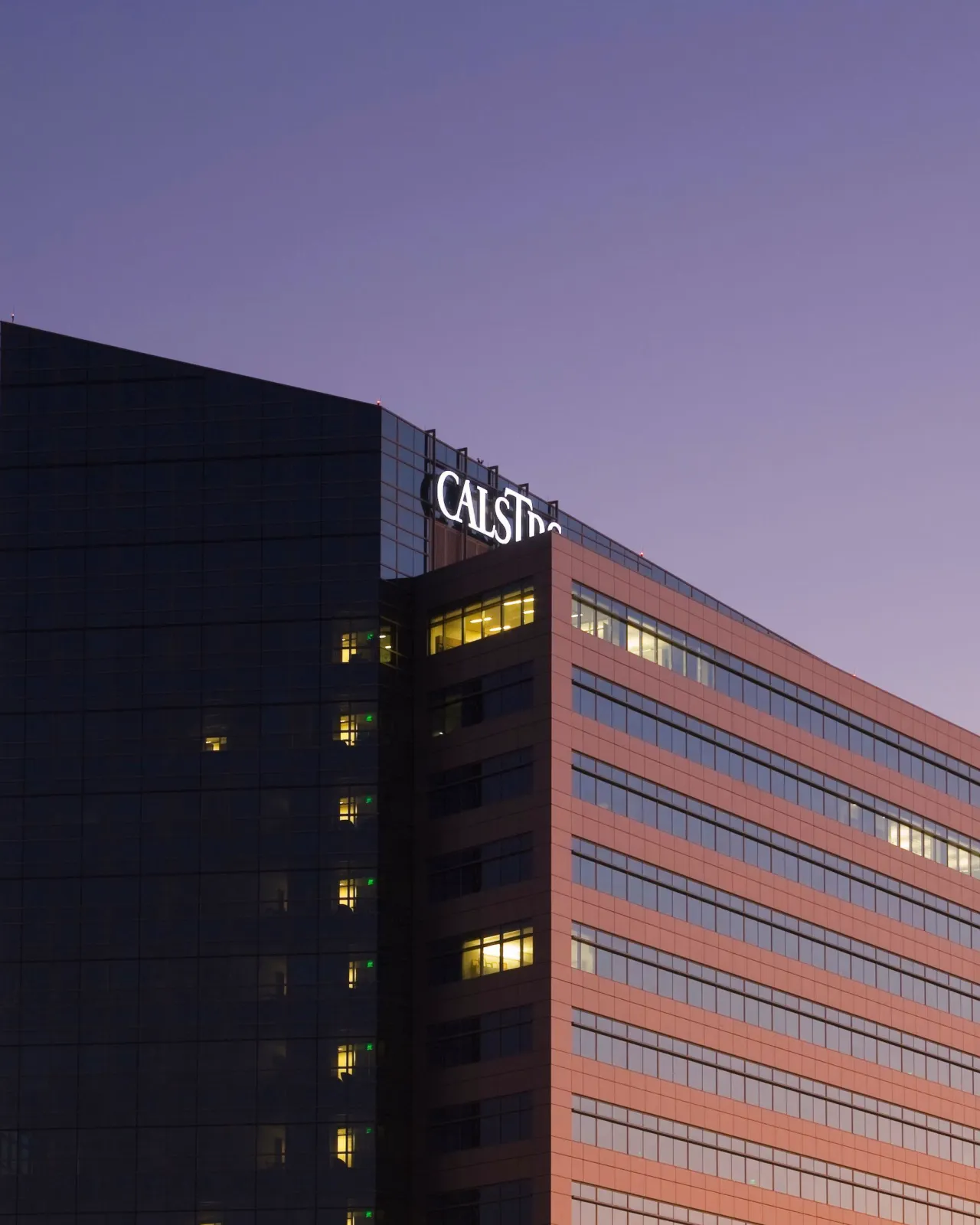
Photo of the top of skyscrapers displaying the text "Special Feature #4"
TheAltaroc team selects exceptional managers for each Vintage. Find out why the USA is the preferred location for due diligence and Private Equity. Trace the history of Private Equity with General Doriot, Silicon Valley and the evolution of the sector up to 2006. A global view of investments and opportunities. Invest today for tomorrow.
By
Damien Hélène
Damien Hélène
Private Equity, an industry born in the United States 60 years ago
This article has been automatically translated. Please excuse any inaccuracies or translation errors.
Dieser Artikel wurde automatisch übersetzt. Bitte entschuldigen Sie etwaige Ungenauigkeiten oder Übersetzungsfehler.
This article has been automatically translated. We apologize per inaccuracies or translation errors.

Every year, theAltaroc teamAltaroc exceptional fund managers to build each of its Vintage. As Frédéric Stolar explains, the United States stands out as the prime location where we will conduct our due diligence.

One of the main reasons for this is that the Private Equity industry was born in the USA 60 years ago. While the French are gradually becoming familiar with this asset class, Americans have been familiar with it for decades, and allocate an average of 20% of their investments to it.

Private Equity provides financing for fast-growing companies, helping them to scale up, internationalize, restructure, digitalize and finance innovation.

Silicon Valley financed by Private Equity

In 1946, General Georges Doriot, a French expatriate in the United States, engineer at the Pentagon and professor at MIT, created the ARD (American Research and Development Corporation) investment fund, originally intended to take equity stakes in small innovative companies, particularly in the electronics sector (Technicolor, Digital Equipment Corporation), which was booming at the time.
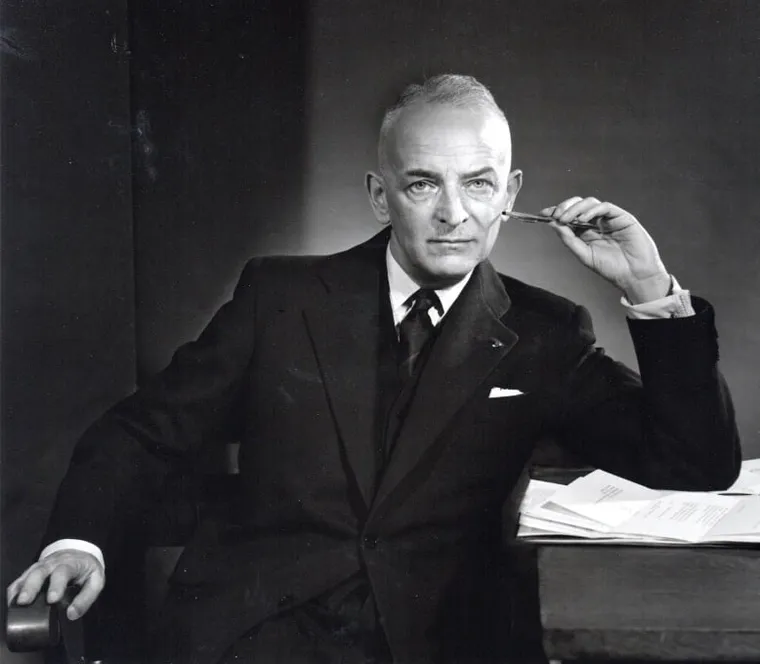
Thanks to his investment in Digital Equipment Corporation, the General secured his own fortune and that of his partners. A few years later, their investment had grown to 6,000 times the initial stake, representing an IRR 100% per year. In the 1970s, General Doriot established an ARD subsidiary in France, but it did not enjoy the same success as in the United States due to the looming economic crisis (unemployment and the oil crisis).

Yet this same crisis had beneficial effects in the United States. In 1963, President Kennedy decided to invest considerable resources in aerospace. His wish to put the first man on the moon was realized on July 21, 1969, with the American Neil Armstrong. This was followed by drastic cuts in public budgets for the major laboratories working with NASA, with the end of the Apollo mission. In 1973, unemployment hit a large part of the population with the end of the war in Vietnam and the reduction in military appropriations. Now unemployed, experienced engineers and employees skilled in new technologies set up their own companies. The result was the creation of Intel, Motorola and AMD.

East Coast investors working for ARD move to California to create new investment funds. Silicon Valley was born with Apple, Microsoft, Cisco, Compaq, IBM, Genetech... As early as 1933, Stanford University had begun financing technology projects, notably those of students Hewlett and Packard. American universities continue to invest tens of billions of dollars each year in Private Equity to finance innovative projects.
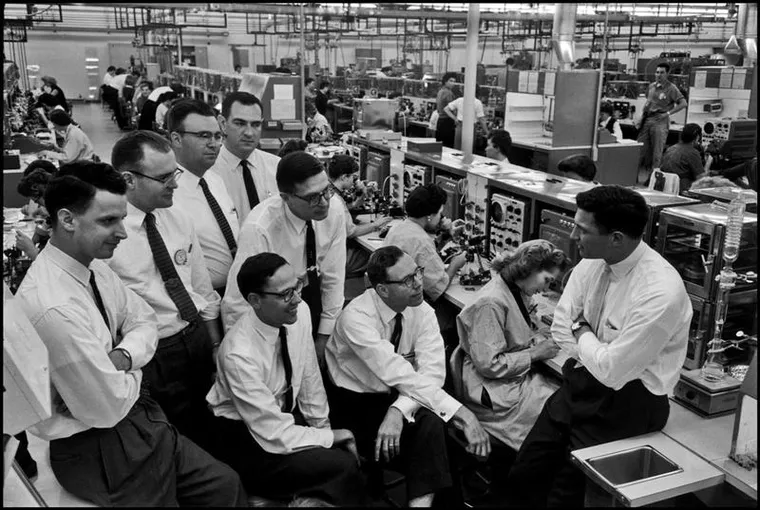
Silicon Valley is rapidly becoming a hotbed of innovation. After electronics, sectors such as biotechnologies, software, the Internet, artificial intelligence and autonomous driving will emerge. These sectors will require increased financing, hence the deployment of Private Equity in the United States and the creation of venture capital firms such as Sequoia.

KKR was founded in 1976. It was the first Private Equity fund to specialize in buyouts as part of business transfers.

In the 1980s and 1990s, the number of transactions and players in the United States grew rapidly, making the sector increasingly competitive. These two decades were also marked by the impressive growth of LBO transactions, with debt financing provided by major investors such as pension funds and retirement funds, as well as the world’s wealthiest families. Meanwhile, the French market saw the development of venture capital activities driven by the participation of business angels and supported by the creation of FCPIs (Innovation Investment Funds) in the 1990s.
The 2000s were then favorable for buyouts, thanks to low interest rates and the introduction of the Sarabanes-Oxley Act, which aimed to increase the accountability of American companies and make their financial communications more transparent.

Between 2003 and 2006, buyout activity in the United States increased 18-fold, reaching $375 billion. The European market accounted for 15% of the total volume of Private Equity deals, and in 2007, France ranked 3rd worldwide in terms of amounts invested.

-

Advertising communication. Please refer to the AIF prospectus and key investor information documents before making any final investment decision. Private Equity involves a risk of capital loss and a liquidity risk. Past performance is no guarantee of future results.
Other content in this topic

Explore our content collections, which bring together different formats around a single subject/issue/theme.
Understanding Private Equity
The AlphaOmega Foundation is organizing the 2026 Grand Education Forum
‍On October 15, 2026, the AlphaOmega Foundation will host the first edition of the Grand Forum on Education at the Conservatoire national des arts et métiers in Paris. This free one-day event will provide an opportunity to exchange perspectives, share experiences, and reflect together on a major challenge: enabling everyone to find their place in a world transformed by artificial intelligence.
Article
|
12
2026-10-12
An abstract geometric structure of intersecting metal beams illustrating performance evaluation in private equity
Understanding Private Equity
How Do You Evaluate Performance in Private Equity?
Unlike publicly traded markets, the performance of a private equity fund cannot be reduced to a change in share price or an annual return.
Article
|
29
2026-06-29
Evergreen and secondary market
Understanding Private Equity
Evergreen and secondary market: towards a structural evolution of private equity
Evergreen funds now represent nearly $400 billion in assets under management* worldwide. Initially considered complementary to traditional closed-end funds, they are gradually becoming established in strategic allocations, including institutional ones.
Article
|
16
2026-03-16
Private Equity environment in Q2ᵉ 2025
Understanding Private Equity
Private Equity environment in Q2ᵉ 2025
Sources: Pathway Capital 2Q25 Environment Report, Mergermarket, PitchBook Data, LSEG Data & Analytics
Article
|
03
2025-09-03
How Private Equity Can Turn This Crisis into a Driver of Future Performance
Understanding Private Equity
Private equity environment in Q1 2025
The first quarter of 2025 began with a marked turnaround in the global macroeconomic environment, breaking with the improvement observed at the end of 2024. The prospect of tariff increases in the United States sparked a wave of uncertainty in the markets, upsetting the fragile balance restored last year. This instability had a direct impact on private equity activity, with a differentiated impact depending on the region, strategy, and deal size.
Article
|
17
2025-06-17
The Secondary Market in Private Equity: Explained Simply
Understanding Private Equity
The Secondary Market in Private Equity: Explained Simply
What the secondary market for private equity is and how it benefits investors.
Video
|
22
2026-10-22
An Introduction to Private Equity by Djamina Grimm
Understanding Private Equity
An Introduction to Private Equity by Djamina Grimm
Why private equity operates on a different time horizon than the stock market.
Video
|
20
2026-10-20
Primary and Secondary Markets: What Are the Differences?
Understanding Private Equity
Primary and Secondary Markets: What Are the Differences?
Gain a basic understanding of how the secondary private equity market works, its advantages, its limitations, and the main types of transactions.
Video
|
11
2026-09-11
Choosing an Evergreen Fund: Key Criteria
Understanding Private Equity
Choosing an Evergreen Fund: Key Criteria
The key criteria to consider when choosing an Evergreen fund: investment strategy, structure, liquidity, fees, and portfolio composition.
Video
|
11
2026-09-11
Understanding Fund Strategies: Generalist vs. Specialized
Understanding Private Equity
Understanding Fund Strategies: Generalist vs. Specialized
Understand the differences between generalist funds, specialized funds, and thematic funds, as well as the advantages of each approach in private equity.
Video
|
11
2026-09-11
The Private Equity White Paper
Understanding Private Equity
The Private Equity White Paper
Download our white paper on private equity to learn how it works, its benefits, its risks, and investment options.
File
|
25
2026-09-25
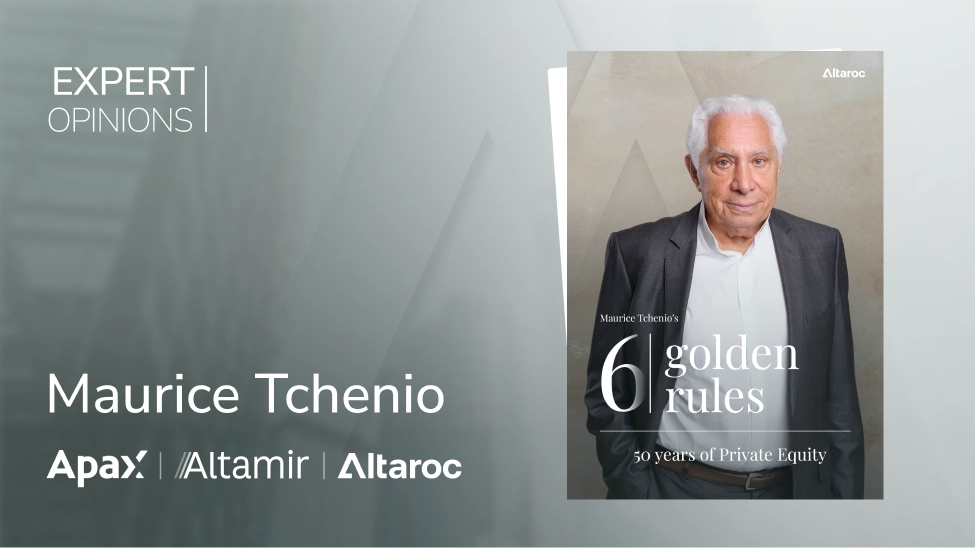
The 6 Golden Rules of Private Equity
Understanding Private Equity
The 6 Golden Rules of Private Equity
Maurice Tchenio shares the principles he has drawn from fifty years of experience to build a long-term investment strategy.
File
|
27
2026-09-27
Strategic Focus - A 15% Allocation to Private Equity
Understanding Private Equity
Strategic Focus - A 15% Allocation to Private Equity
Is a 15% allocation to private equity becoming the new standard for portfolio construction? Find out why market trends are leading more and more investors to view a 15% allocation to private equity as a new strategic balance.
File
|
07
2026-07-07
Why does the net performance of a private equity fund improve over time?
Understanding Private Equity
Why does the net performance of a private equity fund improve over time?
Understand the dynamics of the early years and their implications for your reinvestment strategies.
File
|
06
2026-05-06
What does the future hold for private equity?
Understanding Private Equity
What does the future hold for private equity?
A fresh perspective on the future of private equity, based on the combined insights of five leading international fund managers.
File
|
13
2026-04-13
Private Equity ETFs: How They Work, Benefits, and Risks
Understanding Private Equity
Private Equity ETFs: How They Work, Benefits, and Risks
A private equity ETF provides liquid exposure to publicly traded companies active in the private equity sector, but generally does not invest directly in unlisted companies.
Article
|
03
2026-11-03
Private Equity in France: An Overview of the Asset Class
Understanding Private Equity
Private Equity in France: An Overview of the Asset Class
In 2025, the private equity sector in France demonstrated its resilience, with 36.4 billion euros invested and 42.9 billion raised.
Article
|
27
2026-10-27
Life Insurance and Private Equity: How to Invest?
Understanding Private Equity
Life Insurance and Private Equity: How to Invest?
Life insurance now provides access to private equity through unit-linked policies, often with a lower minimum investment and simplified management.
Article
|
22
2026-10-22
The Best Private Equity Funds: How to Identify Them in 2026?
Understanding Private Equity
The Best Private Equity Funds: How to Identify Them in 2026?
Identifying a top private equity fund isn't just a matter of following a simple ranking.
Article
|
20
2026-10-20
Banking Disintermediation: Why Are Companies Increasingly Turning to Private Investors for Financing?
Understanding Private Equity
Banking Disintermediation: Why Are Companies Increasingly Turning to Private Investors for Financing?
Banking disintermediation diversifies corporate financing by tapping into private debt, private equity, bond investments, and crowdfunding, in addition to bank loans.
Article
|
13
2026-10-13
Welcome to Altaroc
In accordance with applicable regulations, we ask that you complete your profile. This step is required to access the content and services offered on our websites.
Please fill out your profile to access the site
country of tax residence
Select
choosenCountry
Preferred language
Select
choosenLang
YOUR INVESTOR PROFILE
Financial intermediary or professional investor
Financial advisors, wealth managers, private bankers, or any other investment service providers.
Qualified Investor or Altaroc Investor
Experienced investor or Altaroc investor
Private investors who have already invested with Altaroc or who have a minimum investment capacity of €100,000.
Private investors who have previously invested in Altaroc who have a minimum investment capacity of 200,000 euros.
Non-professional (retail) investor
Individual investors with an investment capacity below €100,000.
Retail investors with an investment capacity of less than 200,000 euros.
Institutional investor
Pension funds, retirement schemes, asset management companies, and single-family offices.
Select your language and investor profile to continue
Select your investor profile to continue
Scroll down to accept General Terms and Conditions
The webpage you are trying to access is not available in your country.