

Hospitals 4.0 will therefore be conceived as genuine urban projects. They will integrate several medical centers on a single campus, while promoting fluid connections with the surrounding city. Thanks to pedestrian walkways and even a direct connection to the metro, the hospital will not be an isolated island, but rather an extension of the urban community, accessible and interconnected.
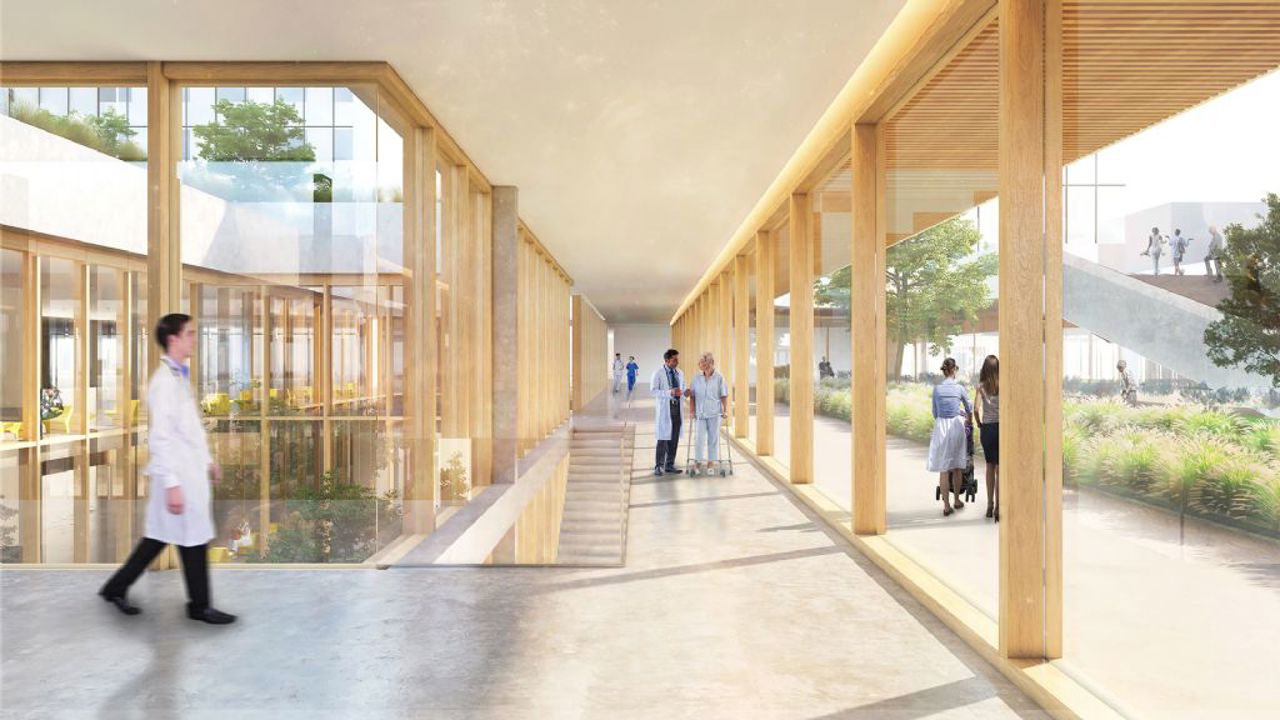
Walking around this hospital complex, patients can feel less stress and anxiety, thanks to bright, airy spaces designed to promote serenity. The architecture is designed to enhance the experience of patients and their families, while facilitating access to the various medical services.
When minimalism reinvents the hospital
For two decades, hospital architecture has increasingly borrowed from the codes of hotel design. Warm wood, pastel hues, and bursts of bright color are all elements designed to humanize medical spaces and alleviate their clinical coldness.
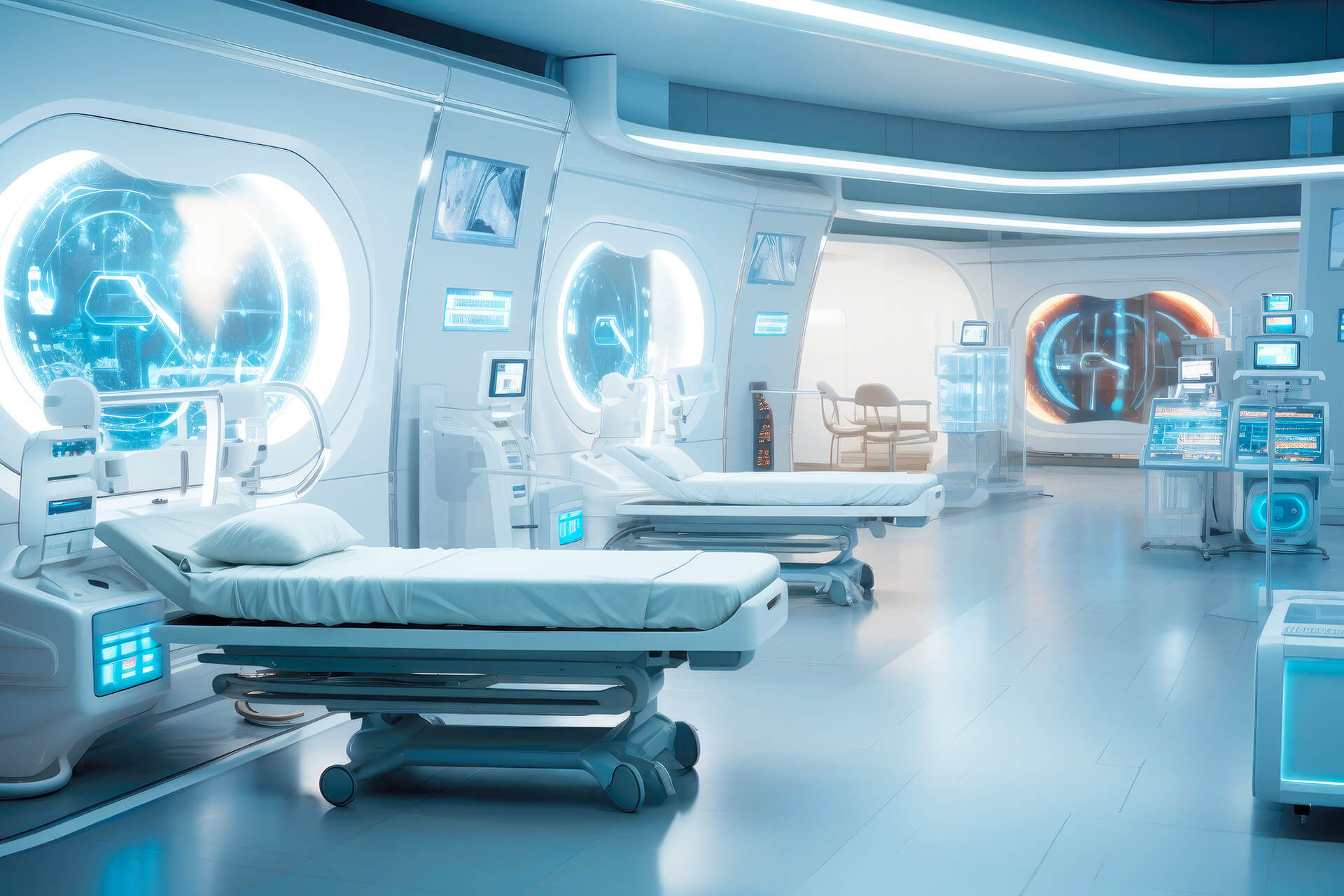
But as the world accelerates and becomes more complex, another trend is emerging: minimalism, in search of serenity and clarity. Tomorrow's hospitals could draw inspiration from the clean lines and high-tech materials of the digital world. Imagine curved white panels, backlit displays, and brushed aluminum accents, evoking the sleek design of a state-of-the-art smartphone.
Beyond aesthetics, innovation also lies in interactivity. Integrating sensors and touchscreens directly into medical furniture would allow healthcare staff to instantly access essential data, without relying on fixed screens or paper records. A discreet but decisive revolution, serving patient efficiency and well-being.
The architecture of these future hospitals will also take into account energy and environmental management, thanks to eco-responsible buildings, using renewable energy production systems and intelligent resource management. The hospital of tomorrow will therefore not only be a place of care, but also a model of sustainable integration into its environment.
Humanizing care with the hospital as a place of life
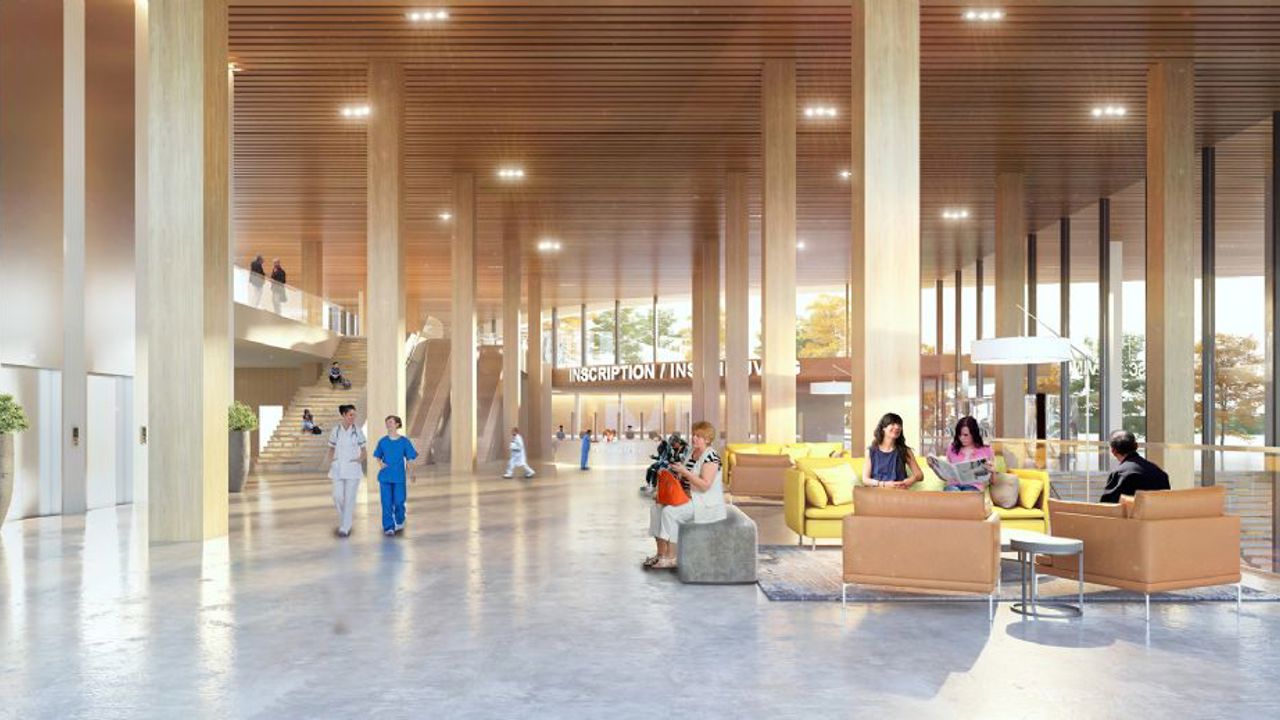
This "health city" concept represents a true paradigm shift in the way hospitals are perceived. The traditional model, where the patient is simply a recipient of care, is now being replaced by a more human approach. The patient becomes a full participant in their own journey, with spaces dedicated to relaxation, psychological support, and rehabilitation. These new buildings emphasize the balance between medical care and well-being, where the hospital is no longer just a treatment center, but also a living space.
These developments are not just aesthetic. They respond to a growing demand for personalized care and improved patient experience. By combining cutting-edge technologies, such as artificial intelligence, with spaces designed for comfort and conviviality, these new hospitals hope to offer more accessible, more humane, and more effective care.
A more autonomous and involved patient
With the digitalization of hospitals, patients will no longer be mere recipients of care, but full-fledged stakeholders in their own health. Thanks to connected devices, they will be able to view their medical data in real time, track their vital signs, and better understand their treatment. This autonomy will be accompanied by increased personalization: meal choices, room configuration, and access to services tailored to their needs. Better informed, they will also play a greater role in medical decisions, transforming their relationship with caregivers into a true partnership.
More fluid and intuitive care pathways
To reduce wait times and improve the patient experience, healthcare facilities will rely on artificial intelligence and digital logistics. Optimizing hospital flows will speed up care, while amenities designed for comfort—bright spaces, intuitive signage, and ergonomic furniture—will make life easier for patients and staff. This will be complemented by enhanced services: modern cafeterias, relaxation areas, and in-room teleconsultations.
More modular and scalable hospitals
The hospital of tomorrow will not only be more efficient, it will also be more adaptable. While current infrastructure takes an average of a decade to complete, future facilities will need to be built in just five years to keep pace with technological and medical developments. Architecture itself will adapt to this dynamic: modular and evolving spaces will replace rigid structures, allowing for the integration of new innovations in real time. Far from austere and rigid buildings, the hospital of tomorrow aims to be flexible, efficient, and, above all, human-centered.
The hospital of the future will therefore not only be a place of care, but also an interconnected and welcoming center that integrates technology, the city, and patient well-being. It represents a model of healthcare that is both modern and humanized, where every aspect, from architecture to data use, is designed to improve patients' lives and optimize care management.



.webp)
.webp)