.webp)


Traditional banks have clearly recognized this trend. The number of offerings is growing, listings are increasing, and marketing campaigns are intensifying. The promise of “democratization” is now a constant theme in marketing messages.
However, the real issue isn’t investor appetite. It’s execution.
Because selling a private equity product effectively is difficult if the advisor isn’t fully trained. And above all, if the organization supporting him or her doesn’t allow this asset class to be integrated into a coherent long-term wealth management strategy.
Distributing private equity isn’t simply a matter of making a product available and putting it on the shelf. It involves providing structured support over the long term.
A structurally distinct asset class
For decades, the banking industry has been built around liquid products that are valued on a daily basis, are comparable to one another, and are relatively easy to explain.
Private equity does not meet any of these criteria because:
- The investment horizon for these locked-in holdings is approximately 10 years, and French savers are not accustomed to structural illiquidity.
- The J-curve—a characteristic of private equity (involving a systematic underperformance at the start of a fund)—requires a genuine educational effort.
- The capital is not invested all at once but through a series of incremental capital calls based on the pace at which the funds acquire companies.
- Every strategy and every fund is different, which is not the case in the world of exchange-traded products.
This fundamentally changes the approach to advising. Private equity is not a one-time investment; it is a commitment over a cycle.
A client who has received proper advice and guidance should not simply invest in a fund. Instead, they should be guided through a structured private equity strategy designed over multiple investment cycles, enabling the coordination of capital calls and distributions, and maintaining consistent exposure over time.
In other words, we need to be able to offer private equity programs, rather than a series of isolated opportunities presented on an ad hoc basis over time.
Selling private equity effectively requires a strategy, not a catalog
To think that simply listing a fund, incorporating it into a life insurance policy, or making it eligible for a tax scheme is enough is to underestimate the transformation required to ensure successful rollout across distribution channels. In reality, without structured support, the complexity is shifted onto the advisor. Yet recommending private equity commits the client to a relationship lasting 8, 10, or even 12 years.
A banker shouldn't just offer private equity products. He or she must be able to propose a genuine private equity strategy:
- Determine the target exposure level
- Anticipate investment cycles
- Manage cash flows (fundraising and reinvestment of distributions)
But the responsibility doesn’t end there. A private equity product has a lifespan of 10 years or more. It navigates changes in tax and estate planning environments, as well as life events (marriage, divorce, inheritance, children), and even generational shifts. It must be structured within the appropriate estate planning, tax, and wealth management frameworks.
This means that wealth management engineers are just as knowledgeable about private equity as bankers:
- Understanding fundraising mechanisms
- Managing liquidity issues
- Incorporation into succession planning strategies
- Optimization through tailored budgets
Marketing private equity therefore requires cross-functional alignment between sales and wealth management teams.
Building networks: necessary, but far from sufficient
Given this complexity, the most immediate response is to step up training. The intention is laudable. But in practice, it quickly reveals its limitations.
Bank advisors already have to be well-versed in an extremely wide range of products: life insurance, structured products, real estate, public markets, credit, retirement planning, and more. Private equity is becoming yet another item on an already packed schedule.
However, private equity distribution does not rely solely on a technical understanding of financial mechanisms. It relies on conviction and the ability to help clients take a long-term view.
An advisor must be able to:
- Identify the client profiles suited to this asset class
- Incorporating private equity into a well-balanced portfolio
- Explain complex concepts in plain language
- Be prepared to weather periods of reduced visibility or temporarily negative performance.
- Develop a long-term strategy
This requires ongoing training that is grounded in practical experience and enriched by real-world examples, simulations, and feedback.
Above all, this requires a range of tools and training that only a specialized provider can truly offer.
Technology: A Driving Force for Transformation
Beyond training, the tools available to networks are becoming crucial.
Private equity distribution can no longer rely solely on human expertise. To ensure the quality of advice and scale operations, technology plays a key role:
· Simulation of the impact on the overall allocation
· Modeling capital calls and distributions
· Viewing the J-curve
· Regulatory traceability
These tools enhance the educational experience, ensure compliance with the duty to advise, and enable recommendations to be made as part of a strategic rather than a transactional approach.
Technology doesn't replace advice; it enhances it. It also helps ensure continuity when the product outlasts the individual relationship with an advisor.
Toward a strategic partnership with specialized stakeholders
The democratization of private equity cannot rely solely on a product listing model.
Unlike traditional asset classes, private equity cannot be effectively deployed without the supporting ecosystem of expertise.
A specialized investment management firm does more than just offer a fund. It provides:
- In-depth expertise in strategies
- The ability to select the best fund managers
- A thorough understanding of cycles
- Expertise in value creation strategies
- Educational expertise for school districts
- The ability to train both bankers and wealth management specialists
It also enables us to assist banks in developing comprehensive private equity programs that are designed for the long term, integrated into investment portfolios, and aligned with clients’ wealth management strategies.
The Benefits of an External Partnership
Partnering with an external private equity firm offers several advantages over an exclusively internal solution.
A specialized provider first and foremost offers dedicated, in-depth expertise in a complex asset class characterized by wide performance variation and the critical challenge of gaining access to the best managers. This specialization enhances the quality of portfolio selection and construction.
It also offers a more open and independent approach, less constrained by the limitations of a proprietary architecture, which allows us to prioritize strategies that are most relevant to the end customer.
The external partner also serves as a trusted third party, lending credibility to the advisor’s recommendations and enhancing the technical support provided over the long term, while allowing the bank to retain control of the overall wealth management relationship.
Finally, it brings agility and innovation, making it easier to adapt to market changes. In an industry as demanding as private equity, the combination of a bank’s distribution power and independent specialized expertise often constitutes a model that is particularly effective at creating value.
Conclusion: Democratization means empowering people
Private equity distribution in the banking sector is not merely a matter of access.
This is a matter of organizational structure, strategy, and building collective expertise. It is difficult to effectively market private equity without in-depth training. Integrating it successfully over the long term without specialized expertise is risky.
Private equity should not be treated as a short-term investment. It should be viewed as a long-term strategy, integrated into an overall asset allocation, structured within appropriate investment vehicles, and managed over a period of more than ten years.
This implies:
- Trained and dedicated advisors
- Heritage engineers with expertise in its specific mechanisms
- Appropriate technological tools
- And, often, the support of a specialized management firm capable of providing training, resources, and ongoing guidance.
.
Private equity doesn't just need to be distributed; it needs to be integrated intelligently.
Only then will it be able to establish itself as a permanent fixture in asset allocation portfolios, and only then will its adoption by a broader client base become a controlled success rather than mere hype.
EXPERT INTERVIEW:
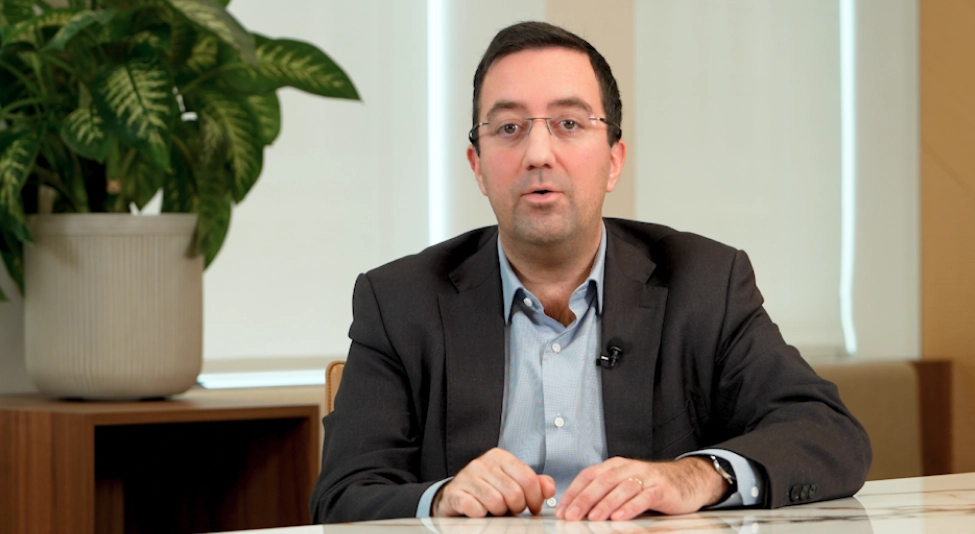
Speaker: Agathe PERRIER MARCHAL – Head of Development for Private Banking, Wealth Management, and Asset Management at Banque Populaire Rives de Paris
How would you describe the changing role of private equity within banking networks in recent years?
Private equity has gradually established itself as an integral component of asset allocation. Long reserved for institutional investors, it is now being incorporated into the portfolios of private banking clients. More recently, it has also expanded into wealth segments that were previously less exposed to this asset class, a trend driven in particular by regulatory changes such as the Green Industry Act. This trend is part of a broader shift toward unlisted assets, driven both by investors’ desire for diversification and by the development of more accessible investment offerings. It also reflects a changing perspective on unlisted assets: they are no longer a one-off exposure but a fully-fledged component of wealth management. At Banque Populaire Rives de Paris, we have developed a dedicated approach to integrate these solutions into a comprehensive asset allocation strategy, complementing traditional asset classes.
In your opinion, what accounts for the gap between client interest in this asset class and its actual distribution?
This discrepancy stems largely from the gap between how this asset class is perceived and its actual nature. Private equity is often viewed primarily through the lens of its potential returns. However, it requires a longer-term investment approach, with specific liquidity constraints and investment cycles. Not all clients approach it in the same way. Some, who are already experienced and diversified, may gravitate toward more targeted strategies. Others are just discovering this asset class, which first requires building a suitable allocation foundation. In this context, the challenge is to integrate these investments coherently into an overall wealth management strategy while taking into account the client’s profile and objectives.
How do you assess the current level of maturity of banking networks with regard to this asset class?
Banking networks are currently in a transitional phase, with varying levels of maturity across institutions. Some have already structured their offerings and fostered a genuine cultural shift within their teams. Others are still in the early stages of adoption. This transition is partly due to the fact that unlisted assets operate on a different logic than that historically used in wealth management. Asset management has long been built around a stock-based approach: a strategy is defined at a given point in time. Unlisted assets introduce a flow-based logic. They are time-sensitive and require ongoing support for investors. This paradigm shift thus entails an evolution in advisory practices, with more regular monitoring and an allocation strategy that is built over time.
In your opinion, what will be the main factors contributing to this asset class’s credibility among banking networks?
The credibility of this asset class depends first and foremost on the quality of fund selection, the ability to assess their risks, and the appropriateness of their inclusion in portfolios. In a market where the range of offerings has expanded significantly, this rigorous selection process is critical. The proliferation of funds indeed requires a selective approach to avoid fragmentation and preserve the consistency of allocations. At Banque Populaire Rives de Paris, we favor a streamlined range, designed to be straightforward and tailored to our clients’ needs. However, this requirement does not come at the expense of diversification. We ensure that we cover all strategies (including private equity, private debt, and infrastructure) by offering solutions that fit within the various investment mandates. Furthermore, for each thematic area, several solutions are selected to provide an appropriate level of diversification in the construction of allocations. This approach is indeed a fundamental principle of wealth management, particularly influential in the management of unlisted assets.
In your opinion, what are the main challenges advisors face when discussing private equity with their clients?
The main challenge lies in the very nature of these investments. Private equity operates on long-term cycles, with cash flows spread out over time. This requires the ability to help clients adopt a less immediate approach to investing. Furthermore, this asset class is still not fully understood. Clients have often heard of it, but do not always fully grasp its specifics. Their perception may therefore be incomplete, or even influenced by simplified notions. The advisor’s role is thus crucial: it is not merely a matter of explaining a product, but of situating this asset class within a broader perspective by incorporating its characteristics, constraints, and risks. Private equity does indeed carry a risk of potentially significant capital loss, as well as a liquidity risk linked to the investment horizon, which inherently limits the possibilities for early exit. This requires providing long-term advisory services, grounded in both educational outreach and a high level of expertise, to help clients understand the mechanisms, constraints, and investment horizons. It is this ability to combine education, expertise, and a holistic perspective that allows private equity to play its rightful role in an asset allocation strategy.
What conditions must be met for an advisor to develop a genuine conviction about this asset class?
Conviction cannot be imposed; it is built over time. It develops through interaction with client situations, as advisors gradually incorporate these investments into their recommendations and observe the results. The challenge, therefore, is less about convincing clients and more about enabling them to gradually embrace these investments.
How can technology actually transform the private equity industry?
Above all, technology enhances transparency. It provides a clearer understanding of investments that, by their very nature, are less transparent than listed assets. It offers a consolidated view of commitments, cash flows, and their impact on the portfolio. It also helps streamline the experience for both advisors and clients by simplifying the processes for subscription, monitoring, and reporting. At the same time, new tools are emerging that can analyze asset allocations to challenge them and improve their consistency. Some solutions are gradually integrating artificial intelligence components to refine portfolio analysis and enhance decision-support tools. These developments, still in their early stages, hold the promise of significant improvements in the quality of advice and are expected to gradually become standard practice.
In your opinion, is it really possible to scale up without the right technological infrastructure?
Scaling up requires managing the operational complexity inherent in unlisted assets. These investments generate specific cash flows, require ongoing monitoring, and involve more demanding processes than listed assets. Without the right infrastructure, this complexity can quickly become a hindrance. In this context, the technological tools provided by specialized management firms—particularly their secure digital platforms—play a pivotal role. They enable the standardization of operations, secure processing, and reliable long-term monitoring of investments. The challenge is also to ensure coordination among the various stakeholders (management firms, banks, family office, insurers) to enable the management of growing volumes without compromising service quality. It is this ability to structure and ensure the reliability of operations that determines the ability to scale up and the broader adoption of these solutions within networks.
How would you define a successful partnership between a bank and a private equity firm?
A successful partnership is based first and foremost on a clear division of roles. The bank designs the asset allocation and supports the client over the long term. The asset management firm designs the solutions and interprets them while providing specific expertise on the asset class. Beyond this division of labor, the quality of the partnership depends on the asset management firm’s ability to make its solutions practically usable by the networks. This requires an educational effort as well as operational support in getting started with and distributing the products. The asset management firm thus plays a key role in building the teams’ expertise and in their ability to communicate clearly with clients. Finally, success also depends on the smoothness of interactions between the parties. Regular communication and a good understanding of each other’s constraints are essential conditions. It is this balance between product expertise, support, and operational execution that determines the quality and longevity of the partnership.
Would you like to find out more? Make an appointment with Isabelle.
Warning:
This article is purely informative and does not constitute a personalized recommendation, legal or tax advice or an investment strategy.
The information presented is based on current conditions and is subject to change. You are invited to contact your advisor to ensure that the products mentioned are suited to your asset profile.
Investing in private equity entails risks of capital loss and liquidity. The performance of an FIA is never guaranteed; it depends on the profitability of the assets in the portfolio. Past performance is no guarantee of future performance.
.webp)

.webp)
.webp)