The French pension system is based on intergenerational solidarity. This redistributive model boasts an average replacement rate of 75% for civil servants and 50% for private-sector employees41. In other words, French retirees receive between half and three-quarters of their working income. This partial coverage is prompting more and more people to turn to complementary savings solutions. This calls into question the future of the French model, and invites us to take a closer look at American practices.
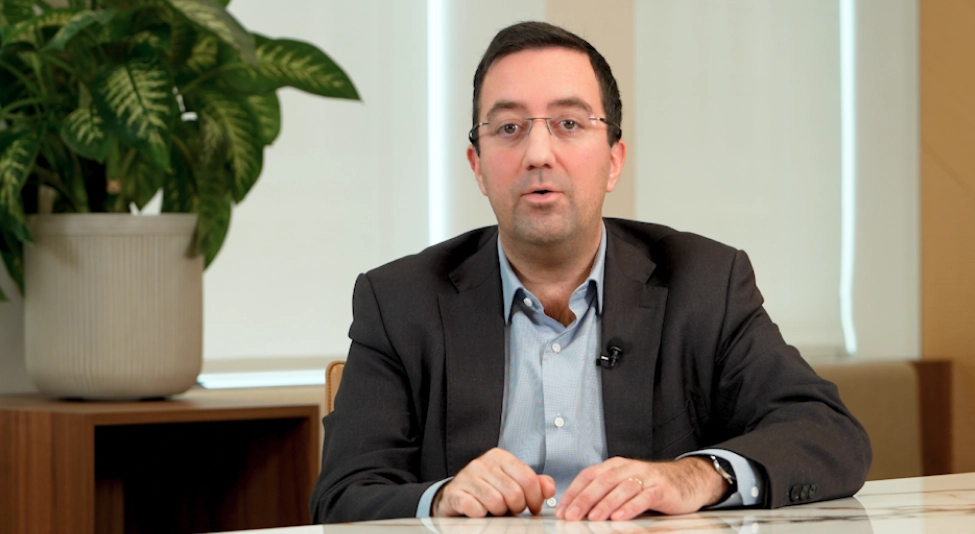
Following the example of the United States, should we open the door more widely to capitalization, in particular via private equity? For Antoine Levy, a French economist and assistant professor at UC Berkeley, the answer is yes: "The American system is half Social Security and half funded. The balance is better because it responds to two risks: returns on capital and growth in labor income".
Rely on a hybrid model
It's hardly surprising that the American approach, marked by the growing integration of private equity into pension fund portfolios, is attracting interest in Europe. However, while some see this model as a potential lever for boosting pension returns, others have reservations about transposing it to France. Savers' cultural caution, regulatory complexity and the very structure of the French system are holding back its adoption.
Yet this versatility between pay-as-you-go and capitalization reduces dependence on political decisions that no one can predict. " Capitalization allows better geographic and sectoral diversification, and an improvement in the financial culture of participants, while reducing dependence on political hazards and the capture of the system by a particular generation," stresses the economist.
The decisive role of public authorities
To implement such a strategy, however, a review of decision-making processes and a more flexible regulatory framework are required. If the American model is to be adapted to France, French legislators must introduce more sophisticated risk management mechanisms, while preserving the interests of retirees.42
"Public policy must play a more general role in encouraging long-term investment (equities, private equity, etc.), particularly for young working people who, far from retirement age, can afford greater exposure to risk," says Antoine Levy.
Recent developments, such as the extension of the European Long-Term Investment Funds (ELTIF) framework, reflect a desire to make access to alternative investments more flexible, without sacrificing investor security. Certain restrictions have been relaxed to encourage the adoption of private equity, while maintaining a protective framework.
"Public policy must play a role in regulating the players involved, to ensure transparency of fees and returns and avoid fiascos such as investments in FIP-FCPI 43, which are overly motivated by an obsession with tax exemption.
Inspiration without copying
Although the American model has proven its effectiveness, it cannot be transposed as is. The fundamental differences between the American and French systems, marked by regulatory and cultural constraints, complicate the exportability of this system. The American model should therefore be taken as a source of inspiration for rethinking pension financing in France.
Provided it is properly regulated and adapted to the specific characteristics of the French market, private equity could offer a viable solution to the challenges of retirement. This is all the more true in a context where returns on traditional assets are increasingly low. With the right legislative and regulatory framework, private equity could play a growing role in France's pension funding strategies. Market players, whether asset managers, economists or regulators, will need to continue exploring these avenues with caution and pragmatism.
More information
Private Equity in Europe: behind the gap, an opportunity
Less developed than on the other side of the Atlantic, the European private equity market offers real potential for individual investors. For Antoine Levy, this asset class "is a tool that, over the long term, has its place in an individual investment portfolio, particularly in countries where listed equity markets represent a smaller share of the entrepreneurial and corporate universe".
While private equity investments are more developed in the USA, accounting for 24.5% of funds raised compared with an average of 7.9% in Europe 44, competition between firms is fiercer. Darren Foreman, former Director of Private Equity for PSERS, sees this as an opportunity for European fund managers. "We have more private equity funds in the US than you have in Europe, so the groups you can invest with have a lot of opportunities."
Nevertheless, Antoine Levy points out that the scale of investments in the United States offers funds greater room for manoeuvre. "Private equity and venture capital funds in the US have the means to assemble larger equity portfolios and interfere in their management in a more structured way."
41 https://manouvellevie.groupama.fr/s-informer-retraite/essentiel-montant-pension-retraite/taux-remplacement-retraite
42 https://www.amf-france.org/sites/institutionnel/files/private/2023-09/230911-private-equity-etat-des-lieux-et-vulnerabilites-l.-grillet-aubert-fr_0.pdf
43 Fonds d'Investissement de Proximité (FIP) and Fonds Communs de Placement dans l'Innovation (FCPI) are French collective investment vehicles created to encourage the financing of unlisted SMEs.
44 https://www.amf-france.org/sites/institutionnel/files/private/2023-09/230911-private-equity-etat-des-lieux-et-vulnerabilites-l.-grillet-aubert-fr_0.pdf
.webp)

.webp)
.webp)