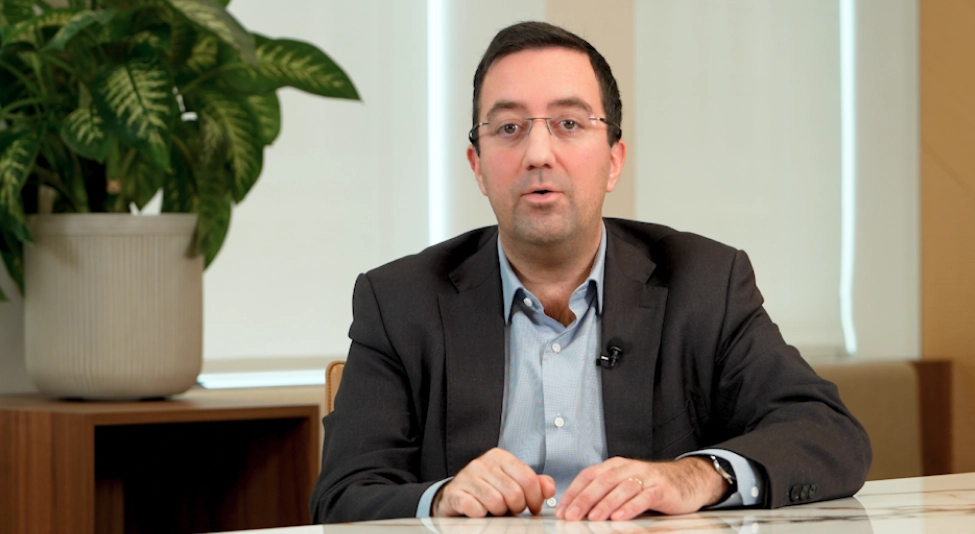

An exclusive interview conducted by Altaroc Deven Parekh, Managing DirectorInsight Partners, at the firm’s New York offices in October 2025.
Deven Parekh wanted to be a doctor. He ultimately chose finance, then private equity, then software—not by chance, but out of conviction. “If you choose to invest, you might as well do so in the fastest-growing sectors.” It was with this simple logic that he joined Insight Partners more than two decades Insight Partners , just before the firm raised its first institutional fund. Since then, he has seen Insight become, over the course of 30 years, one of the global leaders in private equity in the software sector.
A company built on a simple idea… and sustained over three decades
Founded in 1995 by Jeff Horing and Jerry Murdock, Insight Partners from the outset by a clear investment thesis: to invest in scaling software companies that have demonstrated product-market fit and need capital to accelerate their growth. Thirty years and tens of billions of dollars under management later, the thesis hasn’t fundamentally changed—and that’s what makes it remarkable.
What has evolved, however, is the breadth of the spectrum covered. Insight now invests across the entire spectrum, from initial significant funding rounds to buyout , including growth equity. Deven Parekh cites this vertical continuity as a genuine competitive advantage: “Each strategy informs the other. When you’re evaluating a mature company for a buyout, knowing which startups could disrupt it in five years is critical information. And conversely, understanding the long-term growth trajectories of the market’s top players changes how you view an early-stage company.”
A machine for sourcing, not for waiting
One of Insight’s defining strengths is its approach to sourcing. The firm employs 80 people whose sole role is to identify new investment opportunities—even before founders have begun to think about raising capital. “We don’t wait for companies to come to us. We go out and find them.”
This proactive approach is complemented by an in-house tool, Insight Onsite: a sort of internal consulting firm, entirely dedicated to portfolio companies. For each key function—sales, marketing, product—a team of specialists works to identify best practices observed across the entire portfolio and disseminate them. The idea is not to run the companies, but to share with them what the firm has learned from hundreds of similar cases. A pooling of operational intelligence rarely seen on this scale.
AI: A Calculated Threat, a Huge Opportunity
When it comes to artificial intelligence, Deven Parekh refuses to play the role of a prophet—in either sense of the word. His perspective is pragmatic and rests on a fundamental distinction.
Horizontal software—that is, software not tied to specific business workflows and not reliant on proprietary data—is clearly vulnerable to disruption. “It’s becoming much easier to build these tools with AI, in a customized way, without much resistance to change.”
Conversely, vertical applications—those deeply embedded in the processes of a specific industry, whether it’s managing autism clinics or oil operations—enjoy a natural level of protection. Proprietary data, complex workflows, and migration costs all serve as barriers that AI won’t easily overcome.
But beware: being immune to disruption does not mean you can ignore AI. “These companies must invest in integrating artificial intelligence into their products, because the next generation of users—our children—is coming up with ChatGPT as their benchmark for user experience. That’s the standard they expect.” ”
Insight’s AI investment strategy reflects this conviction: the firm focuses primarily on vertical players, where the addressable market size is often much larger than it appears. “In these markets, you’re not just replacing existing software. You’re also capturing a portion of the payroll and service costs that AI helps streamline. The total market is structurally larger.”
For the major foundation models—OpenAI, Anthropic, and others—Insight maintains exposure, but through dedicated late-stage co-investment vehicles, separate from its main funds. This distinction reflects a deliberate caution: “We don’t yet know what their long-term business models will be.”
AI, too… in Insight’s processes
The firm doesn't just invest in AI—it applies it to its own operations. About a dozen engineers work full-time on internal AI tools designed to improve every stage of the investment process.
For sourcing, new analysts receive a list of companies recommended by an algorithm on their very first day—whereas their predecessors spent months building this type of pipeline. For due diligence, AI makes it possible to prepare for a meeting or analyze a 100-page board deck—including appendices—in record time, by comparing data with previous periods. For decision-making, the idea of a “non-voting member of the investment committee” fed by Insight’s thousands of historical memos is being seriously explored, even though Deven Parekh remains realistic: “AI can’t meet with a management team or evaluate it.” We’re not there yet. But it can tell you that, based on your track record, all companies in this sector with a retention rate below 91% have underperformed. And that’s invaluable.”
Two iconic offerings, two distinct investment philosophies
To illustrate the diversity of its approach, Deven Parekh cites two recent exits by Insight.
Central Reach: acquired nearly ten years ago with approximately $10 million in revenue, this company developed management software (a sector-specific ERP, so to speak) for clinics specializing in autism. Insight acquired 100% of the equity, completely rebuilt the management team, and supported organic growth driven by the rise in autism diagnoses in the United States. Eighteen months before the exit, an AI product was launched, opening up a new, visible growth trajectory for strategic acquirers. Result: a sale for nearly $2 billion—a venture-style return within a buyout structure.
Wiz: a different story, even more meteoric. Insight co-led this cybersecurity company’s Series A round with an investment of approximately $5 million. Eighteen months later, Wiz reached $100 million in annual recurring revenue—the fastest growth trajectory ever seen in software. In 2024, Google announced its acquisition for $33 billion, subject to regulatory approval.
These two examples illustrate what Insight stands for: strategies that are very different in profile, but both capable of generating very significant capital gains.
A demanding market, a balanced approach
Deven Parekh has no illusions about the market environment. The coming decade will be challenging: intense competition, uncertain exit multiples—“likely lower than we thought three years ago”—and unresolved questions about the value of slow-growth assets in a post-zero-interest-rate world.
But in this context, Insight maintains a deliberately balanced approach in its funds: Venture buyouts for stability and cash flow, AI exposure for upside potential, and growth equity for diversification. “If part of the market undergoes a correction, the rest of the portfolio acts as a buffer. And if the AI boom continues for another three or four years, we have positions that can generate very significant gains.”
Read the full interview


.webp)
.webp)
.webp)