
Vertical Farming: 80 Acres Farms Takes the Lead in the Global Unreasonable Food Initiative
The agritech company 80 Acres Farms has just reached a major strategic milestone in its large-scale rollout. Specializing in vertical farming, the company has been selected by agri-food giant Mars, in collaboration with Unreasonable Group, to join the first cohort of the Unreasonable Food program. This initiative brings together fifteen fast-growing international companies chosen for their disruptive potential and their ability to sustainably transform the global food value chain.
For 80 Acres Farms, this selection validates the commercial maturity of its business model. The company is joining this accelerator program to meet the selection committee’s rigorous criteria, which are centered on four pillars: shaping the future of food, improving farmers’ livelihoods, transforming supply chains, and reimagining sustainable packaging.
Productive efficiency validated on an industrial scale
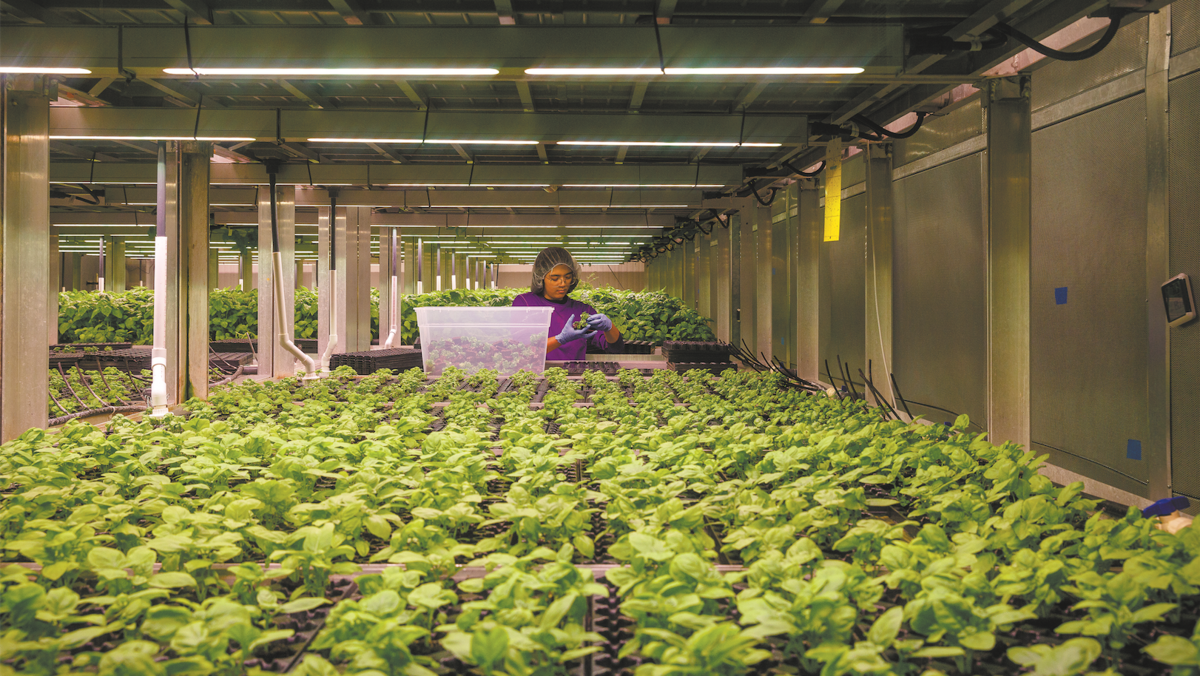
Within this group, 80 Acres Farms stands out as the leader in indoor farming. The company uses 100% renewable energy and consumes 95% less water to produce a similar amount of food as a field-based farm, while growing up to 300 times more food per square meter.
This efficiency enables the company to redefine the standards of mass production by combining sustainability with industrial-scale production, a critical advantage for securing supplies for its global partners.
Case Study: Integration into Mars' Climate Roadmap
For the Mars Group, the decision to partner with 80 Acres Farms is driven by strict climate imperatives, including its Net Zero roadmap and its goal of reducing greenhouse gas emissions by 50% by 2030. Mars is using this program to integrate disruptive technologies capable of decarbonizing all of its operations, from human food to animal nutrition.
As part of this effort, 80 Acres Farms is collaborating with other pioneers in the agricultural transition:
- Mootral: Is developing a feed additive that reduces methane emissions from dairy cows by up to 30%.
- Sea Forest: Develops solutions based on red algae that reduce livestock emissions by up to 90%.
- Yard Stick: Offers technology for directly measuring carbon in the soil at a cost that is 70 to 90 percent lower than laboratory tests.
- Regrow Ag: Uses satellite imagery modeling to audit Scope 3 emissions.
- LandScan: Creates digital replicas of farms to analyze the soil at the plot level.
Comparative Analysis: The 80 Acres Farms Model vs. Traditional Farming
The success of 80 Acres Farms is based on a complete shift in financial and operational metrics compared to conventional farming methods:
- Operating Cost (OpEx) Structure: Traditional agriculture is heavily impacted by the volatility of chemical inputs, pesticides, and transportation costs associated with its distance from urban centers. 80 Acres Farms eliminates pesticide expenses and optimizes water usage. While its electricity consumption for LED lighting and climate control represents its largest operational expense (between 25 and 40 percent of operating costs, depending on the location), this is offset by consistent and predictable productivity.
- Capital Expenditures (CapEx) and ROI: Unlike the traditional model, where the cost of accessing land is the main investment, controlled-environment agriculture requires a significant initial capital outlay to automate the facilities. However, this model offers superior financial visibility: by eliminating the risks associated with weather and increasing the number of annual harvest cycles, an automated industrial facility can achieve operational profitability per site within 3 to 5 years—a highly competitive timeframe for private equity.
Technology Roadmap and Expansion Strategy (2024–2030)
The integration into the Unreasonable Food program is part of a specific industrial expansion roadmap, aligned with the transition goals of major contractors:
- 2024–2026 (Anchoring and Standardization Phase): Optimization of crop data flows and integration with the carbon traceability tools required by distributors to certify reductions in Scope 3 emissions.
- 2027–2028 (Scaling-up phase): Replicate the automated factory model at new national logistics hubs to cover the entire United States and begin international deployment.
- Horizon (Systemic Maturity): Consolidate our position as a key supplier to multinational agri-food companies, guaranteeing stable volumes, pesticide-free products, and a minimal carbon footprint.
For the management team at 80 Acres Farms, this partnership with Mars and Unreasonable Group marks an acceleration of their growth plan. Executives emphasize that having their technology validated by players of this caliber enables them to transform a regional production infrastructure into a nationwide logistics network capable of meeting the demand of the largest retail chains.
Outlook for the AgTech Market in France and Europe
While 80 Acres Farms is leading the charge in the North American market through large-scale industrial deployments, the AgTech market in Europe and France is taking shape in a complementary way. Driven by the strict regulations of the Common Agricultural Policy (CAP) and national decarbonization goals (such as the France 2030 support programs), the European ecosystem is heavily focused on farm management software, precision agriculture, and robotic mechanical weed control.
The shortage of affordable agricultural land in Western Europe is also driving the development of peri-urban vertical farming projects. However, high energy costs in Europe are forcing local players to develop even more advanced thermal optimization technologies, making this sector a fertile ground for consolidation and external growth initiatives led by growth equity funds .



.webp)
.webp)
.webp)