Smart Cities: Pittsburgh Uses Astronomer to Simplify Access to Its Public Data and Launch OneStopPGH
Pittsburgh is a city of neighborhoods, each with its own history. From Bloomfield to the South Side, from Shadyside to Homewood, residents want to know what’s happening in their neighborhoods: who’s building a new building, what construction projects are underway, and whether safety regulations are being followed. Pittsburghers have a reputation for being very curious, but above all, they’re deeply committed to their communities and to ensuring they run smoothly.
However, the city’s IT systems—which are essential for the day-to-day operation of its services—had become fragile. The old system used to share information was no longer meeting the city’s needs. Updates took forever, and technical issues were tying up the city’s already very small team.
Astronomer has enabled the city to secure the foundation on which its data rests. The American company’s solution automates the flow of information, significantly reduces the risk of outages, and eliminates all technical complexity for city hall staff. As a result, the city relies much less on manual processes, which reduces the daily stress on staff and allows the tools to evolve without having to rebuild everything from scratch at every stage.
Significant time savings and fewer breakdowns for City Hall
Pittsburgh chose Astronomer because it first needed to ensure the reliability of its data before making it available to the public. With a very small team managing complex systems, the city was looking for a solution that could be sustained over the long term.
Automating information flows with this software has yielded immediate and tangible benefits:
- 95% fewer outages: The technical outages that used to prevent updates to the city's websites have almost completely disappeared.
- 25 hours of work saved per week: Freed from repetitive tasks and constant system monitoring, the IT team (which consists of only three engineers) can finally focus on creating new services for citizens.
- Up-to-date information in 15 minutes: The time it takes to process and publish new information has been reduced from 3 days to less than 15 minutes.
OneStopPGH Insights: Administrative Transparency at the Heart of Neighborhoods
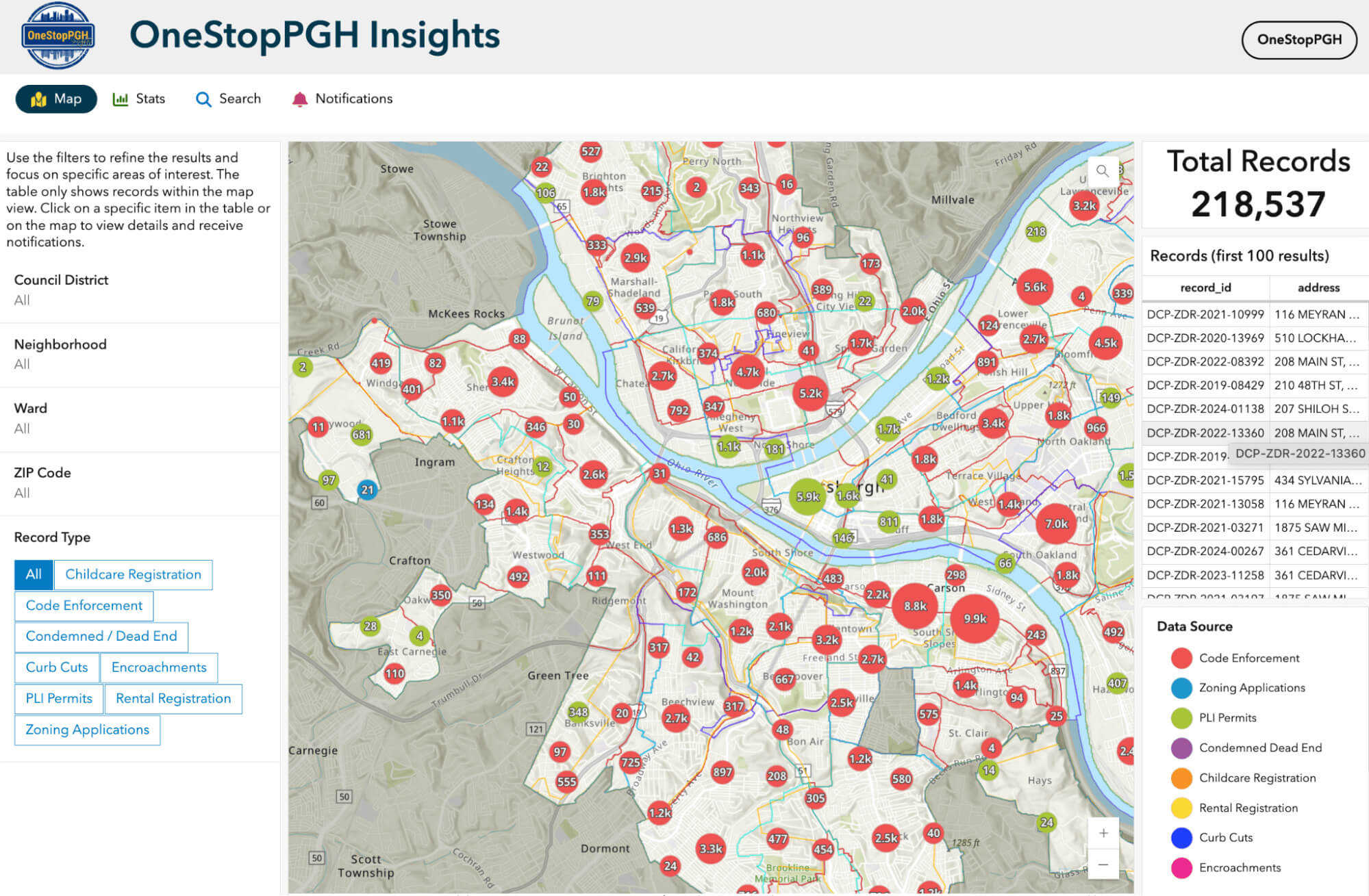
Thanks to this technology, the OneStopPGH Insights project, launched by the city, was able to get off the ground. The data generated by municipal departments is now collected, updated, and published without interruption.
This website provides residents with easy, centralized access to three types of key information:
- Urban Planning: Real-time tracking of building permit applications, approvals, and denials, as well as the names of the real estate developers working on their street.
- Building Safety: History of safety inspections, health reports, and reports of non-compliant housing.
- Service Requests (Line 311): An interactive map to track reports from residents (potholes, broken streetlights, illegal dumping) and see when City Hall plans to fix the problem.
A lightweight solution to the cumbersome software used in very large cities
Pittsburgh's strategy stands out from the approaches used by other former industrial cities because of its cost-effectiveness and simplicity:
- Pittsburgh's Choice: The city uses online software (SaaS) that automates all the behind-the-scenes work. As a result, a very small team is sufficient, costs are kept under control, and the system is easily adaptable.
- The Mistake Other Cities Have Made: Cities like Detroit and Cleveland have often opted for large, traditional software systems—which are very cumbersome and very expensive—or disparate programs for each department. This results in siloed data, requires massive maintenance budgets, and necessitates dozens of technicians for even the smallest update.
By choosing a modern, automated solution, Pittsburgh demonstrates that a medium-sized city can provide exemplary transparency with very few internal resources.




.webp)
.webp)
.webp)