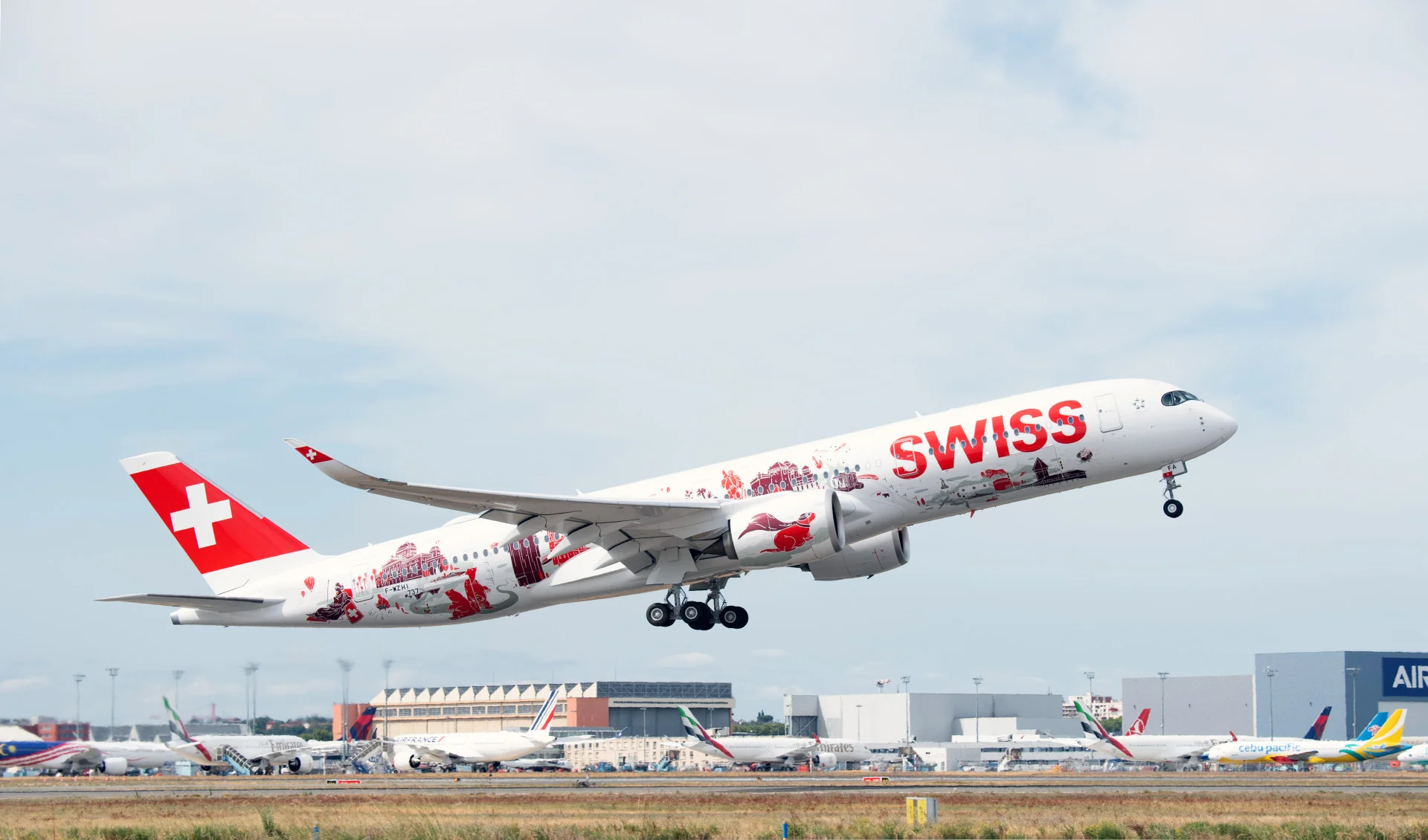
IoT: Swiss International Airlines Deploys Aeris to Automate Monitoring of Its Global Connectivity
Aeris, an IoT connectivity provider, supports tens of millions of devices (phones, vehicles, computers) through a global infrastructure deployed in more than 190 countries. Its platform centralizes connectivity and device management functions, as well as visibility and control tools.
Swiss International Airlines, for its part, has approximately 10,000 devices in use worldwide (in-flight phones and tablets, sensors, and maintenance terminals). Before adopting Aeris, the Swiss airline’s IT teams could track overall SIM card usage volumes but lacked the granularity to precisely identify the source of anomalies. This lack of visibility increased operational risks, drove up data costs, and prolonged incident resolution times.
This vulnerability became particularly apparent during a major incident that occurred two years before the solution was implemented, when an undetected bug caused all data to be re-downloaded instead of a simple incremental synchronization. Within a few hours, the monthly data allowances for thousands of devices were exhausted. Due to a lack of visibility into the connections, identifying the cause took several days, impacting operational efficiency and requiring large-scale manual interventions.
Immediately quantifiable financial and operational gains
Thanks to the implementation of Aeris, Swiss International Airlines has fundamentally transformed its operational model, shifting from reactive incident management to a proactive, data-driven approach. The integration of the platform has resulted in clear key performance indicators (KPIs) for the airline:
- Resolution time reduced by a factor of 100: The analysis of network anomalies or IP address conflicts, which previously required several days of manual investigation, is now handled in less than 15 minutes thanks to real-time dashboards.
- 25% reduction in data connectivity costs: By instantly blocking devices experiencing synchronization loops or unnecessary data downloads, the company eliminates out-of-planroaming charges and bandwidth waste.
- 40% reduction in critical incidents: Automated alerts based on abnormal consumption thresholds enable the correction of configuration errors in the crew’sElectronic Flight Bags before they disrupt takeoff operations.
Detailed visibility at the SIM card level now makes it possible to identify the source of anomalies in just a few minutes—analyzes that previously required several days. This ability to detect atypical behavior early on—whether it involves excessive data usage, unexpected connections, or configuration errors—strengthens security posture while keeping costs down.
Strengthening IoT Security: Perimeter Defense for Connected Fleets
In the aerospace industry, every mobile device or connected sensor represents a potential entry point into the corporate network. Internet of Things (IoT) security can no longer rely solely on local antivirus software, which is often impossible to install on lightweight industrial equipment.
The Aeris platform addresses the issue at the network infrastructure level itself. By monitoring the cellular connectivity layer, it enforces strict security rules:
- Detection of signaling anomalies: If a SIM card originally assigned to a maintenance device in Zurich suddenly attempts to connect from another device or a suspicious network cell abroad, traffic is immediately suspended.
- Network Traffic Control and Firewall: The platform restricts each device's communications exclusively to the company's servers (via private APNs and secure VPN tunnels), preventing any traffic from being routed to unauthorized Internet addresses or malicious command-and-control servers.
An industrial imperative shared by the giants of the automotive and telecommunications industries
This transformation highlights a broader challenge related to the management of connected devices on a large scale. With the proliferation of IoT devices in critical sectors such as aviation, manufacturing, and the automotive industry, the ability to closely monitor connectivity is becoming an operational and financial imperative.
In this context, Aeris works with many industry leaders, such as Orange Belgium, Volkswagen, and Mitsubishi. In the connected automotive sector, for example, real-time processing of telematics data streams enables these manufacturers to deploy remote (Over-The-Air) software updates to millions of vehicles simultaneously, while ensuring that no network bugs overload the bandwidth of partner operators or cause large-scale software failures.




.webp)
.webp)
.webp)