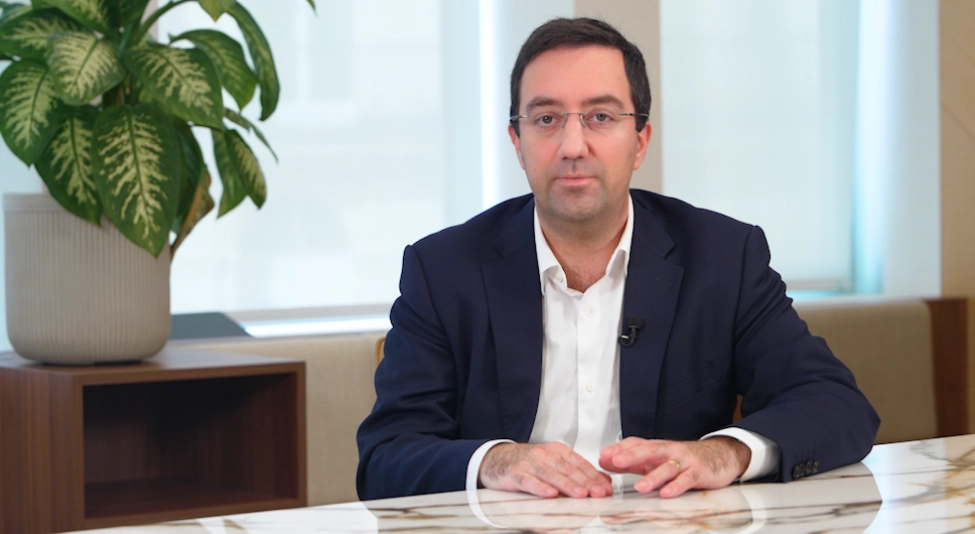
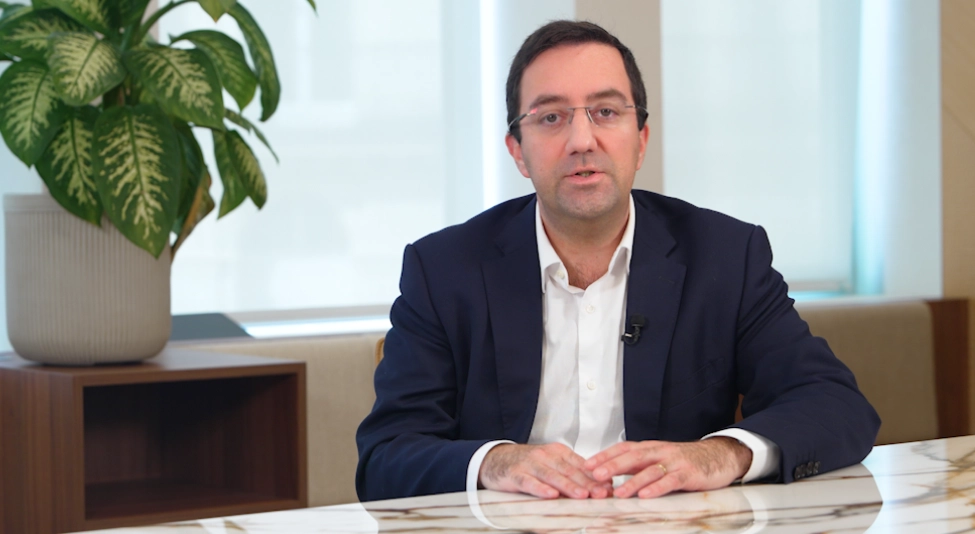
Private Equity: Kristoffer Melinder Analyzes Nordic Capital Strategy and Record Performance
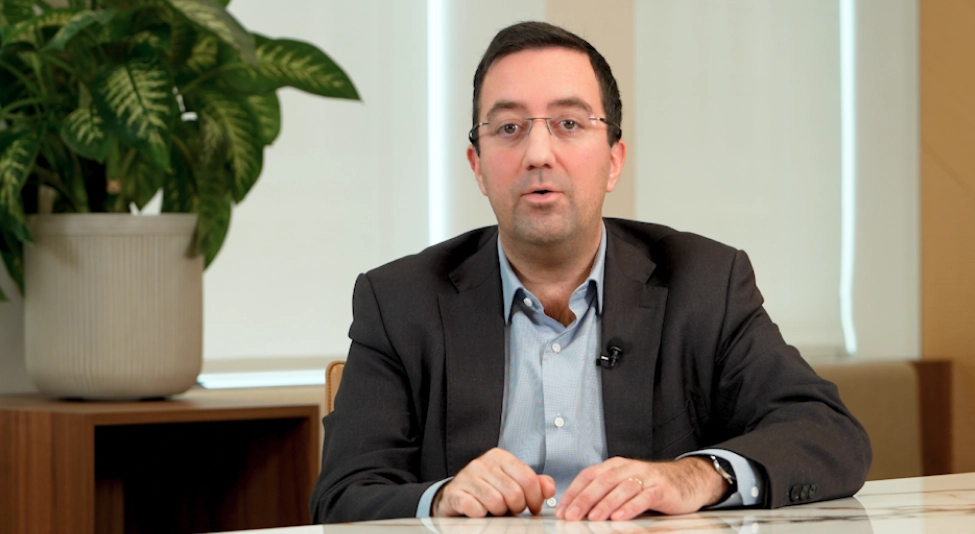
Kristoffer Melinder, a partner and Fund manager Nordic Capital, discusses the asset management firm’s record fundraising and its outlook in an interview with Private Equity News.
Nordic Capital Records Against Its Scandinavian Rivals
As fundraising and deal activity began to collapse globally, Nordic Capital, one of Scandinavia’s largest private equity firms, defied expectations by raising its largest fund in just nine months, securing €9 billion from investors. This achievement allows the Stockholm-based firm to consolidate its leading position alongside other Nordic private equity giants, such asEQT, by demonstrating remarkable resilience in the mid-market and large-cap segments. Altaroc also added the Nordic Capital XI to its Vintage portfolio .
A few weeks later, in October 2022, the Stockholm-based company celebrated the largest divestiture in its history, achieving a 19-fold return on its invested capital through the sale of the U.K.-based company The Binding Site for £2.25 billion.
Fund manager Melinder, a partner Fund manager who has led the firm for 13 years, says that the fundraising for Nordic Capital XI, which reached a cap of 9 billion euros—exceeding its initial target of 8 bibliards of euros—was “the undisputed highlight of last year, despite the massive deterioration in the markets during the fundraising campaign .”
K. Melinder joined Nordic in 1998, after spending two years in London in JP Morgan’s Investment Department. As Nordic’s Fund manager partner and Fund manager since 2016—and previously as co-CEO alongside Joakim Karlsson for six years—he has overseen the company’s growth, which now employs more than 200 people and manages 30 billion euros in assets. The firm’s investors are primarily pension funds, family offices, banks, private wealth managers, insurance companies, and sovereign wealth funds.
In-depth sector-specific expertise: healthcare, fintech, and technology
Focusing on healthcare, financial services, tech, and payments—as well as technology-driven industries and business services—Nordic has invested nearly 22 billion euros in 130 transactions since its founding in 1989. This strict sector-specific focus is exemplified by large-scale transactions, particularly in health tech and enterprise software, where the firm leverages its operational expertise to transform regional champions into global leaders.
"We generally look for business models with recurring revenues and avoid project risks," explains K. Melinder.

ESG: At the Heart of Value Creation and Governance
Like most Scandinavian financial companies, investing in high environmental, social and governance (ESG) standards is one of Nordic's top priorities. Nordic Capital ranks in the top decile of global investment companies for integrating ESG factors into investment decision-making and management.
“ESG is now fully integrated into the way we make investments and manage the companies in our portfolio,” he says. “We have sustainability roadmaps for all the companies in our portfolio, as well as for the company as a whole.”
This ESG policy translates into concrete actions within the portfolio. For example, Nordic Capital investment Nordic Capital Cary Group, the automotive glass specialist, perfectly illustrates this circular strategy: the company systematically prioritizes windshield repair over complete replacement, thereby significantly reducing CO2 emissions associated with the manufacture of new glass.
With regard to governance, Nordic Capital almost always Nordic Capital a majority stake in the companies in its portfolio, although it occasionally takes a minority stake “when we have joint control or some degree of control over the investment.”
"We don't make passive investments, we always have a seat on the board, and we don't invest if there isn't a value-creation plan that defines what we intend to bring to the investment," he clarifies.
About one-third of the investments—which are generally made over a five-year period between acquisition and divestiture—are in the Nordic region, one-third in northern continental Europe, one-third in the United States, and about 10% in the United Kingdom.
Lessons from Past Challenges
K.Melinder recalls that the most difficult part of his 25-year career at Nordic came at the time of the 2008 global financial crisis, when the company's strategy was to withdraw from investments at the peak of cycles.

"In the very difficult macroeconomic context of 2008/2009, we found ourselves in a tricky situation and a number of our slightly cyclical and overleveraged investments were difficult to resolve," he explains.
“The solar energy sector offers significant growth opportunities, but many of these investments have required substantial capital expenditures and have been subject to regulatory policies and subsidies, as well as a major shift in the production base from Europe to China,” he says.
In the wake of the global financial crisis, several European governments cut subsidies for solar energy, making it much more difficult for Nordic to turn its investments in this sector into profitable ventures.
"If you give us a renewable energy company, we aren't the best at making that investment, but if you give us a medical technology or software company, we'll be the best at understanding and growing that type of business."
What are the market prospects?
For Kristoffer Melinder, the market environment remains complex, despite expectations of high inflation and high interest rates.
“It’s very difficult to fully anticipate the extent of a slowdown,” he says. “We’ll look at our portfolio, which is very resilient, with revenue that has held up well and is actually accelerating. We’re seeing that the economies of scale from this growth are translating into higher margins, and it makes sense not to necessarily sell companies in an unfavorable market environment.”
"We take a measured approach to ensure that we provide liquidity and generate returns for our limited partners, while balancing that with the intrinsic value and value creation of our companies."
Before becoming a father of seven, K. Melinder was an avid mountaineer. He even climbed the 6,190 meters of Mount McKinley, North America's highest mountain, as part of a three-week expedition to the highest peak in North America.
"I scaled back my mountaineering activity considerably as my family grew," he declares. If mountaineering is often cited as a metaphor for life, it also seems to inspire K. Melinder's calculated approach to investing.