Is combining financial performance with respect for environmental, social and governance (ESG) criteria really a contradiction in terms? At a time when compliance needs are multiplying, and investors are no longer expecting just competitive returns, but also greater transparency in the integration of ESG criteria, this transition raises fundamental questions.
"The practice of integrating financially meaningful ESG measures into investment processes aims to strengthen risk management and can contribute to long-term financial returns. Therefore, we believe that ESG integration can help deliver improved risk-adjusted returns over the long term," explains J.P. Morgan in one of their memos to their investors.
ESG and private equity: constraint or opportunity?
According to a survey carried out by PwC, Private Equity Responsible Investment 2023 27, 78% of those questioned consider the ESG performance of a potential investment to be consistent with the search for returns. Seventy-one percent of respondents from 45 private equity companies include ESG criteria in their action plan immediately after an acquisition.
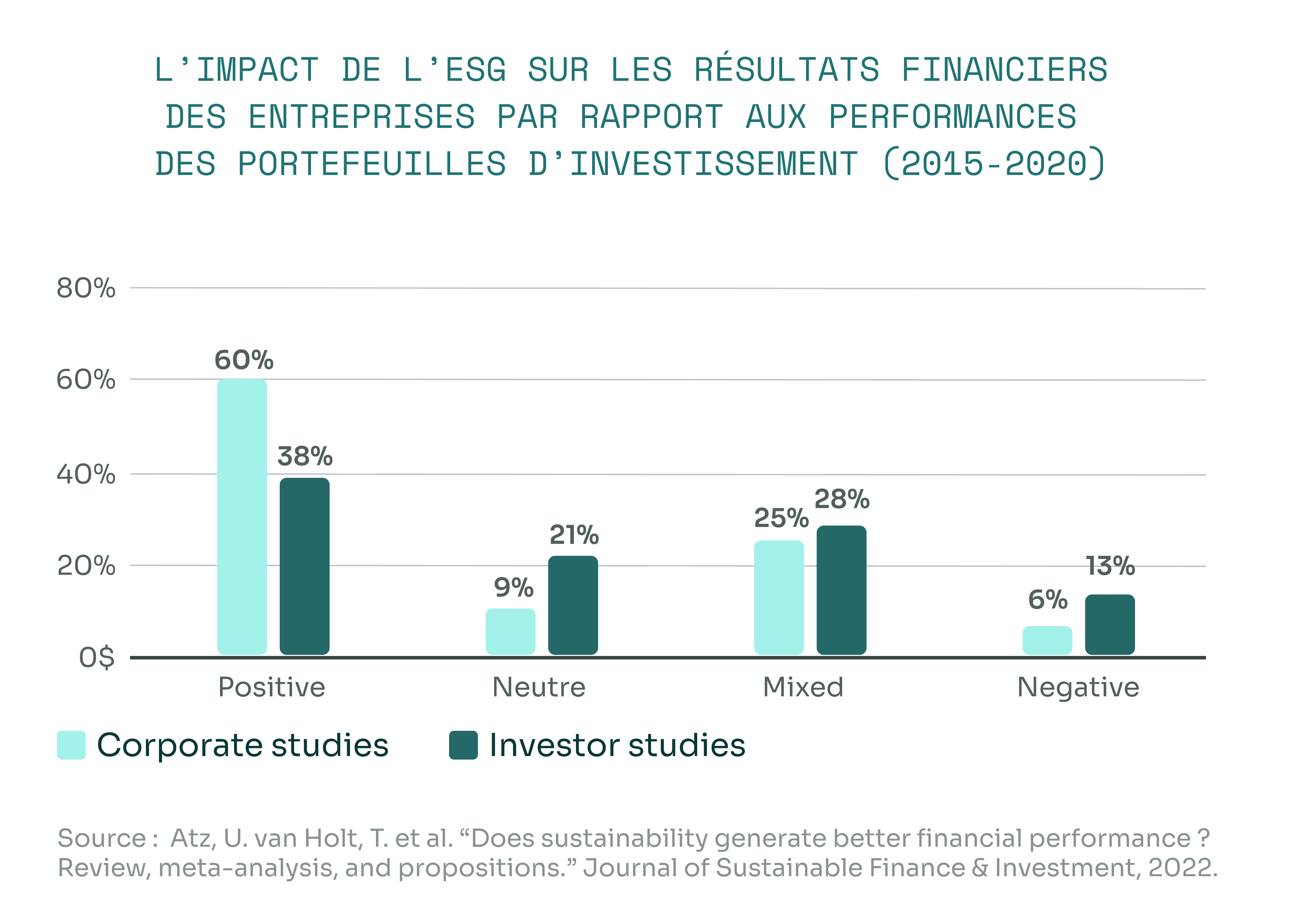
However, some players believe that the introduction of these criteria may lead to short-term compromises. "Financial investors are concerned that ESG criteria may restrict their investment options and impact their long-term returns. There is a tension between short-term market pressures and long-term ESG investment objectives", stresses Yifei Zhang, Professor at the University of Hong Kong.
Correlation between ESG criteria and financial performance
Whatever the case, between regulatory pressures and new expectations, the question is no longer whether pension funds should integrate ESG criteria, but how they should do so. A constraint that could ultimately be synonymous with opportunity.
Investing in low-carbon companies and social initiatives can contribute to long-term stability. This is because they are better positioned to cope with environmental risks and regulatory pressures, as well as to meet consumer expectations. At least, that's what a meta-analysis of companies' ESG performance points out, based on a panel of 2,250 studies published between 1970 and 2014. In 62.6% of cases, ESG criteria are correlated with positive financial performance 28.
Among European large caps, ESG products returned 11.2% between January and August 2024, compared with 11% for traditional products. CSR can also help maximize returns by improving corporate image. ESG criteria are therefore not just a cost of compliance, but are also synonymous with profitability 29.
Nordic Capital Capital, an example of a successful CSR strategy
Many private equity managers have already demonstrated that ESG criteria can go hand in hand with outstanding financial performance. One of the most notable examples is Nordic Capital, a pioneer in private equity in the Nordic countries. The Fund manager has successfully integrated ESG criteria into all of its investment strategies.
This commitment is demonstrated by the firm’s highest rating under the Principles for Responsible Investment (PRI). Nordic Capital thus Nordic Capital among the top 10% of private equity firms worldwide for the integration of ESG criteria. The firm, which is included in the Vintage FPCI Altaroc Odyssey and in the selection universe for Vintage , was also recognized as an “ESG Champion” at the Real Deals Private Equity Awards 30.
Nordic Capital ESG criteria for every investment, enabling it to assess not only each company’s environmental and social impact, but also its governance. The Fund manager also set greenhouse gas emission reduction targets aligned with the 1.5°C pathway of the Paris Agreement, approved by the Science Based Targets initiative (SBTi) 31. This proactive approach has enabled it to achieve returns above the market average while meeting its social responsibility goals.
More broadly, the acquisitions of Sesol, a leader in the installation of photovoltaic solar panels, AutoCirc, a company specializing in the re-use and recycling of automotive parts, and Sortera, a provider of waste management and treatment services, bear witness to this 32 commitment.
Responsible investment on the rise
ESG criteria also drive innovation. General Atlantic ’s investment General Atlantic 80 Acres Farms, a company included in the Vintage FPCI Odyssey , is one example. Specializing in vertical and urban farming, the company produces fresh, healthy, and sustainable food using robots and artificial intelligence. This new model could soon become the norm.
The ethical and environmental challenges of integrating ESG criteria into private equity remain significant. Asset management companies and institutional investors, particularly those based in Europe, are coming under increasing pressure when it comes to CSR. As they seek to respond to these challenges, changing investor expectations and regulations are accelerating the trend.
However, best practices such as those of Nordic Capital Capital demonstrate that solid returns and social responsibility can coexist. Responsible investment also benefits from its long-term vision, which corresponds to the needs of some investors, notably for pensions. Between the integration of ESG criteria and the quest for profitability, funds are gradually finding their voice.
More information
Principles for Responsible Investment
Sponsored by the United Nations, the Principles for Responsible Investment (PRI) have over 5,000 signatories, including Altaroc, representing over 120 billion in assets under management. The initiative, created by institutional investors, aims to promote a sustainable and economically efficient global financial system that meets the challenges of ESG issues.
PRI is built around six pillars:
1. integrate ESG criteria into investment decision-making and analysis processes.
2. include ESG issues in shareholding policies and procedures.
3. ask portfolio companies for CSR transparency.
4. encourage adoption and implementation of the principles.
5. cooperate to improve the effectiveness and implementation of PRIs.
6. report on activities and progress.
Business ID card
Nordic Capital : the face of private equity in Northern Europe
Founded in 1989 in Stockholm, Nordic Capital is a pioneering private equity firm in the Nordic region. The Fund manager in LBO a highly specialized sector focus, allocating 40% to healthcare, 40% to tech and payments, and 20% to financial services.
Nordic Capital manages over 30 billion euros in assets. The firm has over two hundred employees, including one hundred dedicated to investment.
27 https://www.pwc.fr/fr/publications/developpement-durable/capital-investissement-creer-de-la-valeur-avec-l-esg.html
28 https://www.tandfonline.com/doi/full/10.1080/20430795.2015.1118917 and https://www.robeco.com/fr-be/actualites/2024/01/l-esg-fait-il-plus-de-bruit-que-de-bien-pour-les-portefeuilles-d-investissement-
29 https://www.lemonde.fr/argent/article/2024/09 /14/investir-dans-les-fonds-durables-ca-recommence-a-redevenir-payant_6317228_1657007.html
30 https://www.nordiccapital.com/news-views/press-releases/nordic-capital-has-again-been-named-as-an-esg-champion-at-the-real-deals-private-equity-awards-2024
31 https://www.nordiccapital.com/our-impact/climate-action
32 https://panamericanfinance.com/insights/energy-transition/private-equity-investment-in-the-global-clean-economy-2023/lead-general-partners-profiles/nordic-capital/ and https://www.private-equitynews.com/news/nordic-capital-acquires-majority-share-in-sesol-a-green-tech-frontrunner-within-renewable-energy/